Original topic illustration: ChainView BTC866 original topic diagram · ChainView BTC866 Editorial · CC BY 4.0
Issuing authority and jurisdiction
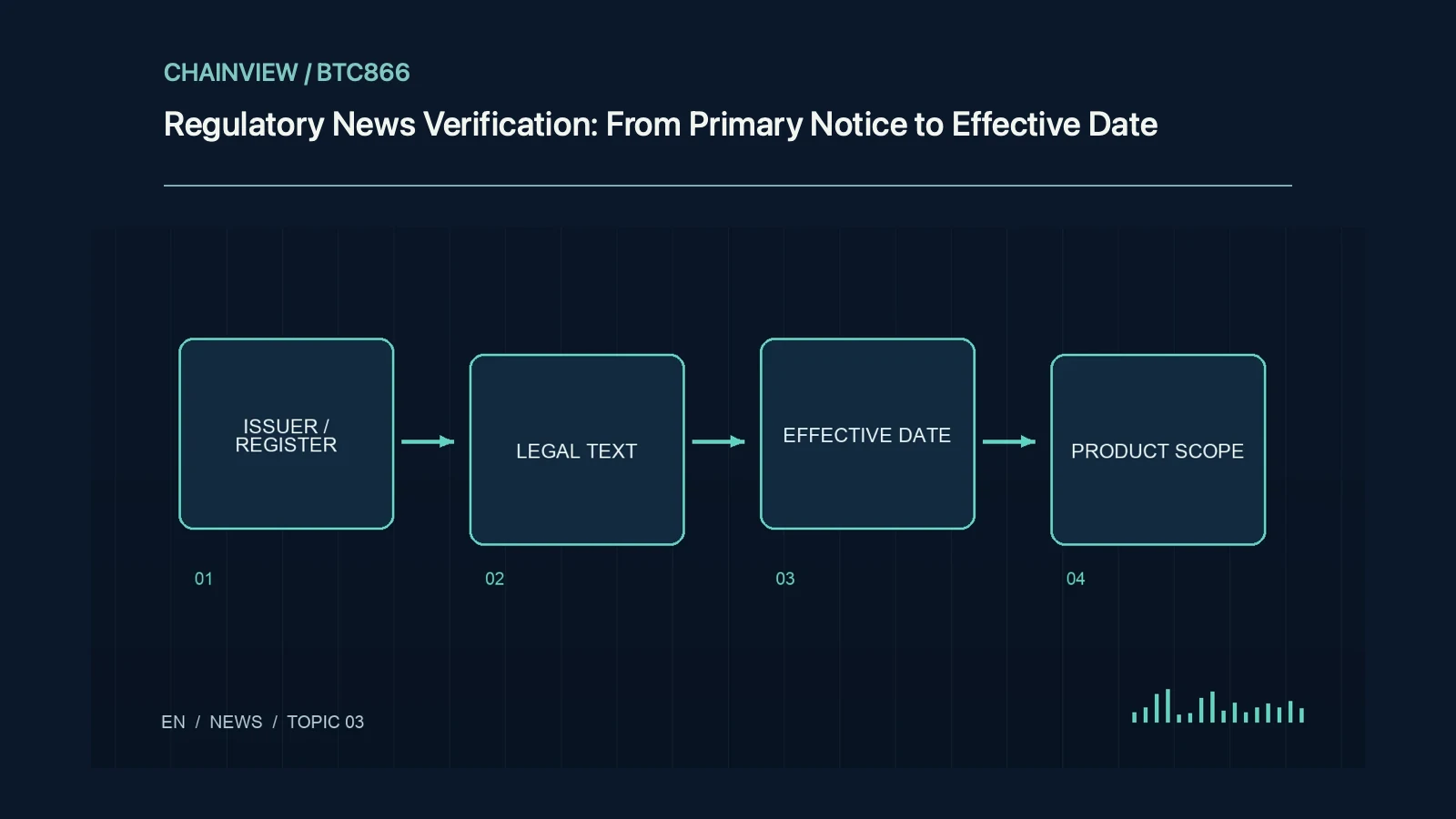
Identify the issuing authority and document type. A payment warning, enforcement order, court judgment, and statute have different subjects and procedures. Save the complete official notice, including its number, signatory, and attachments. A trade association statement is not legislation. Screenshots should lead you to a primary document before you infer obligations.
Proposal versus operative rule
Separate consultation, adoption, transition, and enforcement dates. A proposal collects feedback; it does not automatically impose its proposed obligations. Approval may concern one application or product rather than an entire business. Keep both local time and UTC where timing matters, and read transitional arrangements before deciding whether an existing account is affected.
Who the provision covers
Map each provision to its covered person, activity, asset definition, exemption, and geography. Holding an asset, running an exchange service, and offering an investment product are different activities. A translated website or accepted identity document does not establish eligibility. Verify the contracting entity and product restrictions without misrepresenting your residence.
Limits of enforcement conclusions
Distinguish allegations, interim measures, settlements, and final judgments. Allegations are not judicial findings, and settlement payments do not necessarily admit every claim. Read the factual background, legal basis, remedies, and appeal status. An outcome concerning a particular activity should not be generalized to every project using similar technology.
Building a provision worksheet
Use one row per operative provision: clause number, exact quotation, affected feature, responsible entity, and verification status. If new subscriptions stop, separately check whether existing customers can redeem and how legacy positions are handled. Keep editorial interpretation in another column and clearly flag questions requiring qualified local advice.
Tracking revisions and personal records
Official pages may revise attachments or add implementation guidance. Retain versions and access times, compare subsequent notices, and keep account terms, transaction evidence, and support correspondence. This is a verification method rather than individualized legal advice. Eligibility and reporting duties depend on the applicable jurisdiction and rules in force when the activity occurs.
Worked review example
Suppose a notice appears on March 1, consultation ends April 1, and an adopted rule takes effect September 1. Keep all three dates rather than writing that the rule was already operative in March. If a provision covers marketing to retail customers, do not infer identical treatment for institutional activity or private holdings. Add a clause reference to each conclusion and an unresolved column where the notice is silent. The example is hypothetical: its dates explain the review method, not an actual regulatory event. A saved version and translation note also help resolve later disagreements about what the notice originally said.