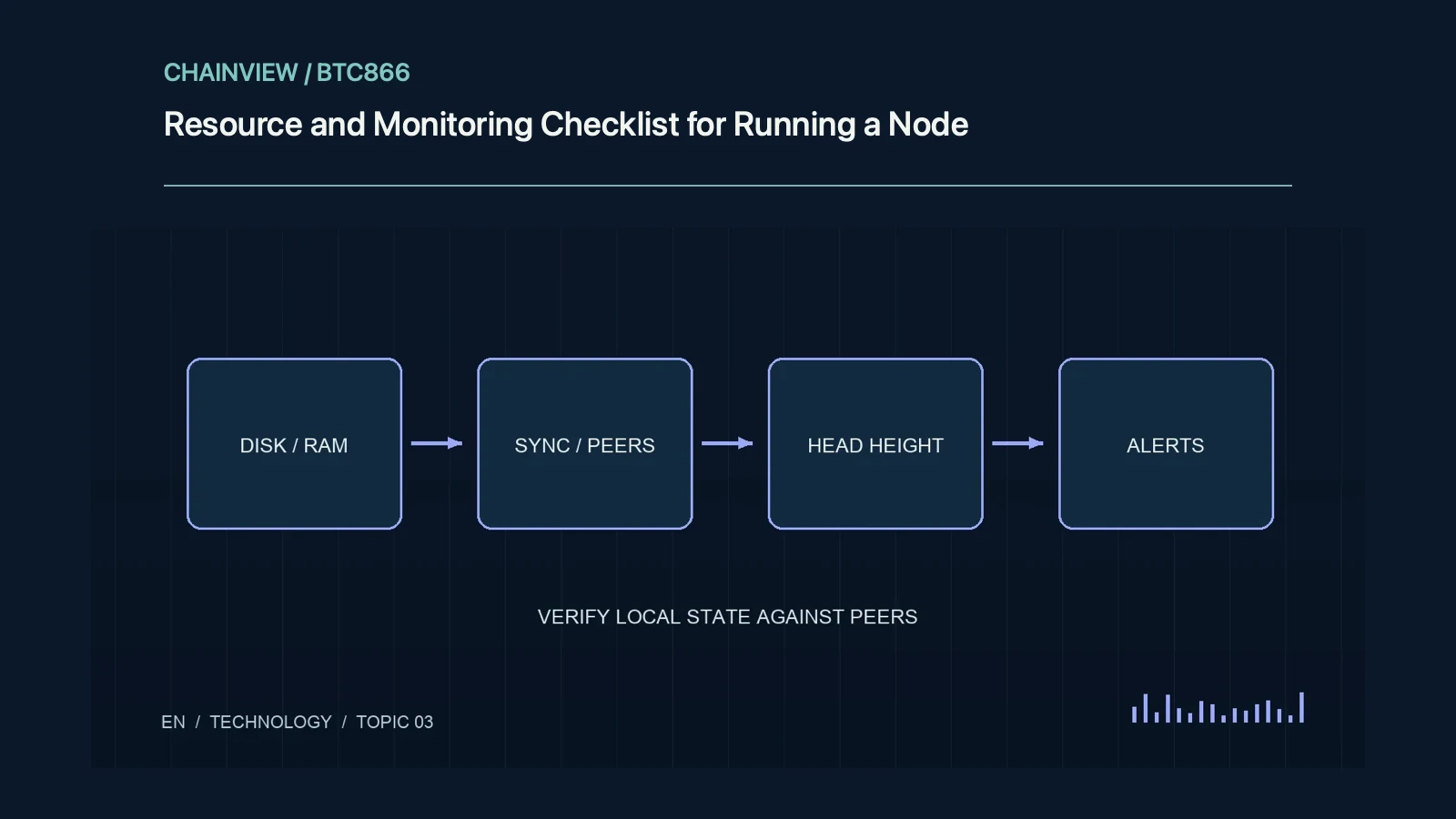
Original topic illustration: ChainView BTC866 original topic diagram · ChainView BTC866 Editorial · CC BY 4.0
Define the node role
Full nodes, archive nodes, validators, and application RPC endpoints have different responsibilities. Define the intended role before selecting hardware. Minimum specifications are not long-term capacity guarantees: state growth, indexes, and query traffic matter. Validator signing keys and penalty risks require additional procedures beyond ordinary node synchronization.
Disk capacity and performance
Capacity, random I/O, endurance, and filesystem behavior all matter. Reserve growth space and monitor databases, logs, and snapshots separately. Pruning reduces stored history but limits some queries and rebuild options. Check application requirements before synchronizing rather than discovering afterward that the selected configuration cannot provide needed historical data.
Connectivity and exposed interfaces
Separate peer connectivity from administrative interfaces. Public RPC services need authentication, rate limits, and logging policies. Internet access is not a reason to expose privileged methods. Track bandwidth, peers, reconnects, synchronization lag, firewall rules, and clock synchronization. Protect remote administration and avoid placing credentials in publicly readable configuration or repositories.
Versions and maintenance windows
Record version, source, signatures, and configuration differences. Read migration and rollback limits, preserve essential settings, and validate supported client combinations. Notify dependent services before maintenance. After upgrading, check height, chain identity, and API behavior; a running process alone does not establish correct synchronization or application compatibility.
Back up the right material
Chain data can often be resynchronized; wallet keys, validator keys, and slashing-protection records have different requirements. Copying a live database may produce inconsistency. Follow supported snapshots and prevent duplicate validator signing during recovery. Test restore time and ensure backup-encryption keys themselves have a secure, usable recovery path.
Alerts and incident records
Alert on disk headroom, synchronization lag, finality delays, crashes, and API error rates, with owners and actions. Tune noisy thresholds so important incidents remain visible. Preserve timelines, versions, logs, and interventions before restarting repeatedly. Independent validation improves autonomy, but operating a node still requires maintenance and dependency management.
Worked review example
Suppose a disk holds 1,000 units, with 700 database, 100 logs, and 100 system use. Only 100 remain, despite the database appearing to occupy just seventy percent. Track each component and migration headroom. Restore tests should measure resynchronization time, because downloadable chain data does not eliminate service downtime or the separate need to protect signing keys.