Original topic illustration: ChainView BTC866 original topic diagram · ChainView BTC866 Editorial · CC BY 4.0
Identify the recovery mechanism
Wallets may use seed phrases, multiparty systems, device backups, or custodial recovery. Identify required materials and whether one item grants full control. A login password is not interchangeable with on-chain recovery information. Resetting email credentials generally cannot restore lost self-custody keys, while a leaked seed may directly compromise funds.
Offline records and materials
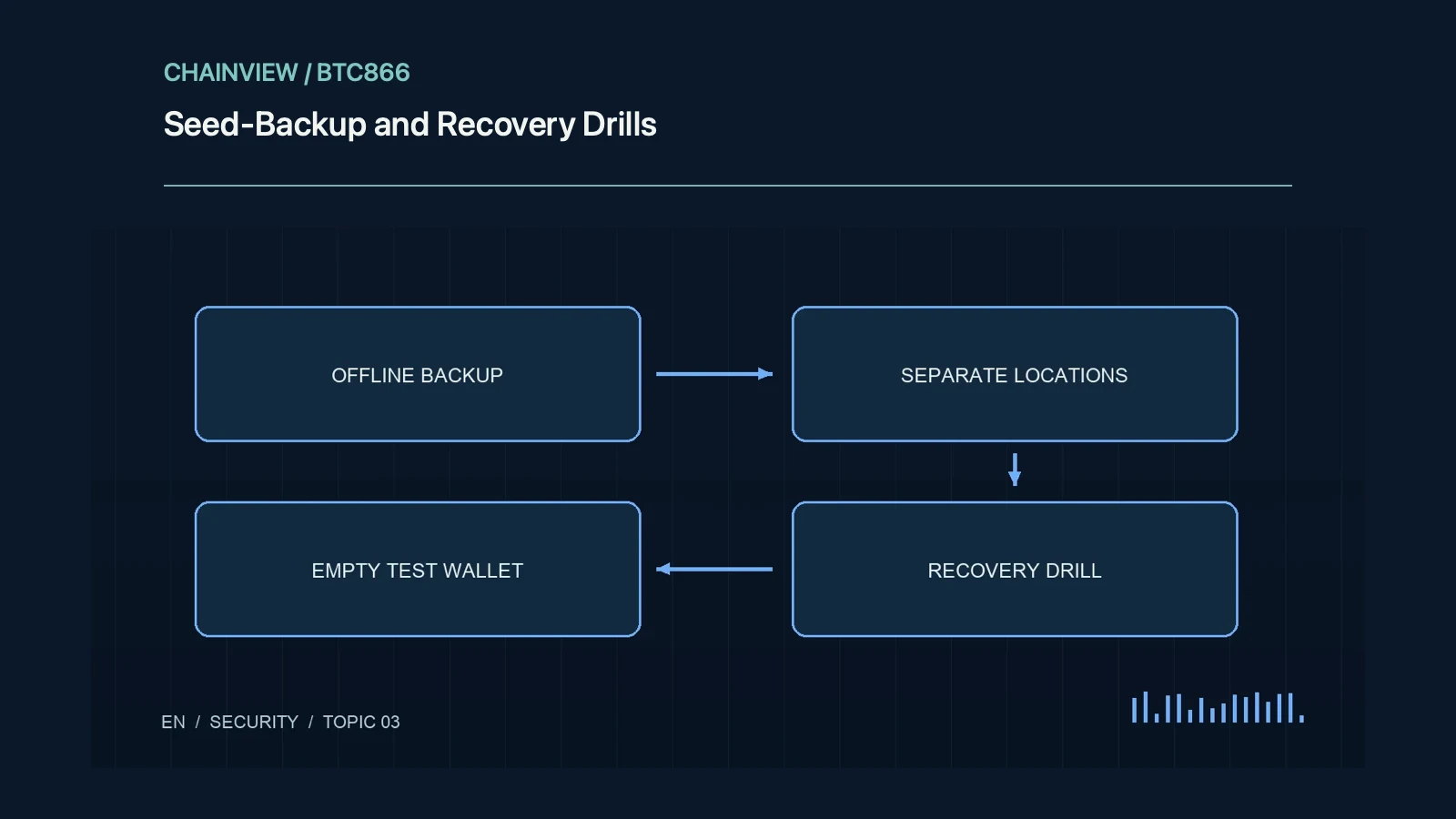
Generate and verify backups in a trusted setting without screenshots, chat, or cloud notes. Paper and metal have different durability constraints. Avoid homemade scrambling or opaque encodings that may become unrecoverable. Check order, spelling, and passphrase requirements so an authorized person can still restore accurately years later.
Separation and access control
Two copies in one room share fire risk; several portable copies can increase theft exposure. Select separated locations, access rules, and inspection schedules. Keep locations private. Use established standards for any sharing scheme: arbitrarily splitting words can reduce both confidentiality and recoverability rather than providing a sound threshold backup.
Practice with a test wallet
Practice first with an empty wallet, recording device, software, derivation path, and expected addresses. Restore through official instructions and compare results. Do not import a real seed into an online computer merely to verify it. A recovery drill needs a trusted environment so the verification process does not become the largest disclosure risk.
Passphrases and inheritance
Losing a required passphrase can make a seed insufficient, and a wrong passphrase may produce a valid empty wallet. Separate procedural instructions from secrets. Inheritance also involves local law and executor authority; publishing private keys in a potentially public will is unsafe. Coordinate legal arrangements with technically workable recovery instructions.
Respond to exposure
Changing an application password does not revoke control from someone who knows the seed. Assess moving assets to entirely new keys using a trusted device, and inspect related permissions. Attackers may monitor later deposits. Avoid recovery services requesting secrets. Preserve evidence and contact relevant official channels without assuming completed on-chain losses can be reversed.
Worked review example
Two copies in different drawers share the same building fire risk. A memorized passphrase can also make a surviving seed unusable to an authorized successor. Test readability, location independence, and procedural access without writing secrets into the log. Practice with an empty wallet before changing real backups; copy count alone cannot establish recoverability.