Original topic illustration: ChainView BTC866 original topic diagram · ChainView BTC866 Editorial · CC BY 4.0
Map the impact boundary
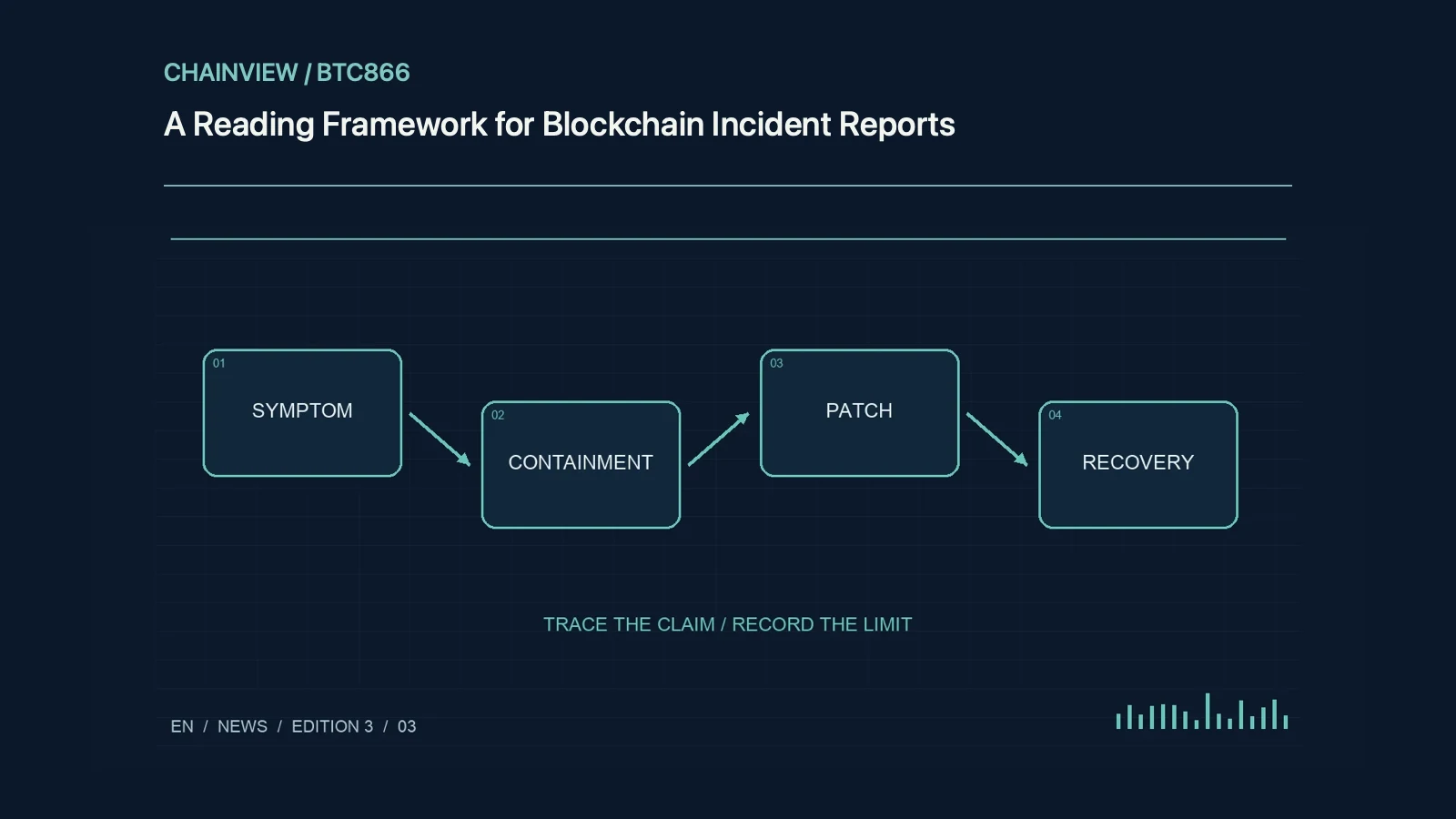
Identify the failed component before describing the whole network. Consensus stalls, RPC outages, explorer lag, bridge pauses, and frontend failures have different effects. Record network, versions, contracts, period, and functions. Check inclusion, finality, and independent exit routes. One provider's error does not establish a chain halt, while continuing block production does not establish that every application or customer balance remained unaffected.
Reconstruct an evidence-based timeline
Separate first symptoms, alerts, confirmation, containment, deployment, and verified recovery. Status pages can lag the actual event, so preserve chain evidence and release logs. A traffic spike may trigger a defect without explaining the underlying design failure. Mark provisional conclusions clearly, including uncertain attribution and loss estimates. An address label or social-media claim is not sufficient evidence to identify an attacker.
Verify recovery beyond the announcement
Recovery requires checking backlogs, consistent state, node agreement, and patch coverage. Reopening a feature does not settle every old request; unpausing a contract does not prove its root flaw is fixed. Inspect release notes, tests, independent review, and remaining restrictions. Users should reconcile existing hashes and account entries rather than sending duplicate payments. Operators should preserve failed samples and logs before disruptive interventions.
Extract actionable improvements
Look for failed controls, permissions that reduced or amplified damage, measurable remedies, owners, and deadlines. A single-provider outage calls for independent sources and consistency checks, not merely a promise of stability. Keep technical recovery, compensation, and legal responsibility on separate tracks. A repaired service can still have unresolved claims, and a compensation announcement is not evidence that every affected user has received payment.