Original topic illustration: ChainView BTC866 original topic diagram · ChainView BTC866 Editorial · CC BY 4.0
Inventory control and obligations
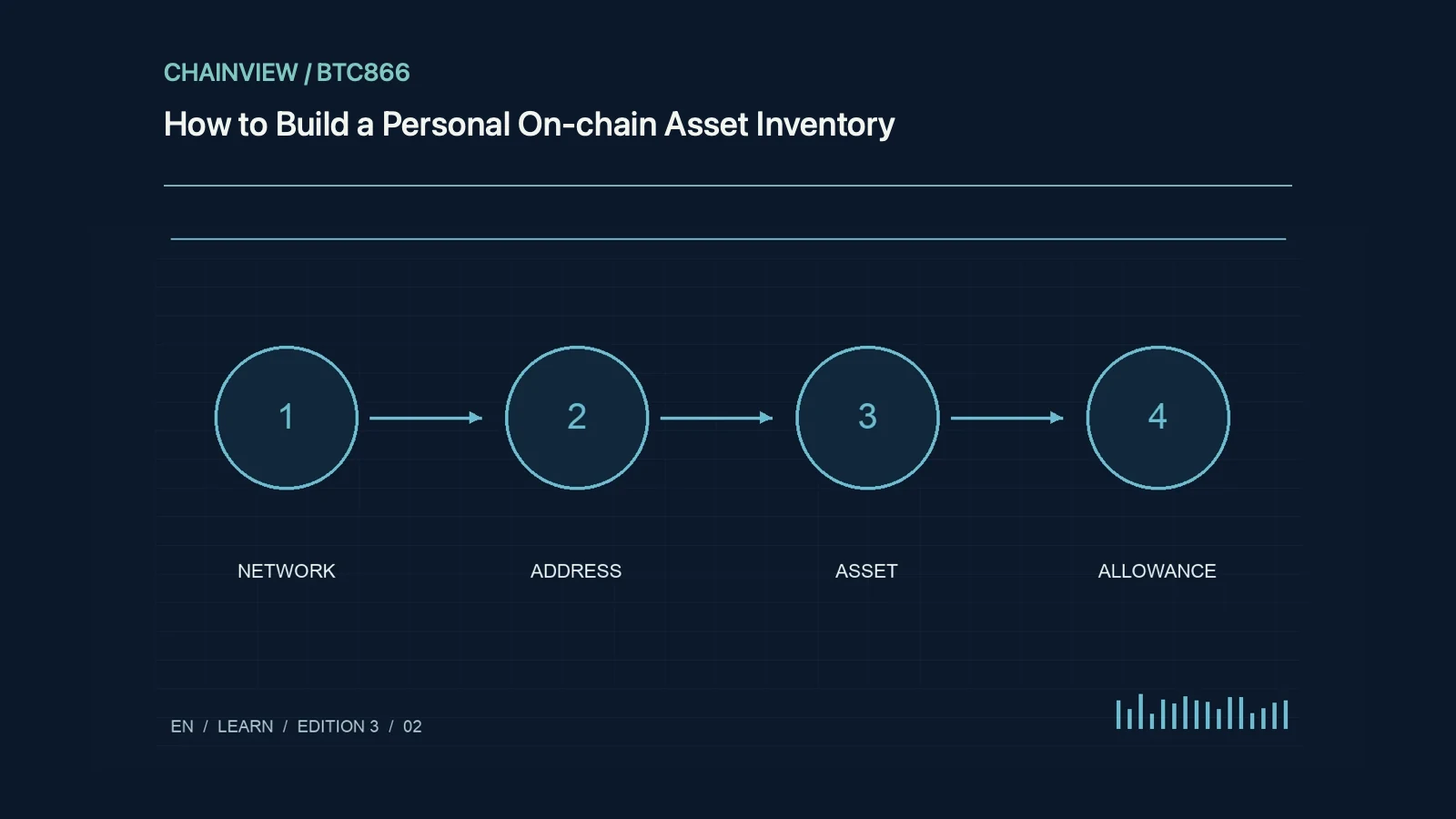
An inventory maps control and obligations across chains, accounts, and services, rather than publishing wealth. Record network, public address, custodian, contract, quantity, liabilities, restrictions, and date. Keep seeds, private keys, and recovery codes out of ordinary spreadsheets, and protect the inventory itself. Distinguish custody claims, contract positions, and collateral so the same value is not counted again as a receipt token or platform balance.
Identity requires more than a symbol
Names and symbols are not asset identity. Record chain and contract for native, wrapped, and bridged assets, with decimals and verified provenance. Unsolicited tokens can contain phishing links; visibility is no reason to claim them. NFTs need contract and token ID, separating media access and rights from valuation. A displayed high price for an illiquid token is not executable cash and should not inflate usable-asset totals.
Allowances, debt, and exit restrictions
Include allowances, debt, staking exits, pool shares, pending withdrawals, and expiring rights, not just positive balances. Record accounts, counterparties, costs, thresholds, and steps, distinguishing chain data from service exports. Disconnecting does not revoke approvals; selling a receipt may not end every obligation. Mark unknowns for investigation. Do not connect to an unfamiliar aggregator merely to fill a spreadsheet when read-only queries suffice for most basic checks.
Reconcile and preserve versions
Reconcile opening quantity, inflows, outflows, fees, and closing quantity before explaining valuation. Unchanged quantity at a lower price is different from missing assets. Investigate chain, decimals, pagination, and pending items for discrepancies. Preserve exports, query dates, and edit reasons. An inventory supports tax, inheritance, and response work without determining legal treatment. Share only necessary sections, with separately protected recovery arrangements for secrets.