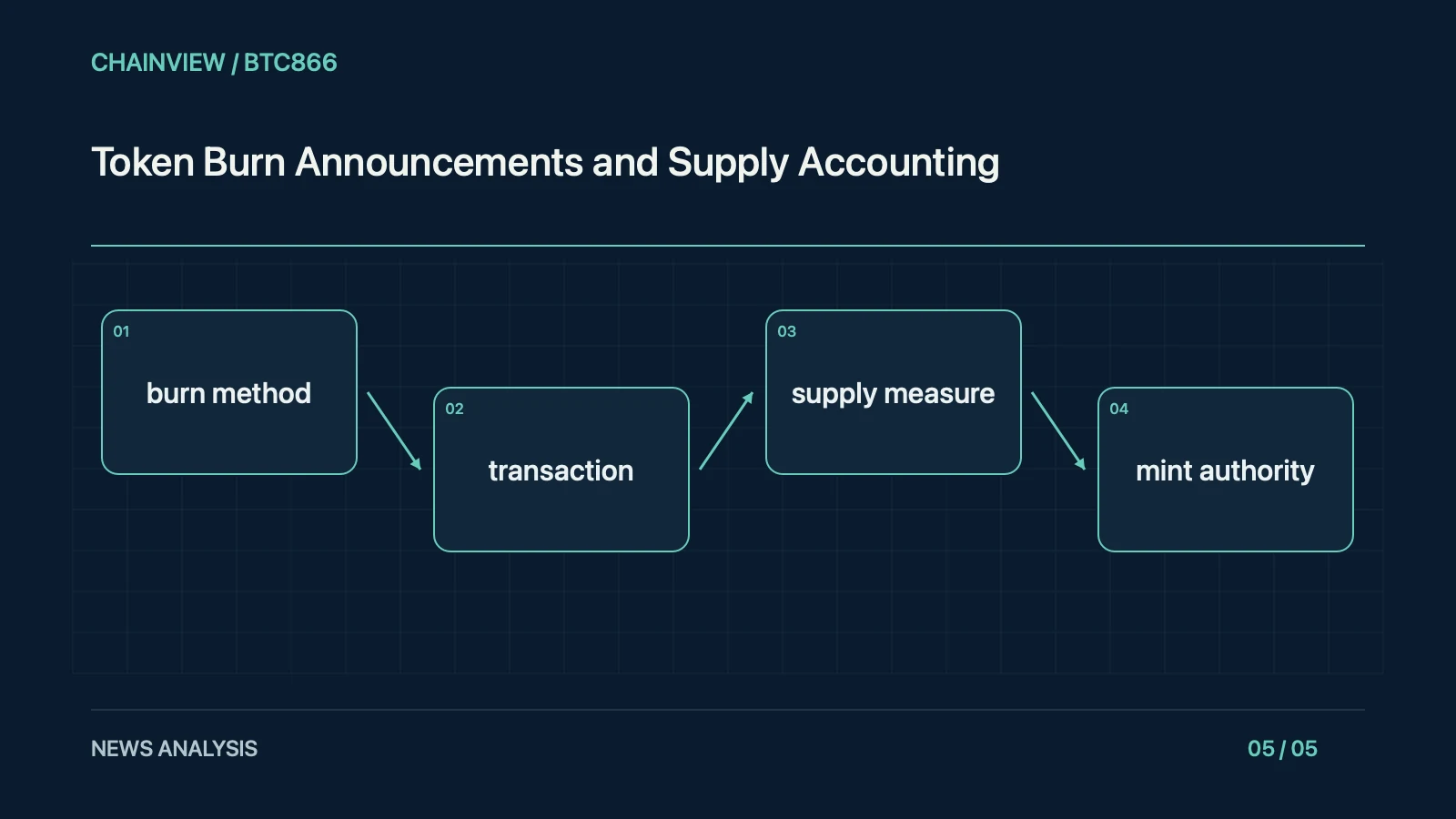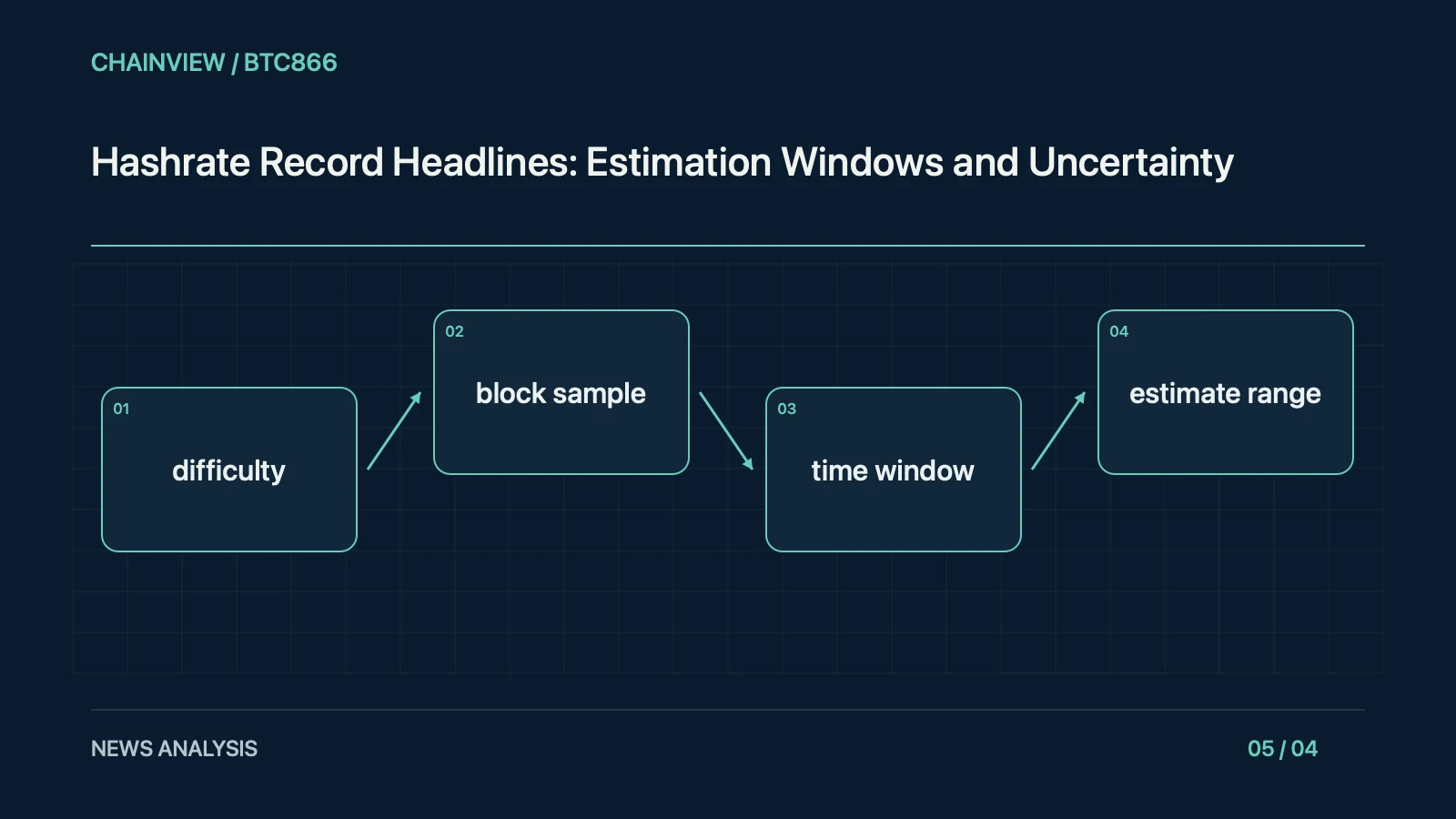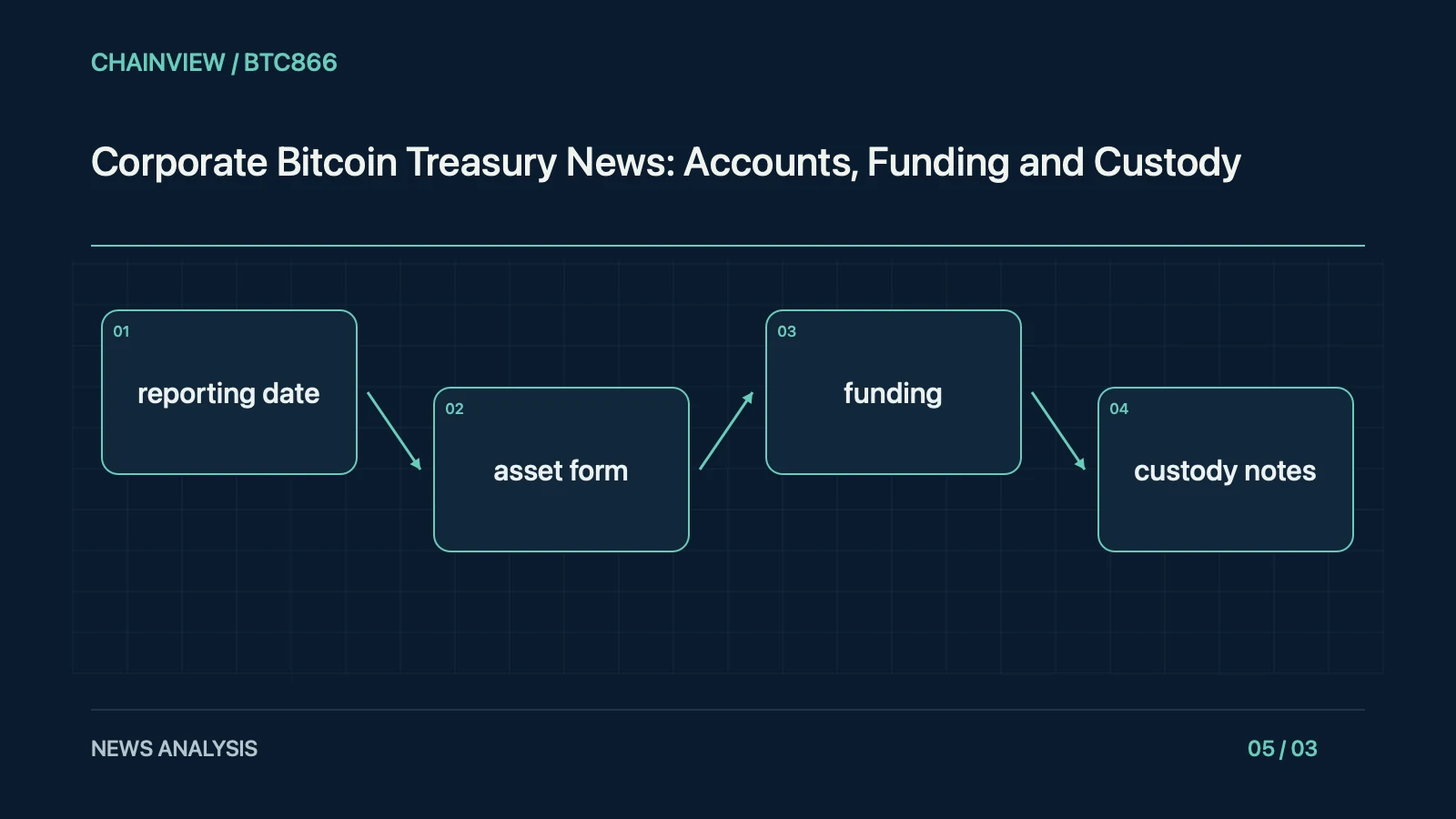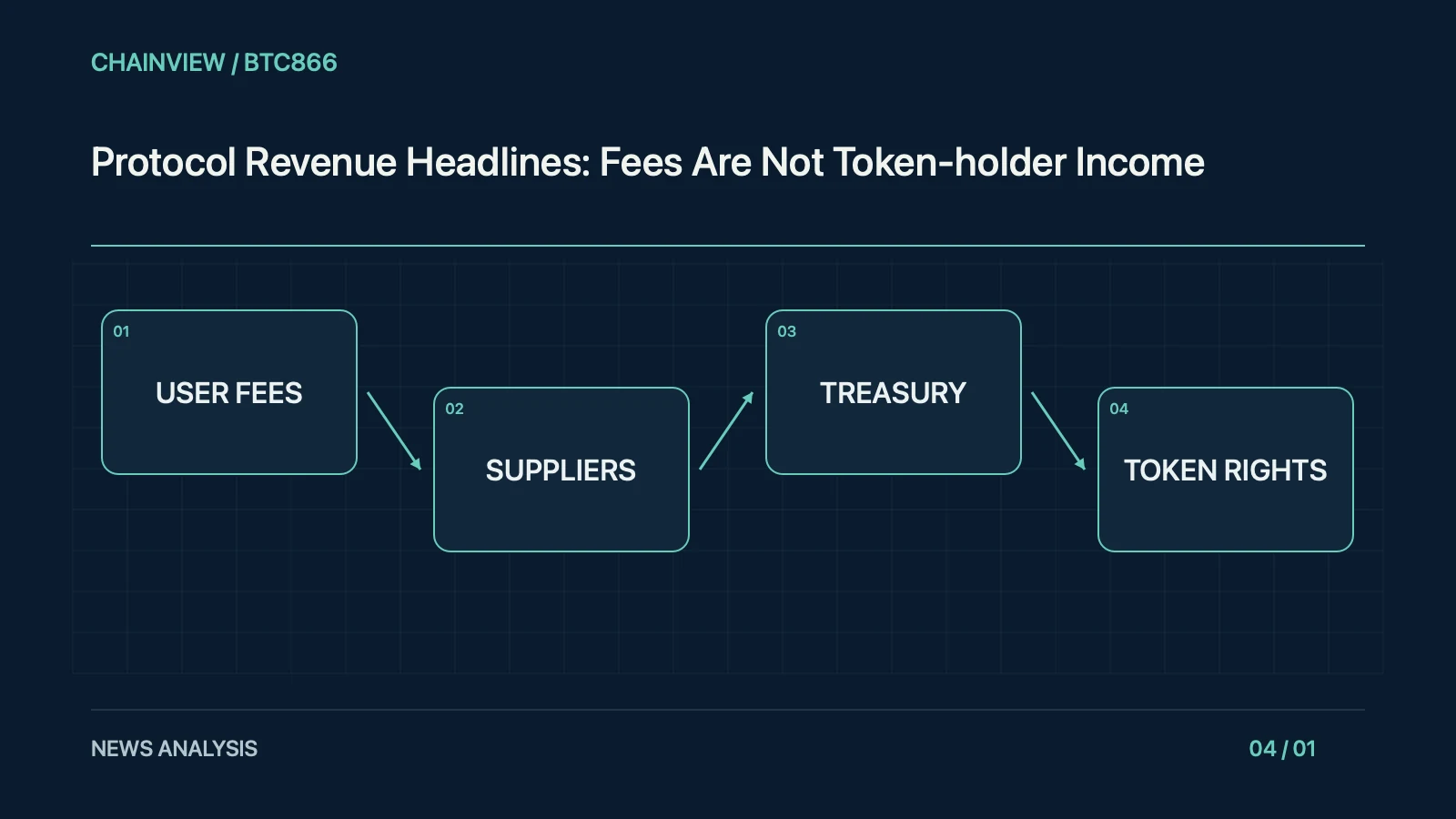
Original topic illustration: ChainView BTC866 original topic diagram · ChainView BTC866 Editorial · CC BY 4.0
Follow the fee before naming the income
A protocol revenue headline needs a map of where a user payment goes. Gross fees describe what users pay, while supplier compensation can go to validators, liquidity providers, node operators or other participants. The remainder may reach a treasury, be burned, or stay in a contract with restricted spending rules. These outcomes have different economic meanings. Consider an illustrative application collecting 100 units during one week: 70 units compensate liquidity suppliers, 20 fund a treasury and 10 pay an external service. Calling all 100 units token-holder revenue would hide the recipients. Start an analysis with the asset, network, contracts and reporting interval. Then label each category using the project's own documented definition, explaining departures from a comparison dashboard. A familiar metric name is not enough to establish that two products measure the same flows.
Separate governance from a distribution right
Holding a governance token can allow voting without granting a right to receive fees. A future proposal to activate distributions is different from an active, funded mechanism. Even an executed distribution contract may depend on governance votes, administrator permissions, eligibility or operating conditions. Read the current token documentation and deployed configuration together. Ask whether distributions are automatic, discretionary, restricted to stakers or conditional on locking tokens. If an announcement says revenue supports the ecosystem, identify what that phrase permits: grants, development expenses, buybacks and direct transfers are not interchangeable. Legal rights also depend on the instrument and relevant law; a dashboard cannot resolve them. A useful report states what a holder can presently do and receive, then separately describes proposals. It does not convert an aspiration about token value into an enforceable claim against the protocol or its treasury.
Reconcile contracts with the dashboard
Choose a sample interval and trace a few documented payments from the fee-collecting contract to their recipients. Verify addresses through maintained project documentation rather than copying labels from an unfamiliar explorer account. Check whether a dashboard includes unrelated transfers, refunds or fees collected on another network. If the protocol upgrades a collector midway through the period, combine the relevant addresses without counting the migration transfer as fresh revenue. A treasury balance is a stock at a point in time; revenue is a flow over an interval. The balance can increase through grants or token sales, which do not establish additional user demand. Record query assumptions, token units, conversion prices and the date of retrieval. This makes a later correction possible when an analyst discovers an omitted contract or changes the definition of retained income.
Treat incentives and annualisation carefully
An application can collect fees while paying larger token incentives to attract activity. Show both flows rather than presenting incentives as customer receipts or ignoring their dilution effect. A reward denominated in the project's own token is also different from cash available for expenses. When converting assets into a common currency, explain which price and timestamp were used; a thinly traded token may have no executable market at the displayed quote. Annualising a strong week by multiplying it by 52 is a scenario, not a realised annual result. One-off migrations, congestion and promotional campaigns can distort that estimate. Describe seasonality and unusual events, and avoid adding a forecast to actual receipts in the same total. A reader should be able to distinguish observed payments, valuation assumptions and hypothetical future policy from the headline alone.
Write a reproducible revenue note
A compact revenue note can contain a metric definition, observation period, source contracts, supplier payments, retained amount and holder entitlement status. Use explicit unknowns when the available documentation cannot establish a recipient or a permission. For example, report that a contract received a transfer but the purpose remains unverified, rather than assuming it represents operating profit. Compare adjacent periods only after checking consistent contract coverage and units. Preserve the source query or export and the version of any governance proposal cited. If a later vote changes fee allocation, update the article with the effective date while retaining the historical calculation. This approach helps overseas readers compare projects across currencies and time zones without confusing a large activity number with distributable income. It also keeps the news useful after the initial announcement has disappeared from social feeds.