Original topic illustration: ChainView BTC866 original topic diagram · ChainView BTC866 Editorial · CC BY 4.0
Establish who actually made the announcement
A recognisable logo in a blockchain press release proves little about the relationship behind it. The first verification step is to locate the announcement on the official domain of each named party, checking the date, legal entity and person quoted. A project can be a customer of a cloud provider without becoming its strategic partner. It can also participate in an open developer programme whose membership is available to many firms. Search a counterparty's newsroom and product documentation independently instead of following only the project's links. If one party has not confirmed the statement, report that limitation explicitly. Silence does not prove fraud, but it cannot supply missing confirmation. Save the original wording because edits may narrow a broad claim after publication. The distinction matters more than the size or familiarity of the brand displayed.
Classify the relationship before describing impact
Partnership is an umbrella term covering very different arrangements. A paid vendor contract, technical integration, memorandum of understanding, short pilot and binding production agreement create different obligations. Ask what each side must deliver, to whom and over what period. A pilot using simulated transactions does not establish that customers can use a production service. An application appearing in a public marketplace may mean only that it passed listing requirements. Consider an illustrative wallet integrating a payment provider's software toolkit: this can improve a checkout flow without creating an investment, exclusivity arrangement or guarantee of settlement. Name the documented integration and its users. If the announcement contains milestones, distinguish a target from a completed delivery. Readers gain more from a precise description of the relationship than from enthusiastic language about a broad institutional alliance.
Look for evidence of actual delivery
After classifying the relationship, test its observable claims without exposing personal funds or sensitive credentials. Public developer documentation might identify supported networks, application identifiers and available interfaces. A product page may provide a launch date, regional limits and instructions for eligible customers. Check whether these materials belong to both parties or merely repeat the same press release. If a live service is claimed, an accessible interface and dated operating documentation are stronger evidence than a conference photograph. They still do not prove large adoption or commercial success. Where access requires onboarding, use the stated eligibility rules rather than bypassing them. Keep a simple evidence table: claimed deliverable, supporting source, current status and unresolved question. This separates a real technical milestone from assumptions about customer numbers, revenue or the future price of a related token.
Test the claims that are usually implied
Announcements often encourage conclusions they never explicitly establish. Cooperation does not necessarily include equity funding, token purchases, exclusive rights or a regulator's approval. A bank testing infrastructure may not hold the project's token at all. A public agency attending a demonstration may not endorse the service for consumers. Read quoted statements in their original context and determine whether named brands authorised use of their marks. For financial terms, ask whether a signed commitment, payment or amount has been publicly disclosed; do not fill missing numbers with rumours. Distinguish customer adoption from employees attending a workshop and a production transaction from a laboratory test. If commercial terms are confidential, say so. A fair article can recognise demonstrated progress while keeping unverified financing and market-impact claims outside its factual conclusions, especially where overseas readers may misunderstand institutional titles.
Publish with a clear update standard
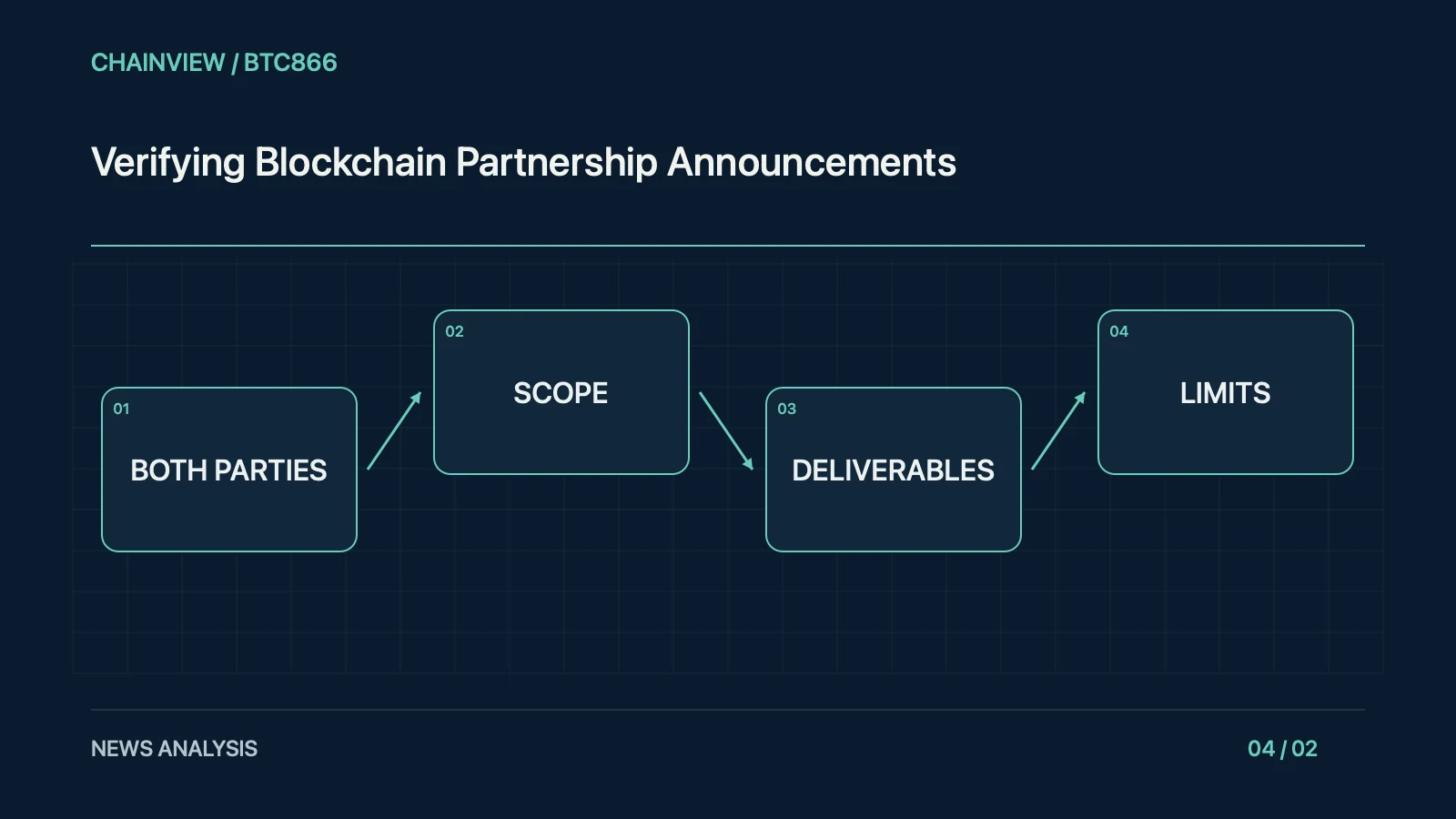
Write the headline around the narrowest verified result, such as an announced pilot or completed integration. In the body, identify the parties, scope, stage, dates and limits. Include a correction rule for delayed launches, altered regions or a counterparty denial. For example, if a promised consumer feature remains unavailable, update its status rather than leaving the original future tense to look like a completed launch. Preserve links to primary materials and distinguish independently checked facts from information supplied by a project spokesperson. Translations should retain cautious words such as intends, may and subject to approval. Removing those words can turn a conditional statement into a misleading guarantee. This reporting method gives a partnership story lasting value: readers can revisit the evidence and see which commitments actually became usable products, without relying on the emotional effect of a famous logo.