Original topic illustration: ChainView BTC866 original topic diagram · ChainView BTC866 Editorial · CC BY 4.0
Identify the source of risk
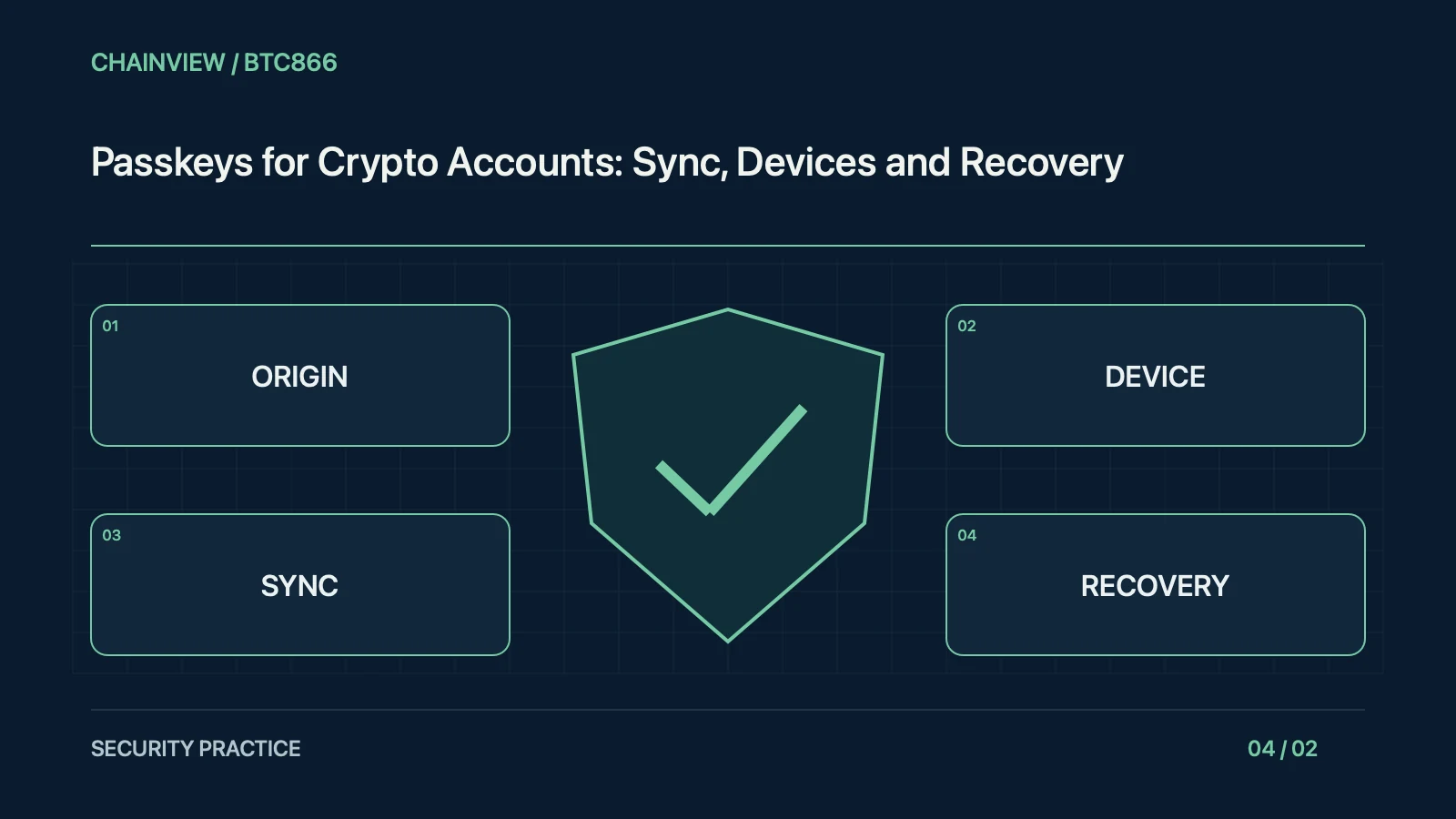
A passkey binds authentication to a service origin and can resist many ordinary password-phishing attacks. It is not the same thing as a wallet private key and does not eliminate unlocked-device, backend, or withdrawal-process risk. Confirm the official domain, supported enrolment method, and account entity through an independent entry point. Passwordless marketing describes a login method, not the absence of every other weakness in the account.
At enrolment, confirm that the browser's displayed origin matches the intended service before supplying other account details. Origin binding is a technical control, but the user still has to choose the genuine service and understand the account being linked. A legitimate-looking page that asks for unrelated credentials can create harm before the passkey ceremony itself even begins.
Inspect each relevant field
Synced passkeys depend on an ecosystem account and its recovery arrangements, while device-bound credentials can depend on particular hardware. Their backup and loss scenarios differ. Record supported devices, browsers, operating systems, and alternative access routes. Understand what happens when replacing a phone or leaving an ecosystem. A cloud synchronisation indicator does not prove that every device can authenticate, and sharing an ecosystem account is not a suitable way to distribute financial login authority.
Mark which credentials are synced, which are hardware-bound, and which access routes remain available after replacing a device. Read compatibility guidance before leaving an ecosystem account or changing its security configuration. Do not assume that destroying an old phone leaves a recoverable cloud copy. The backup model should be understood and documented before the loss scenario rather than inferred from a reassuring synchronisation symbol.
Understand the limits
Recovery procedures, email or SMS fallbacks, active sessions, and support workflows can bypass the strength of the primary login method. Check retained passwords, recovery-email security, and unfamiliar sessions. After enrolling a passkey, still review withdrawal destinations, alerts, and transaction controls. Strong login authentication does not establish that every sensitive action requires equivalent authorisation. Where several credentials are allowed, name devices clearly and periodically reconcile the credential list with devices actually controlled.
Recovery email and telephone records need maintenance too. A number no longer controlled can become a weak fallback. Notifications help detect changes but do not authenticate every linked action; enter through an independent route instead of trusting an alert's embedded link. A false security warning can exploit a real concern about account access and lead a user to disclose information outside the protected passkey flow.
Respond safely
Practise non-destructive access checks while retaining a reliable existing route. Confirm that another supported device can sign in, the recovery instructions remain available, and backup contact details are accurate. Do not delete the only credential or reset all devices merely to test recovery. After losing a device, use the official procedure to revoke access and inspect active sessions. Recover an ecosystem account only through authenticated channels, not a supposed agent requesting remote control or a verification code.
Rehearse an alternative route while a reliable session remains available, avoiding irreversible resets. Keep official recovery instructions and trusted contacts accessible. Waiting until a device is lost can push a distressed user toward search advertisements for supposed recovery specialists. An upfront guarantee to unlock an account is not evidence of capability or authority, and should not replace the provider's documented recovery process.
Maintain controls
Maintain a record of credentials, device status, recovery routes, fallback methods, and notifications, while protecting sensitive recovery materials separately. Explain that passkeys secure a particular origin-bound authentication process rather than guaranteeing custody, asset value, or every backend operation. Update guidance when synchronisation, recovery, or platform support changes. Readers should understand the dependencies behind convenience and retain other controls instead of assuming that one strong authentication method makes the entire financial account invulnerable.
Deleting a credential and terminating server sessions can be separate actions. After revoking a device, still inspect active sessions and sensitive-operation records. Listing login credentials, sessions, and withdrawal authorities separately makes the remaining access paths visible after an incident. That layered review is more useful than declaring the account safe merely because one lost-device passkey no longer appears in a credential list.