Original topic illustration: ChainView BTC866 original topic diagram · ChainView BTC866 Editorial · CC BY 4.0
Identify the document and its author
A complaint records allegations from a party. A motion asks a court for relief, while an order states what the court has decided. A lawyer's press release can help locate a case but cannot replace the docket. Start with the court, case number, parties and filing date before describing a crypto business as liable or cleared.
Record the docket entry number rather than only a website date. Attachments, amended filings and withdrawn documents can contain different language. Before quoting, establish who is speaking. A witness statement described in a complaint is not automatically a judicially confirmed fact, and admitting evidence is not identical to accepting its truth.
A complaint states a party's allegations; a motion requests relief, while a judicial order records what a court has actually decided.
Separate procedure from a final merits decision
Preliminary relief, a procedural dismissal, settlement and a final judgment answer different questions. A court may allow a case to continue without accepting every allegation. A settlement may contain no admission of liability. Read which parties and claims the operative language covers; a narrow result should not become a headline declaring universal victory.
If an order lets one claim proceed, name that scope and describe the remaining claims accurately. A dismissal may permit amendment or rest on jurisdiction rather than the legality of every act. Readers should understand both what the court decided and what it left undecided, without a winner-takes-all summary.
Identify the court, docket number, parties, filing date and procedural posture before describing the effect on a crypto business or token.
Check jurisdiction and appeal status
The effect of a decision depends on the court, jurisdiction and issues actually resolved. Filing an appeal does not automatically suspend every order or prove that reversal will occur. Check for a stay rather than assuming one. Overseas readers also need the connection to their contracting entity, because a case abroad does not create a worldwide service permission.
Check whether a finding concerns particular parties and transactions rather than lifting one sentence about an asset category out of context. Similar technical labels can hide different contractual facts. When an appeal document cannot be located, say its status was unconfirmed at retrieval; absence from your search does not establish that no appeal exists.
Distinguish preliminary relief, dismissal on procedural grounds, settlement terms and a final merits judgment; an appeal may change what remains contested.
Build a procedural timeline
Consider a hypothetical complaint in January, an interim ruling in March and a partial settlement in June. These are separate events with different evidential meaning. Record the filing party, requested action, court response and remaining issues. Do not backdate later findings into the original allegations, and remove unnecessary personal details when reproducing public documents.
Add a source and verification status to each timeline event. Distinguish damages requested, amounts ordered, settlement commitments and money actually paid. The largest amount in a complaint is not necessarily the company's final loss. A screenshot without a docket reference should not outrank the underlying court material.
Quote the operative language with its jurisdiction and scope, protect personal information, and avoid turning one case into a universal legal conclusion.
Keep corrections traceable
Watch for amended complaints, subsequent orders, judgments and appeals. Preserve retrieval dates and identify which conclusion a later filing changes. If only an extract is accessible, limit the claim to that extract instead of reconstructing reasons from social posts. Explain the practical uncertainty and direct individual legal questions to a qualified professional in the relevant jurisdiction.
Define correction triggers for the article. A later vacated order, amended claim or appellate decision may require changes to the headline, summary and caption. If consequences for personal accounts have not been officially explained, list them as unresolved rather than converting litigation analysis into an operational notice for every customer.
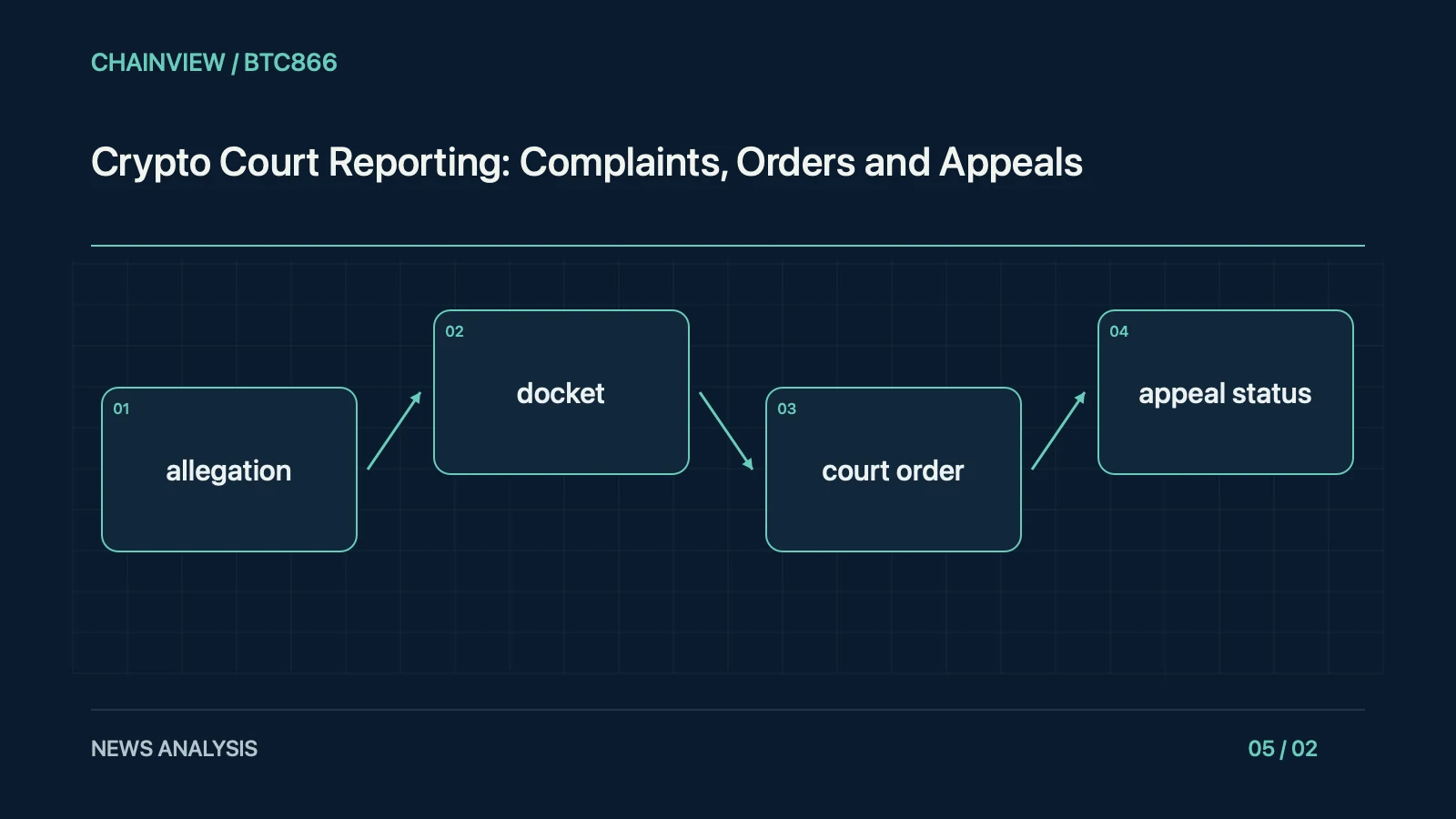
For this story, create four evidence columns headed allegation, docket, court order and appeal status. In each, retain the original passage, publisher, date and unresolved question. Separate completed events from interpretation and future conditions; the headline should rely only on supported findings. Preserve the original retrieval when a source changes and explain which conclusion was revised. Repetition across popular accounts is not independent confirmation when they all trace to one announcement. A reader should be able to follow the article back to the underlying document without trusting a screenshot, a familiar logo or an unexplained numerical comparison.