Original topic illustration: ChainView BTC866 original topic diagram · ChainView BTC866 Editorial · CC BY 4.0
Encryption is not a magic shield
An encrypted wallet file protects confidentiality, but someone who obtains it may attempt guesses offline. Algorithm, parameters and password strength all matter. A file extension does not justify public cloud or chat uploads.
Identify the backup format and wallet version. Some files contain watch-only addresses, while others contain decryptable keys. Consequences differ. Do not infer content from file size or upload it to an unknown online checker; use documented offline inspection.
An encrypted wallet file protects confidentiality only under its encryption design and password strength; obtaining the file may allow repeated offline guessing.
Understand the KDF limit
A key-derivation function raises the cost of each guess but cannot turn a short predictable password into high entropy. Use a unique secret that cannot be inferred from personal details, and preserve the parameter information needed for recovery.
KDF parameters must remain recoverable on the intended device. Increasing cost indefinitely can impede legitimate recovery. Follow supported recommendations and retain version information. Password entropy still matters, and a hint should not make the answer obvious to someone familiar with the household.
A key derivation function increases the cost of each password guess, but cannot turn a short predictable password into a strong secret.
Consider an unlocked device
Malware can read plaintext or signing access while the backup or wallet is open. Filenames, cloud metadata and sync history may reveal information. Offline storage reduces exposure but does not make every location trustworthy.
Cloud synchronisation can retain older copies after the current file is removed. Encrypting later cannot revoke an earlier plaintext leak. Assess wallet exposure separately. Media disposal and any key replacement should happen cautiously in a trusted environment, not through an unsolicited remote helper.
File names, cloud metadata or unencrypted headers may still reveal information, and malware on an unlocked device can bypass the protection of a stored archive.
Test recovery in isolation
Use a trusted device and practice copy to verify opening, address derivation and needed records without connecting to live applications. Stop if a supposed support flow asks for a seed phrase or private key.
A recovery test should confirm expected addresses and derivation rather than only a correct password. Use an unfunded practice sample for rehearsal. Give an inexperienced emergency contact trusted entry points and stop conditions rather than asking them to import live secrets into a web page.
Keep recovery materials out of public uploads, maintain secure access to the backup password and test recovery only in a trusted environment without exposing live secrets.
Maintain availability and secrecy
Record software version and locations, check media integrity and minimise unnecessary copies. A lost encryption password can make a backup permanently unusable. A recovery plan should reveal only the minimum necessary information to a trusted person.
Plan for disaster, forgetting and obsolete devices without placing the only password and only copy in one location. More copies also increase exposure. Periodic review should check location and readability, never leave an entire recovery chain in a convenient chat history.
Recovery planning also needs to distinguish the password protecting a file from a wallet passphrase that changes key derivation. Similar interface labels do not make them interchangeable. A correct file password can decrypt a backup while the wrong derivation setting produces different addresses. Follow the wallet's documented model and test with a harmless sample. Do not let an unfamiliar helper persuade the owner to disclose either secret simply because one successful decryption has not yet revealed the expected account.
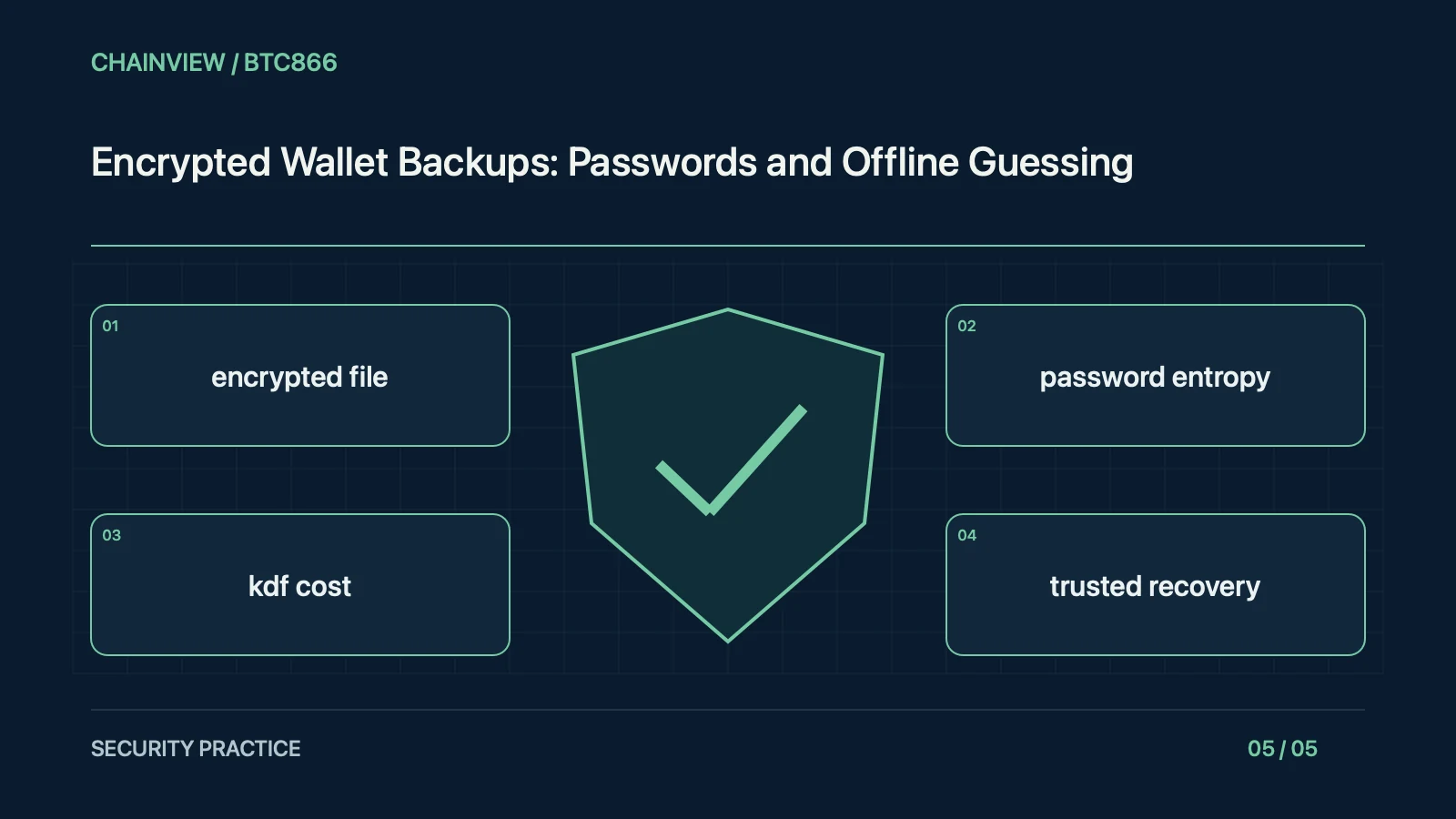
A response card can use encrypted file, password entropy, kdf cost and trusted recovery as checkpoints for observed symptoms, trusted verification, stop conditions and responsibility. Confirm facts before any action that changes permissions or moves funds. An urgent support message does not justify revealing secrets. Prefer read-only inspection, then document and recheck settings when a real change is necessary. After containment, repair the underlying recovery or access weakness rather than only dismissing the visible warning. Retain evidence without exposing identity material publicly. The aim is a controlled decision that reduces risk, not a hurried series of signatures prompted by fear or a stranger offering assistance.