Original topic illustration: ChainView BTC866 original topic diagram · ChainView BTC866 Editorial · CC BY 4.0
Carry only necessary access
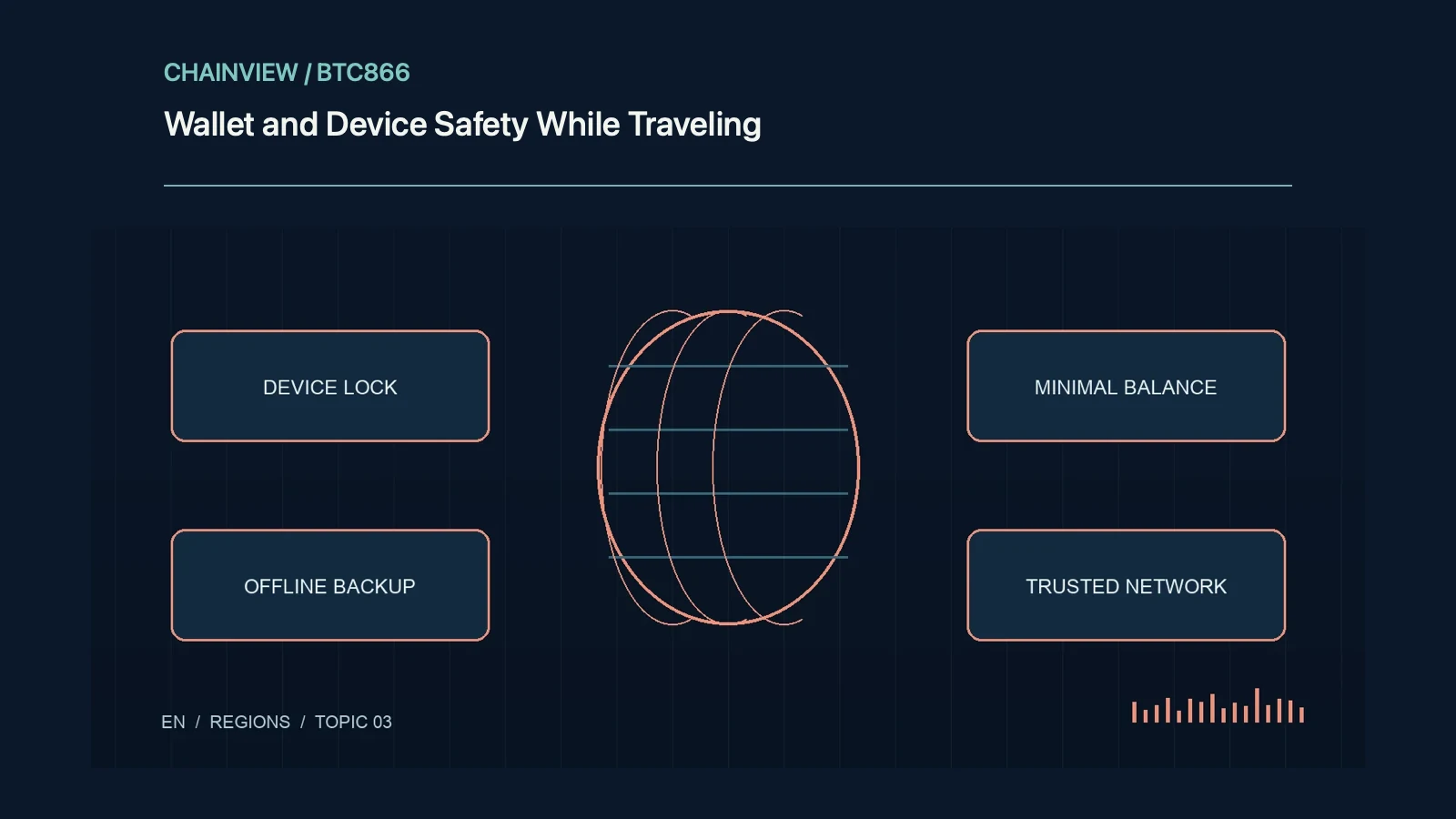
Plan the minimum access needed for travel and avoid concentrating all control on one device. Consider loss, inspection, damage, and outages while retaining a lawful recovery path. Do not keep complete seeds in phone photos or beside the device. Separated backups help only when authorized recovery remains practically possible.
Inspect devices before departure
Update trusted software, enable locking and encryption, and check backup authentication before leaving. Confirm official availability in the destination and save support routes. Avoid last-minute unfamiliar wallets or network-fix tools. Reliable power and controlled physical access reduce the need to depend on public computers or untrusted charging arrangements.
Public networks and logins
Public Wi-Fi can involve spoofed hotspots and deceptive captive portals. Verify network origin and full HTTPS domains, and reject unexplained certificate installations. Use trusted connectivity for sensitive services. Network tools do not change service eligibility or justify false location information; security and legitimate access requirements must both be considered.
Inspections and local requirements
Check official border and customs guidance about devices, encryption, and declarations before travel. Seek qualified advice where needed. Minimize unnecessary sensitive data while complying with lawful requirements, and avoid improvised false statements or evidence destruction. Preparation should focus on understanding rules and carrying accurate, appropriate documentation.
Layered response to device loss
After loss, assess device locks, key protection, and sessions. Secure email and recovery through a trusted device, revoke access, and evaluate account freezes or asset migration. Remote wiping does not prove keys were never exposed. Avoid seed entry on public computers, preserve incident details, and contact relevant official providers or authorities.
Review access after returning
After returning, inspect new devices, sessions, permissions, and alerts, and revoke temporary access. Reconcile spending and transfers with fee and valuation evidence. Reassess trust if backups were opened or devices left your control. Travel security balances reduced exposure with recoverability; no single application or carrying method is universally sufficient.
Worked review example
A phone and sole recovery code in one bag share a failure point. Check backup access and local requirements before travel. If a device left your control, reassess sessions and key trust afterward; remote wiping does not prove no exposure occurred. Test the recovery procedure without carrying every seed or making large real transfers merely for practice.