Original topic illustration: ChainView BTC866 original topic diagram · ChainView BTC866 Editorial · CC BY 4.0
Identify the Thai business type
Thailand SEC information distinguishes exchanges, brokers, dealers and other activities. Match the contracting entity and permitted scope. A brand, app-store listing or Thai-language interface cannot replace the official record.
Different business types can involve different contracts and risks even within one group. If the entity on a list differs from the payment recipient, pause and ask for an explanation. Confirm legal name, authorisation and support channel together rather than relying on download counts as a proxy for legitimacy.
Use Thailand SEC official information to distinguish exchanges, brokers, dealers and other activities instead of treating every provider as the same type of business.
Check foreign-resident requirements
Identity, address, bank-account and eligibility requirements depend on the provider's current rules. Nationality is not the only factor. Another user's successful onboarding does not guarantee access for a different resident.
Documents may need translation, validity dates and matching bank names, under the provider's actual requirements. Resolve transliteration differences through documented support rather than changing identity facts to fit a form. Use trusted submission channels; complete identity documents should not be sent to an informal community onboarding intermediary.
Foreign-resident onboarding can depend on the provider's current identity, address, bank-account and eligibility requirements; nationality alone does not answer every case.
Separate investment from payment use
Permission to invest or hold an asset does not establish permission for every goods payment. Fiat transfer, custody and cross-border use raise separate questions. Read SEC and Bank of Thailand notices for the actual activity.
Investment access and payment rules cannot substitute for each other. This article does not invent a live permitted or prohibited list. Frame a cross-border question around direction, entity and purpose, obtaining a qualified answer before acting. Successful scanning or technical transfer completion cannot serve as proof that a personal arrangement is allowed.
Investment access, custody, fiat transfer and using a token to pay for goods raise different regulatory and operational questions.
Keep a THB funding trail
Retain bank credits, service references, timestamps, native units, THB conversions, fees and hashes. Resolve name mismatches through official channels. Repeated trial transfers can make reconciliation harder rather than fix eligibility.
If a provider returns funds to the original bank account, retain its reference and timestamps, tracking bank and chain stages separately. Currency, network and service charges may differ. Reconcile a short credit line by line instead of immediately calling it theft, and do not expect another deposit to accelerate an existing support case.
Check current Thai SEC and Bank of Thailand notices, retain THB transaction evidence and avoid using local account access as proof of permission for unrelated cross-border services.
Recheck current material
Registers and foreign-client policies may change. Preserve dates and original Thai terms when translating. Individual legal, tax and eligibility questions require a qualified local assessment; a general article supplies a checking route.
When translating Thai material, retain source and date, preserving key eligibility and effective-date clauses even in a concise summary. Update captions and summaries if requirements change. Overseas readers need a practical evidence route rather than a blanket legal guarantee based only on nationality or a friend's account experience.
A practical question to a provider should identify the customer's actual residence, desired service and funding route without sending unnecessary documents in the first message. Ask for the official eligibility policy and secure submission channel. Keep the reply, but verify whether the answer names the same contracting entity. An informal assurance from a community representative should not override written terms or an official restriction, even when the person speaks the customer's preferred language.
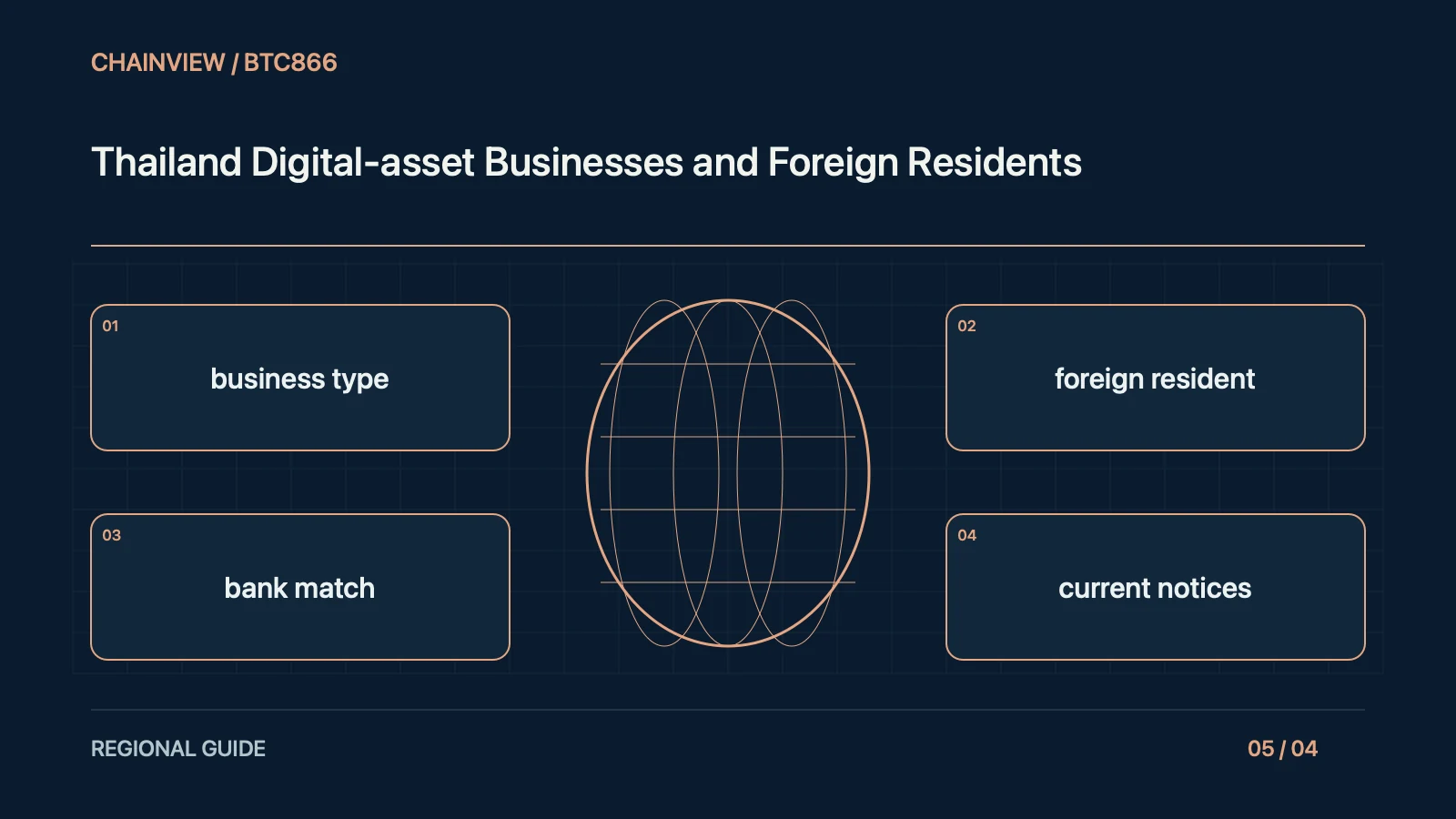
A regional verification record can begin with business type, foreign resident, bank match and current notices, linking each to official wording, retrieval date, contract and personal facts still requiring clarification. Preserve original terminology when translating. General rules, the firm’s status and the user’s eligibility are separate findings. An accessible page does not enlarge a legal permission, and incomplete facts call for a provider or qualified local assessment. Minimise disclosed personal data while retaining necessary evidence securely. Public educational material should never include identity documents, account passwords or recovery secrets. This record supports informed questions and future updates; it does not provide a universal authorisation for every reader abroad.