Original topic illustration: ChainView BTC866 original topic diagram · ChainView BTC866 Editorial · CC BY 4.0
Constituents shape representation
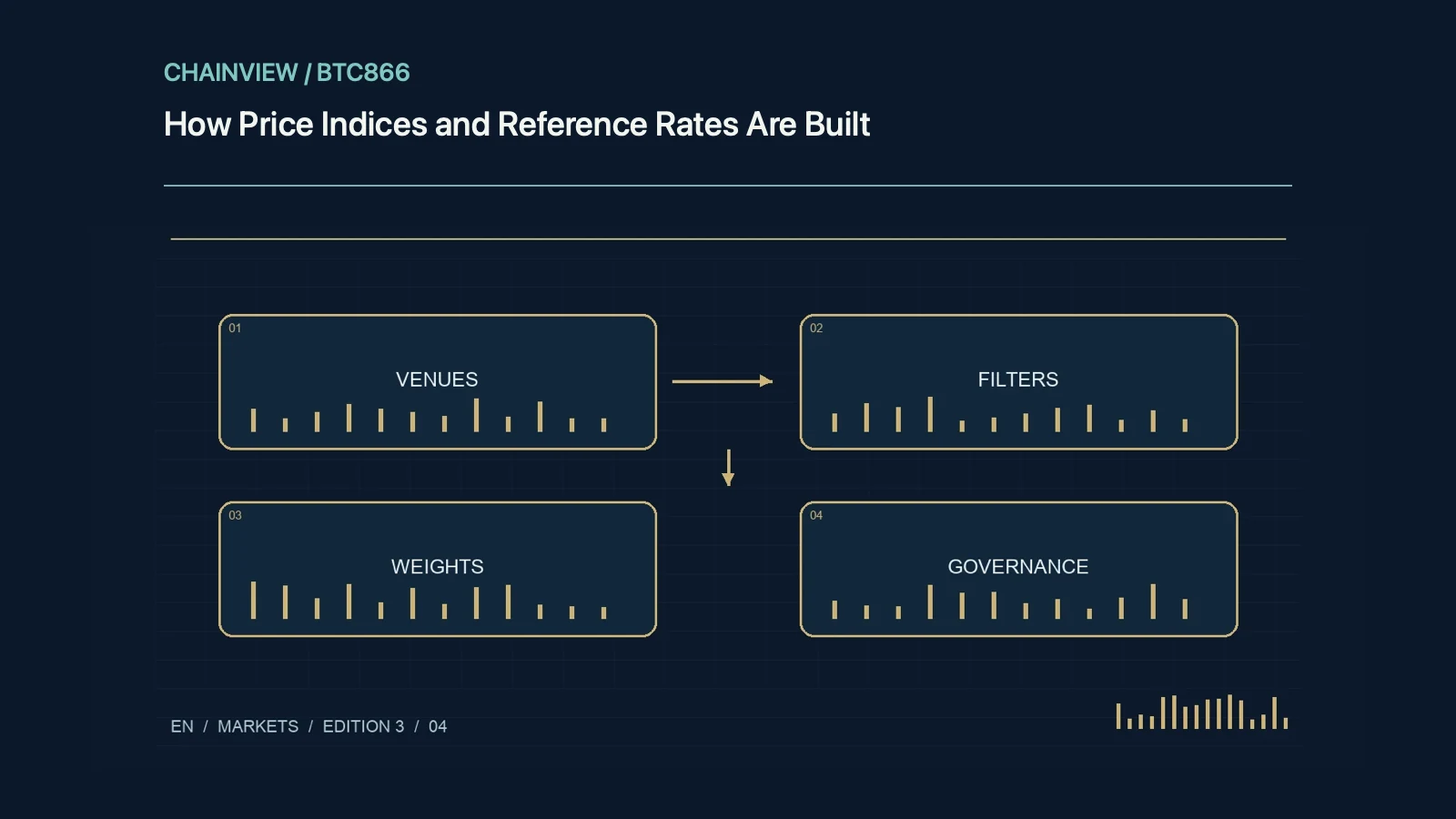
An index begins with venue, pair, and trade eligibility. Geography, access, data quality, liquidity, and conflicts affect representativeness. More inputs are not automatically better. Check stablecoin conversion and excluded pairs. Weighting by reported volume can magnify unreliable venues or prices that are difficult to arbitrage because withdrawals are constrained. Clear admission and removal rules matter more than the constituent count alone.
Sampling and outlier treatment
Last trade, midpoint, time weighting, and volume weighting respond differently to thin periods and spikes. Record window, frequency, minimum observations, rounding, and missing-data policy. Outlier treatment needs predefined rules rather than discretionary deletion of inconvenient results. Genuine extreme trades differ from feed errors. Late data, provisional values, and historical revisions also affect research and settlement; inspect methodology versions and change logs.
Governance and fallback design
Administrators need rules for outages, suspected manipulation, legal change, and venue removal. Identify emergency decision-makers, conflict controls, consultation, and fallback calculations. Inputs may share infrastructure or incentives, weakening apparent diversity. Users should know how delayed, missing, or corrected rates affect contracts. Predetermined alternative sources support consistency; selecting a convenient price after an event can violate both methodology and contractual obligations.
Recalculate a reference value
Use a public historical window, preserve trades, and reproduce each filtering and weighting step. Compare equal and volume weights without declaring either universally correct. Reconciliation should first check timezone, precision, late observations, and FX sources. An index supplies a consistent reference, not a promise of execution at any size. Research captions should state these limits instead of presenting a calculated rate as an available order-book price.