Original topic illustration: ChainView BTC866 original topic diagram · ChainView BTC866 Editorial · CC BY 4.0
Define stress from cash needs
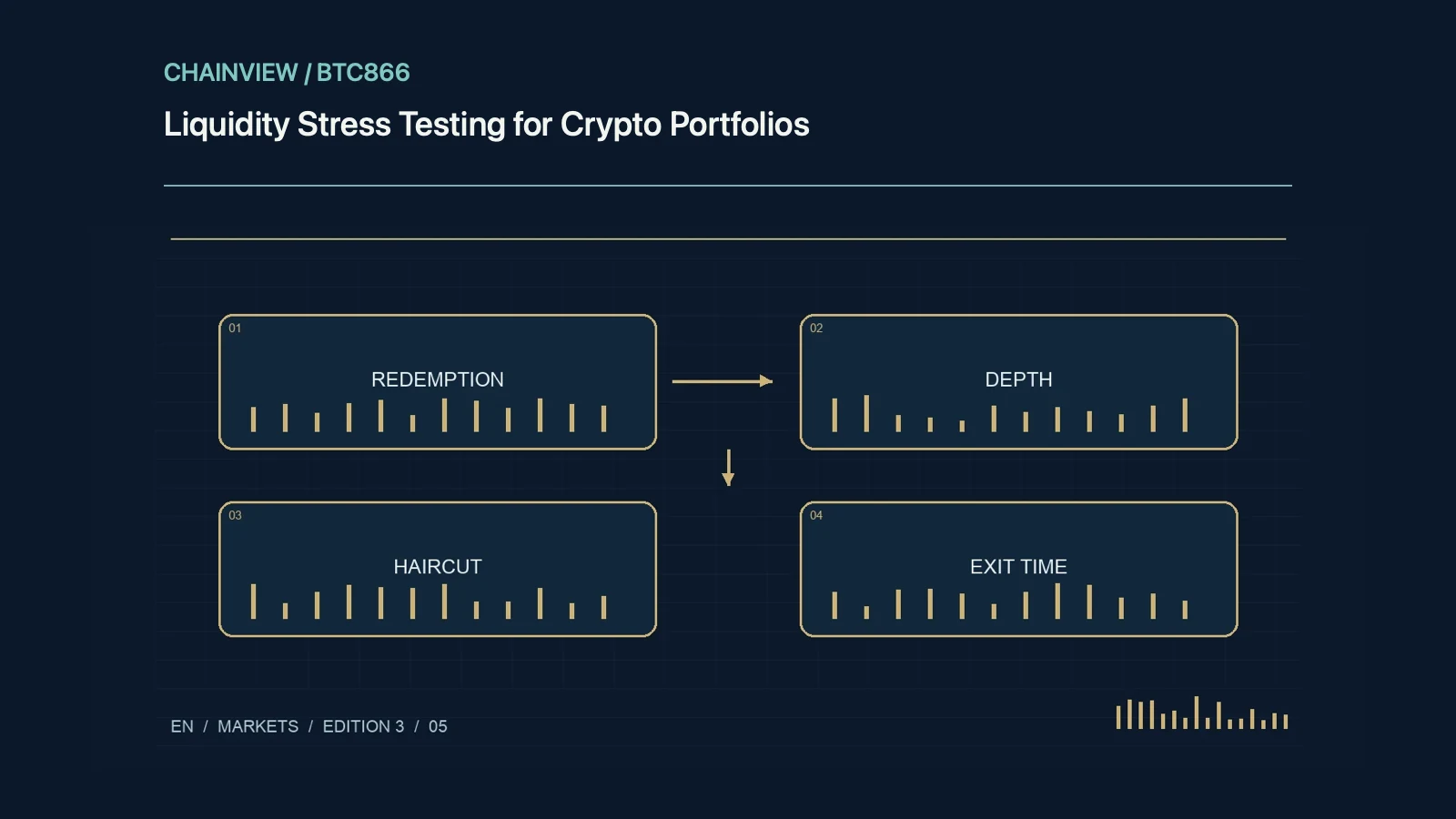
Start with how much usable cash is needed, when, and from assets that can actually and lawfully be sold. Marks are not immediately available money. Separate locks, staking, withdrawal limits, and bank settlement. Map accounts, currencies, networks, venues, and rights without counting collateral twice. A cash need or margin obligation gives the scenario a purpose; the exercise does not require predicting a particular future price.
Depth and correlations deteriorate together
A uniform price haircut still assumes executable liquidity. Stress spreads, depth, correlations, stablecoin discounts, and simultaneous channel closures. Estimate size-sensitive execution and staged exits rather than selling everything at a new midpoint. Prices can move while liquidation proceeds. Historical extremes inform scenarios but cannot bound all future combinations. Several explicit assumption levels are more informative than one precise-looking final loss estimate.
Collateral and settlement chains
Collateral haircuts can trigger margin needs, and selling collateral can affect other positions. Model order, fill, withdrawal, confirmation, conversion, and usable bank cash as distinct stages. A fast trade with a two-day withdrawal pause has not solved today's bank-cash need. Limits, fees, entity transfers, and weekends matter. Availability at one venue does not make balances elsewhere instantly transferable or equally liquid.
Turn results into a contingency plan
Report scenario, assumptions, net proceeds, waiting time, shortfall, owners, and uncertain parameters. A projected gap can motivate lower concentration, suitable buffers, and verified alternatives, rather than more leverage. Check routes proportionately through existing records and small operational tests. Stress testing supports decisions but cannot guarantee crisis prices or service availability; update it as products, residence, and account rules change.