Original topic illustration: ChainView BTC866 original topic diagram · ChainView BTC866 Editorial · CC BY 4.0
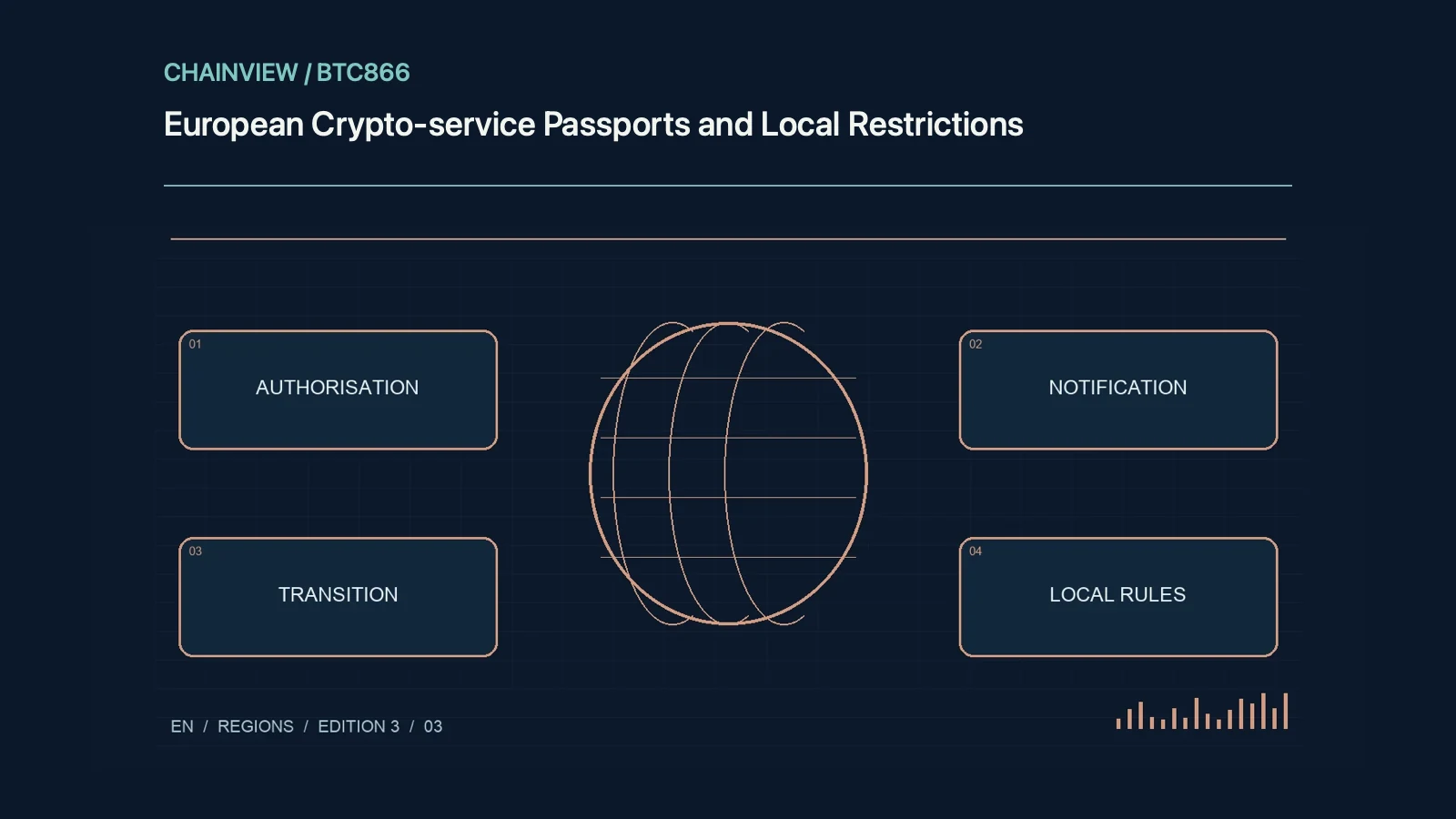
Authorisation, notification, and transition
EU crypto-service frameworks can distinguish new authorisation, cross-border notification, transition, and asset-specific requirements. Identify legal entity, service, and customer before reading EU and national guidance. One group licence does not automatically cover every affiliate, site, or product. Transitional operation has dates and scope. Record notices and effective deadlines; a planned application is not an authorisation.
Align registers with the contracting entity
Match official register name, number, status, activity, and address to onboarding, terms, invoices, and support. Brands and domains can hide different companies. Separate custody, exchange, and technology entities and their complaint routes. Registers can lag changes, so retain query times. When records conflict, seek clarification rather than selecting the most favourable interpretation.
Reverse solicitation is narrow
A user's approach and a firm's marketing are distinct. A click or language selection is not a permanent reverse-solicitation exemption. Review targeting, local content, support contact, referrals, and who initiated the relationship. Professional-client status requires definitions and verification. This is not a workaround for regulation; assess genuine residence, product eligibility, and consumer protections under applicable law and seek qualified advice when needed.
Stablecoins and product classification
Asset categories can trigger different documents, reserve, redemption, and service rules. Identify issuer, classification, disclosures, eligibility, minimums, and provider role. A trading interface is not the issuer. Local payment and marketing restrictions still matter. A one-dollar price does not establish legal status or stability. Technical standards may be phased; mark terms awaiting clarification rather than relying on community shorthand.
Keep current and decide on exit
Recheck registers, terms, notices, and residence rules. Define triggers such as entity change, suspension, withdrawal limits, or changed liability. Exit can include selling, revoking approvals, exporting statements, and retaining complaint evidence. Do not promise fast, cheap migration or appreciation. Follow current official timelines and chain state, recording unknowns and pending steps.