Original topic illustration: ChainView BTC866 original topic diagram · ChainView BTC866 Editorial · CC BY 4.0
Mechanism and rights
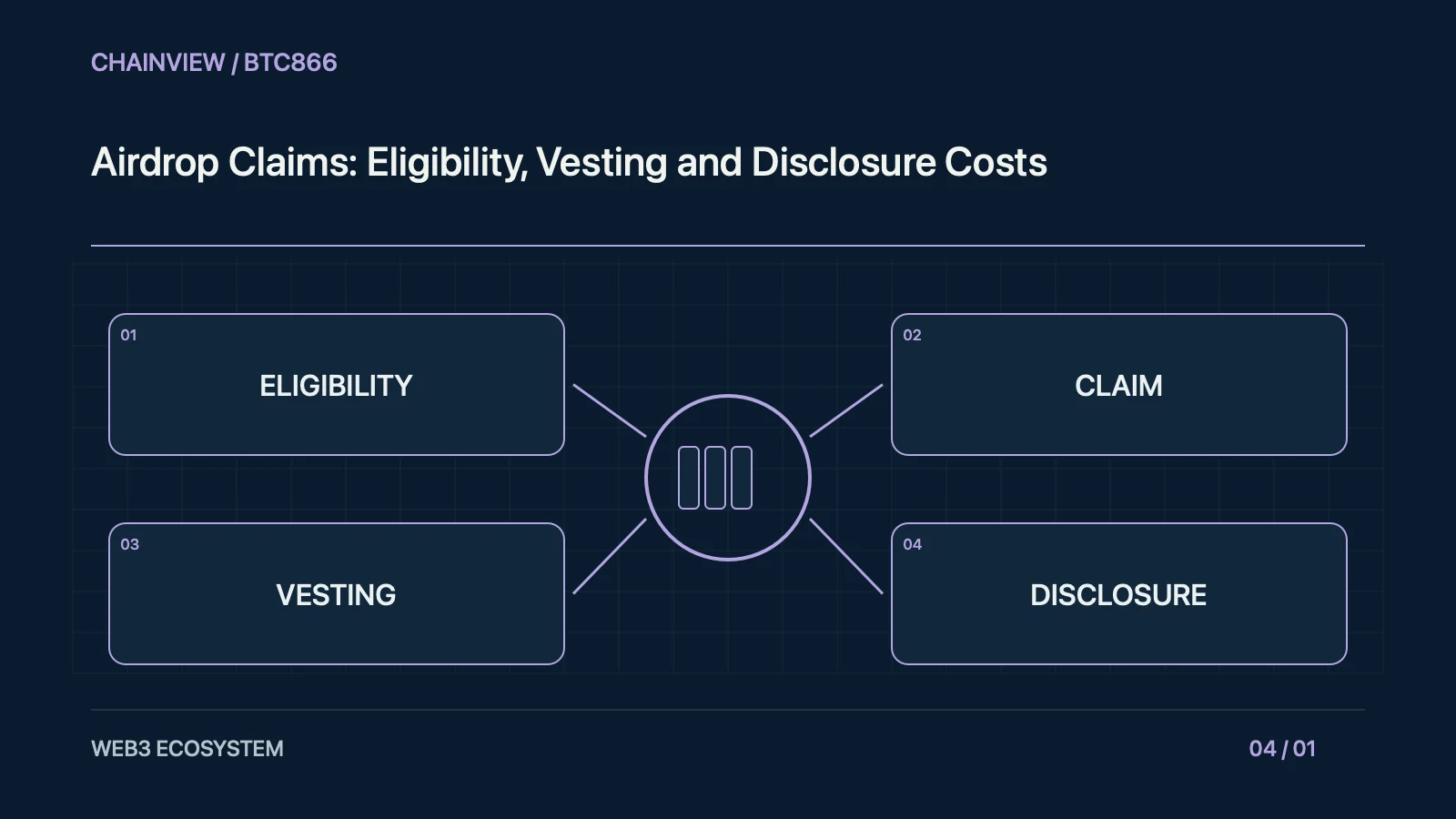
Points, whitelist status, and a final claimable allocation describe different stages. A campaign score does not necessarily create an enforceable legal right to tokens. Final rules can depend on snapshots, exclusions, identity conditions, and later review. Check the announcement date, network, eligibility method, appeal route, and revisions. Do not describe a provisional allocation as money already received, or value an uncertain entitlement at a promotional price and call the result a guaranteed return.
A snapshot needs a block or time definition, and an eligibility interface can update later than the underlying calculation. If two quantities differ, preserve address, query time, and rule version. Check whether they describe the same distribution round before taking action. A display mismatch is not evidence that an extra payment is required to activate or correct an allocation.
Records and verification
Claiming can require gas, signatures, allowances, identity disclosure, or acceptance of vesting conditions. Each creates a cost or dependency. Verify the target contract, method, recipient, permission amount, and expiry through independent official entry points. Separate a read-only eligibility check from an actual signature. Connecting a wallet does not create an obligation to proceed. A supposed support agent asking for a recovery phrase, private unlocking payment, or remote device control is a reason to stop rather than an additional claim step.
The prepared signature can differ from the advertised claim, for example by granting another contract spending authority. Compare requested actions with the explanation and reject additional permissions that cannot be justified. Authenticate even an apparently official link through an independent route. A group administrator forwarding it is not independent confirmation of its contract, domain, or requested wallet authority.
Worked limits and controls
An allocated token may not be transferable immediately. Vesting, restrictions, and thin market depth can make a displayed value very different from sale proceeds. Multiplying the entire allocation by a small-market quote does not prove that the full amount could be sold at that price. State the source, time, and executability of any valuation. Separate unvested, vested, claimable, claimed, and transferred amounts. Where no defensible price exists, preserve quantity and uncertainty instead of inventing a valuation to complete a headline.
A valuation table can show quoted price, transferable quantity, depth, and estimated fees, but these remain observations or assumptions. Applying the same price to locked and liquid portions conceals an important restriction. Separate them and avoid making the total resemble a bank balance. If quoted liquidity disappears before sale, the earlier estimate does not become a debt owed by the project.
Exceptions and actions
Cross-border readers must also check residence, contracting entity, and local disclosure requirements. Technical ability to sign is not proof of legal eligibility or suitability. Claiming and later disposing can have tax consequences depending on the arrangement and local facts. Retain the eligibility rules, receipt date, quantity, fees, valuation evidence, and later transactions for qualified advice. A guide written for another country should not silently become a filing instruction for every reader of the same language.
For identity disclosure, assess necessity, receiving entity, retention, and deletion before participating. Keeping personal records for potential tax advice is different from submitting those records to a campaign organiser. The possibility of future reporting does not justify giving an unknown project a complete identity package. Collect evidence privately and share only what a verified lawful process actually requires.
Ongoing maintenance
Declining a claim remains a legitimate choice when permissions or costs are unclear. Preserve evidence and seek official clarification rather than allowing a countdown to force a decision. After proceeding, reconcile the receipt, delivered quantity, and residual approvals before signing again. Record faulty queries and support cases instead of repeatedly submitting the claim. This article explains mechanisms and disclosure costs without promoting an airdrop or promising later compensation. Update deadlines, regional restrictions, contracts, excerpts, and diagrams together so that an old search result does not continue circulating obsolete steps.
After claiming, inspect remaining allowances and sessions and remove unnecessary permissions through trusted tools. Failure to claim does not always extinguish every right, and an extension is not guaranteed either; record the actual formal rule. Community promises are not substitutes for announcements and contract conditions. Preserve the final quantity and receipt so the claim can be distinguished from later transfers and market activity.