Original topic illustration: ChainView BTC866 original topic diagram · ChainView BTC866 Editorial · CC BY 4.0
Distinguish categories and perimeters
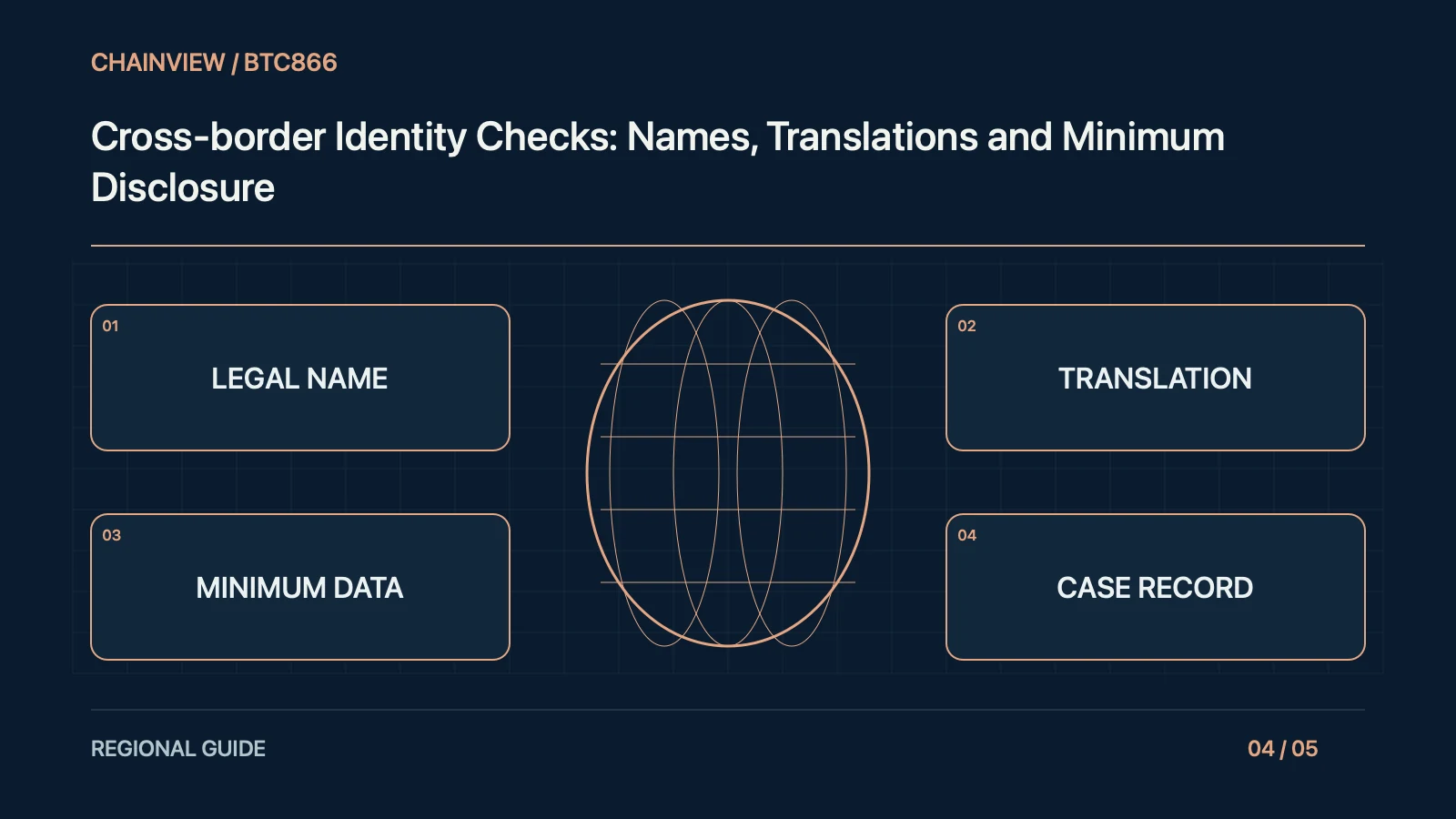
Passports, bank records, and local documents can use different name orders, romanisation, spaces, diacritics, or former names. A failed match should not be solved by changing identity facts. Inventory the genuine spellings and issuing sources, then ask the verified provider how it handles the discrepancy. Do not fabricate documents, borrow an account, or remove important name components merely to satisfy an automated field.
A name crosswalk can include original script, romanisation, document type, issuer, and date without publishing genuine identity numbers. Editorial examples should use fictional names and state that they illustrate field mapping rather than guarantee accepted formatting. The useful information is how to describe a discrepancy truthfully, not a template for modifying a document until an automated system approves it.
Verify current records
A document request should specify accepted types, validity, issue dates, address recency, and translation or certification standards. Community experience is not a substitute for the provider's current requirements. Address evidence, nationality, residence permission, and tax-residence declarations answer different questions. Overseas Chinese users may hold both Chinese-script and Latin-script records; preserve originals, proper translations, and explanations instead of treating an automatic translation as official certification or universal acceptance.
Requirements for translator credentials, certification, and address recency can differ. Obtain an explicit list before paying for translation. An old successful case can suggest a question but cannot prove current acceptance of the same document. Reconfirm after policy changes. This avoids unnecessary disclosure and expense while keeping the provider responsible for stating what its actual verification process needs.
Read applicable terms
Before uploading, verify the domain, secure channel, privacy policy, retention period, and redaction rules. Share only what is necessary. Some fields may be redactable while others are essential; follow genuine written requirements without altering facts. Avoid sending complete identity files, verification codes, or recovery words through private support chats. A financial account identity check should not require the seed phrase of a self-custody wallet.
Redaction must not alter authenticity or conceal a material fact required for verification. If privacy concerns conflict with a request, ask about an alternative through the official channel. Record the uploaded version and scope. Sending several inconsistent versions without explanation can make a simple transliteration question harder to resolve and create a record that neither the customer nor the provider can later interpret confidently.
Keep personal evidence
Retain case number, dates, submitted-file inventory, translator or certification details, and provider responses. Repeatedly submitting inconsistent versions can create further conflicts. Describe a name mismatch by its exact fields and seek the official next step rather than testing several questionable portals. If a request changes unexpectedly, authenticate its source again. A fake supplementary-document notice can exploit a real verification problem to collect identity records from a frustrated customer.
Verify links in support replies through the authenticated account route, since forwarding or impersonation can change a destination. There is no automatic need to send a complete package again to a different person offering faster processing. Follow the existing case or a clearly verifiable escalation process. Urgency is not evidence that an unofficial upload link or personal messaging account belongs to the provider.
Maintain and seek qualified review
After completion, confirm that account details are accurate and understand retention and deletion policies for old documents. Update genuinely expired records through verified channels. Seek qualified advice for personal legal or tax declarations; one platform accepting a document does not establish acceptance by every authority. This guide offers data minimisation and a traceable resolution process, helping readers address transliteration while protecting identity information without promising that any particular application will be approved.
Minimise long-term retention according to legal and practical needs. Before deleting local copies, confirm that necessary compliance evidence and secure backups remain. One institution accepting a name explanation does not update every other institution's records. Maintain genuine information separately where needed so later cross-platform comparisons do not recreate the mismatch. The goal is consistent truthful records with controlled disclosure, not a claim of universal acceptance.