Original topic illustration: ChainView BTC866 original topic diagram · ChainView BTC866 Editorial · CC BY 4.0
Registration is not general endorsement
New Zealand's Financial Service Providers Register helps identify entities and services. Registration is not government approval of investment quality or a blanket licence for every crypto activity.
Record the retrieval date and exact name alongside listed company and service information. An accessible page does not establish that every promoted business remains covered. An old screenshot is not current status, and a relationship between a local name and foreign affiliate needs separate confirmation.
A listing on New Zealand's Financial Service Providers Register identifies registration information and must not be presented as a general government endorsement.
Let the activity guide the check
Trading, custody and investment products can raise different requirements. Compare FMA information with the actual service, not only its crypto label. Use current notices and product-specific terms.
If an activity requires another licence or rule, a FSPR entry does not replace it. FMA consumer material can identify the questions to ask without deciding every personal arrangement. Preserve unresolved points rather than inventing an authority response or implying that a general educational page approved a particular product.
Check the exact entity, registered services and any applicable licensing status with the FMA; obligations depend on the activity rather than the use of the word crypto.
Check for an overseas contract
A local brand can direct users to a foreign affiliate. Read terms, invoices and support information to identify the party. Website access does not prove that a New Zealand dispute scheme covers the contract.
A dispute scheme can impose customer categories, deadlines and service boundaries. Keep the contract, complaint history and provider response before asking about acceptance. A complaint badge cannot guarantee identical handling for every overseas resident or every dispute involving a token, particularly when an offshore affiliate is the contracting party.
Confirm whether a dispute-resolution scheme covers the customer and service in question, especially when the contract names an overseas affiliate.
Keep NZD evidence and warnings
Preserve valuations, trade times, fees and bank records. Review official warnings and restrictions. Registration does not turn crypto into insured bank deposits or guarantee recovery after a provider failure.
For currency conversion, retain the NZD source and timestamp, keeping a separate column when a provider reports in dollars. Reconcile asset units and local value separately so exchange-rate movements do not become fictional trades. Tax classification depends on applicable rules and facts rather than an automatic conclusion from this article.
Retain NZD valuations, service terms and transaction records, and review official warnings without assuming that registration makes deposits insured or crypto losses recoverable.
Confirm complaint coverage
Verify whether the customer, service and dispute type fall within a scheme, keeping notices and case references. Ask the institution or a qualified local adviser when unclear. A badge cannot establish an unconditional compensation right.
Submit only necessary evidence through a secure complaint route, never private keys to a social-media recovery representative. Verify similar-looking institution names and domains before sharing records. Ongoing maintenance should review scope, contact information and official warnings instead of relying forever on one saved registration screenshot.
A reader can test the information chain by matching the entity in account terms with the register and the named dispute scheme. If one link differs, ask for clarification before assuming coverage. Preserve any response with its date and scope. This narrow reconciliation is more reliable than inferring protection from a local phone number or a recognisable logo, while still leaving product risk and individual legal rights to the relevant terms and applicable law.
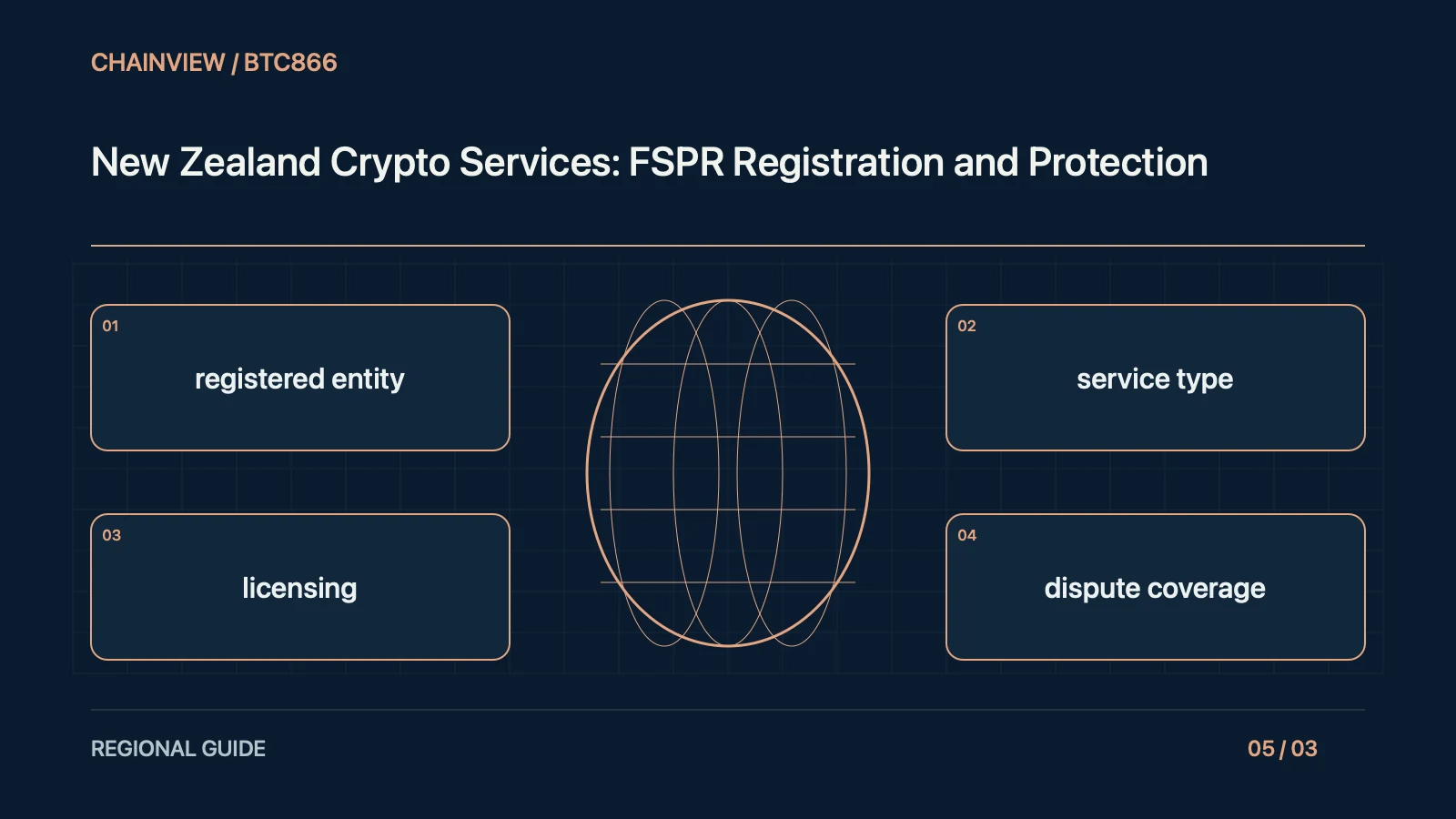
A regional verification record can begin with registered entity, service type, licensing and dispute coverage, linking each to official wording, retrieval date, contract and personal facts still requiring clarification. Preserve original terminology when translating. General rules, the firm’s status and the user’s eligibility are separate findings. An accessible page does not enlarge a legal permission, and incomplete facts call for a provider or qualified local assessment. Minimise disclosed personal data while retaining necessary evidence securely. Public educational material should never include identity documents, account passwords or recovery secrets. This record supports informed questions and future updates; it does not provide a universal authorisation for every reader abroad.