Original topic illustration: ChainView BTC866 original topic diagram · ChainView BTC866 Editorial · CC BY 4.0
Shares versus cash flows
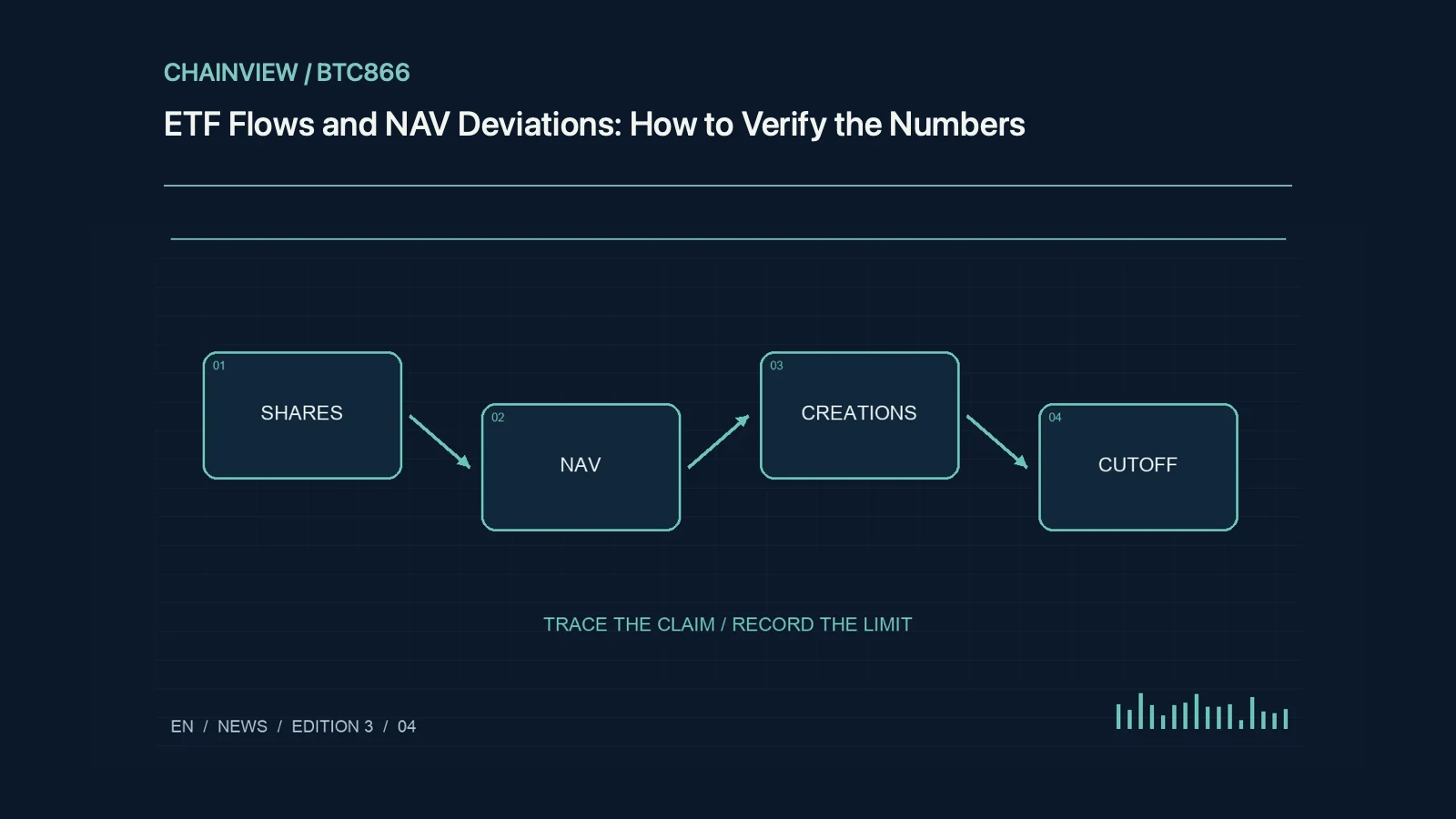
Secondary-market turnover, net subscriptions, assets, and price returns answer different questions. Trading existing shares does not itself change fund holdings. Check product, share class, currency, and date, then distinguish official flow reporting from estimates based on shares and NAV. Creation and redemption can use different arrangements across products and periods; consult the operative documents rather than assuming one cash or in-kind model applies universally.
Align NAV and market-price times
NAV uses a specified valuation time and reference methodology, while share prices move during exchange hours. Cryptoassets can trade when the fund's shares cannot. Comparing a weekend underlying price with Friday's share close creates a timing mismatch. Record time, benchmark, fees, holiday treatment, units, and currency. Distinguish per-share NAV from total assets and inspect table scaling before quoting a dollar amount.
Understand errors in flow estimates
Estimated flows depend on the NAV date, recognition of share changes, splits, distributions, and revisions. Rising assets may reflect rising underlying prices rather than new subscriptions. Providers can use trade-date or settlement-date conventions. Holdings files help reconciliation, but timing, fees, and unsettled positions can still create gaps. State the method and residual error instead of presenting an estimate as an exact cash ledger.
Keep conclusions within the evidence
If assets rise from one billion to 1.1 billion while prices rise ten percent and shares stay constant, there is no evidence of one hundred million in subscriptions. Reconcile shares, NAV, prices, and timestamps. Even confirmed creations do not identify every investor or predict future demand. Link source files and calculations, label estimates, and avoid converting a single daily flow into a trading promise.