Original topic illustration: ChainView BTC866 original topic diagram · ChainView BTC866 Editorial · CC BY 4.0
Mechanism and observed state
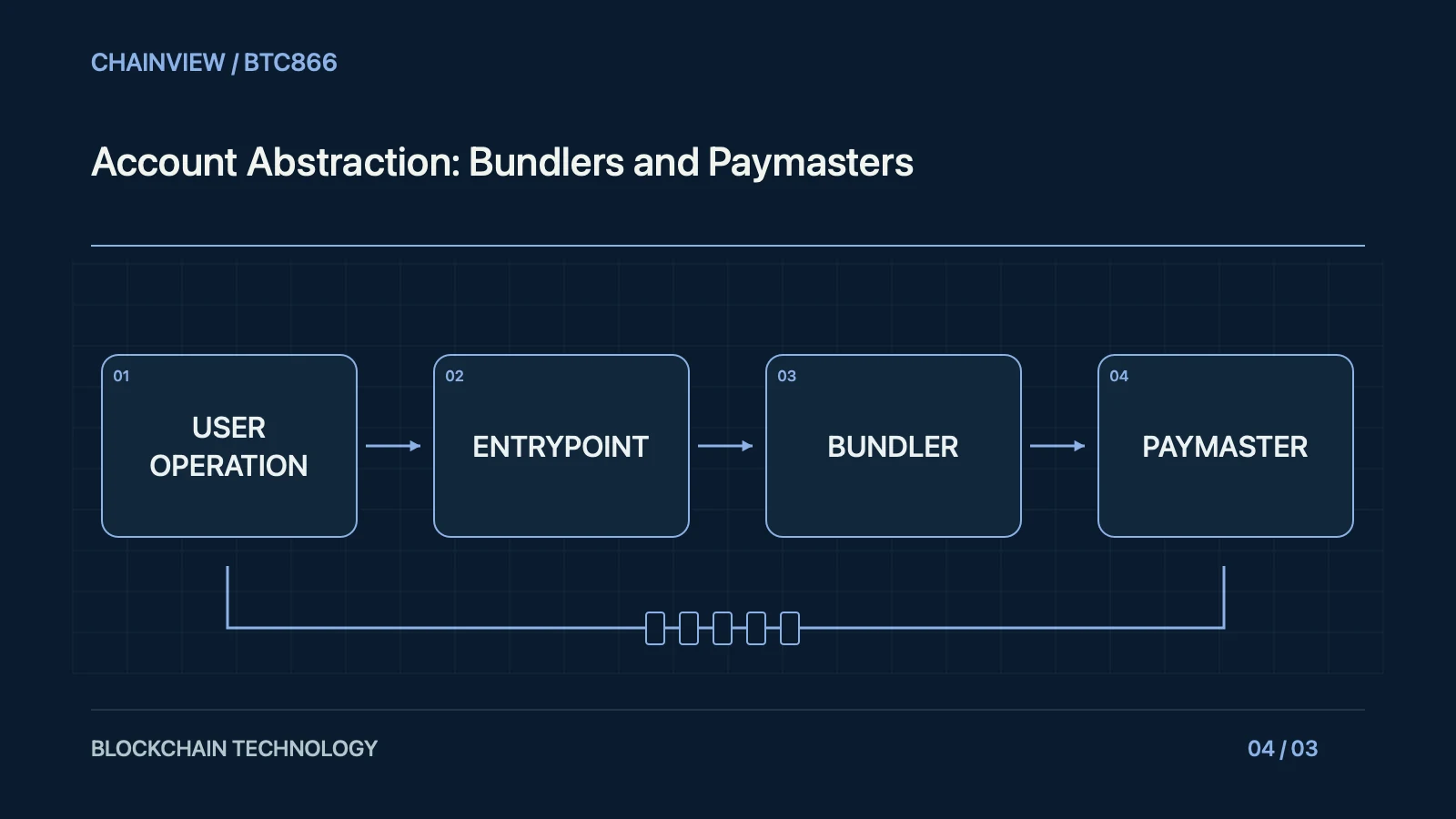
An ERC-4337 user operation is validated by a smart account and handled through an EntryPoint with a bundler. It should not be described as an ordinary transaction directly signed by a conventional externally owned account. Its user-operation hash can differ from the final blockchain transaction hash, so keep both when seeking support. Identify the network, EntryPoint version, account implementation, and bundling service before relying on a broad account-abstraction label.
An endpoint can acknowledge a user operation before it is included on-chain. Make that intermediate state visible to the user. Record the service URL and operation hash, then link the eventual transaction so the history remains intelligible if the provider changes. A vendor database entry is useful operational evidence, but it should not be described as a blockchain receipt.
Validation workflow
A bundler can simulate and filter operations, but simulation observes a particular state that can change before inclusion. A successful simulation therefore does not guarantee execution. Nonces, balances, validation conditions, time windows, and service policies can cause rejection. Distinguish validation errors, execution failures, and network-service problems. Match error codes to the exact implementation version, and avoid repeatedly signing the same payment merely because a dashboard has not updated or an endpoint timed out.
Different bundlers can apply different acceptance policies to the same proposed operation without either necessarily malfunctioning. Compare supported methods, networks, fee policies, and validation rules. Preserve the original error code and version in a support report instead of only saying that the wallet does not work. That detail helps distinguish unsupported configuration from a failed account validation or temporary service interruption.
Authority and execution limits
A paymaster sponsors fees only under its validation rules and funding conditions. Free gas can be limited by user, method, budget, period, or region, and availability can change when funding is exhausted. Read whether a token fee is collected, how conversion is calculated, and who bears costs when execution fails. One sponsored success does not establish permanent free access. Necessary actions need a documented fallback, not an unknown site's request to transfer an activation payment.
Sponsorship can apply only to specific calls or limits. Adding another action to a batch can make the whole request ineligible. Check each requested call and establish whether the fallback asks the user to pay in a native asset. A good interface should reveal that change before signing rather than silently converting an apparently sponsored request into an unexpected user-funded operation.
Diagnosis and testing
Smart-account upgrades, recovery modules, session keys, and administrator controls create additional trust boundaries. Convenient recovery can depend on guardians or a provider, while batched calls can combine several actions under one authorisation. Review module installation, scope, expiry, and revocation, and establish whether another compatible interface remains usable if a vendor stops operating. Account abstraction can improve interaction without eliminating contract defects, permission mistakes, or dependence on external services and key-management arrangements.
List recovery and session modules with their controllers and change events. Before removing a module, confirm another reliable signing or access route remains. Do not delete the only credential merely to rehearse recovery, and do not authenticate a supposed guardian through an unknown chat account. Recovery convenience needs an identity and continuity plan as well as a technical contract mechanism.
Outcome and evidence
A practical test plan covers unavailable sponsorship, insufficient paymaster funding, temporary bundler failure, and revoked modules. Preserve the user-operation identifier and final receipt. Check whether a batch reverts atomically or permits some calls to succeed, then reconcile assets and permissions rather than relying on a single success badge. The useful questions are who validates, who pays, who can upgrade, and what happens on failure. A simpler button does not mean that the underlying operation has fewer conditions or responsibilities.
Reconciliation should inspect each intended call, the actual fee payer, and residual permissions in addition to overall transaction status. A contract update can change batch semantics, so revisit implementation versions and tests after upgrades. An early wallet demonstration is not permanent evidence for every future configuration. Preserve both the user-visible request and the final effects so a later reviewer can compare intent with execution.