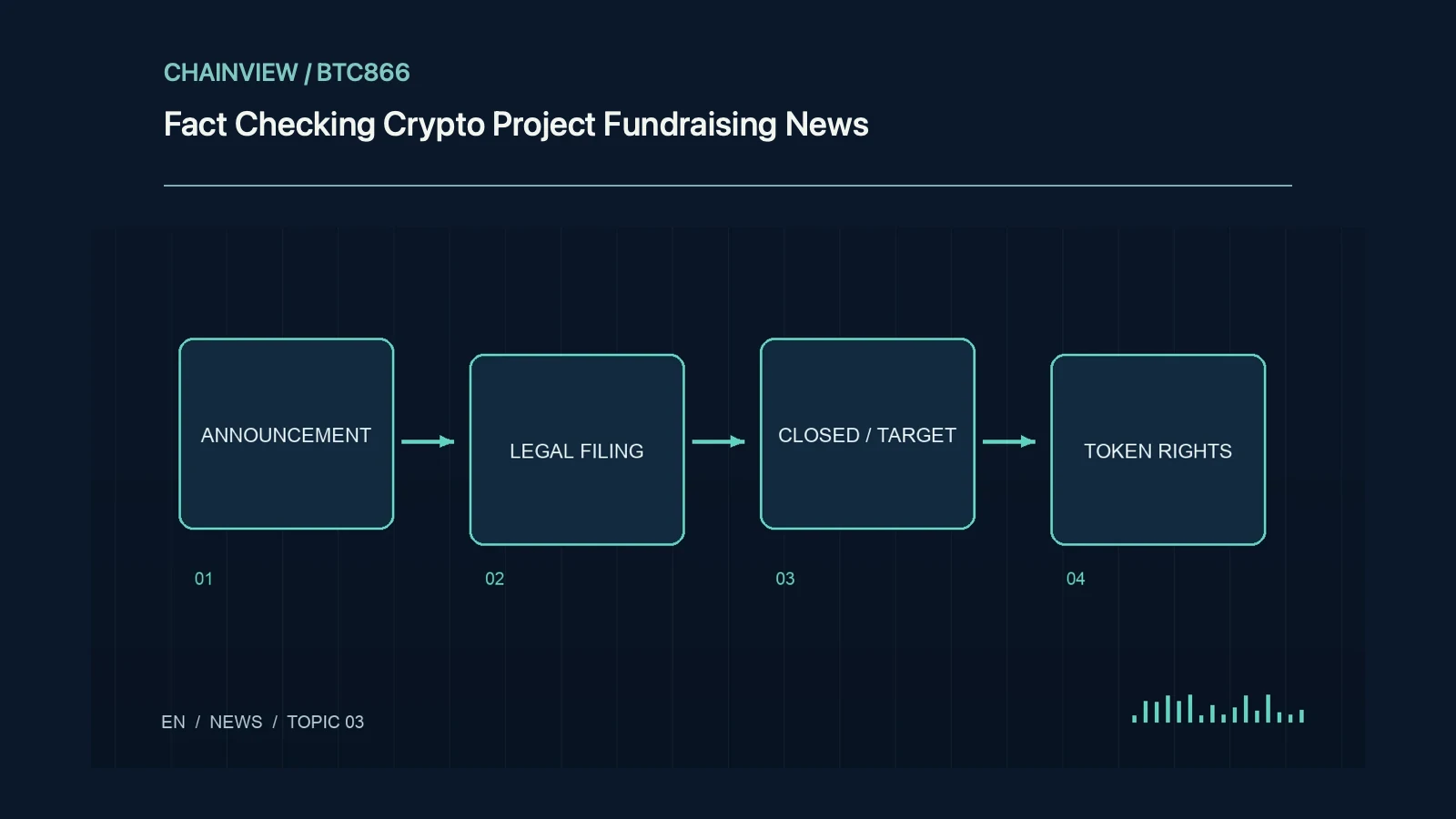
Original topic illustration: ChainView BTC866 original topic diagram · ChainView BTC866 Editorial · CC BY 4.0
Identify the parties
Identify the financed legal entity and its relationship to the token, foundation, and product brand. Investing in a developer company is different from buying a network asset. Verify investors through their own announcements or filings. Advisors, commercial partners, market makers, and equity investors have different roles; a displayed logo is not sufficient evidence of investment.
Amounts and valuation
A fundraising figure may mean cash received, signed commitments, a target ceiling, or cumulative rounds. Distinguish pre-money from post-money equity valuation and from token fully diluted valuation. Mark undisclosed terms as unknown. Currency conversion dates and noncash contributions matter; a secondary-market token price cannot establish the terms of a private financing.
Instruments confer different rights
Equity, preferred shares, convertible notes, future-equity agreements, and future-token agreements confer different rights. Private investors may receive liquidation preferences, conversion discounts, board seats, or information rights that token holders lack. Record the instrument and its rights separately. Company growth does not automatically create a contractual value-transfer mechanism for a publicly traded token.
Vesting and circulating supply
Check the lockup, vesting start, release frequency, and acceleration conditions. A one-year lock can precede a single release or later linear vesting; team and investor schedules can differ. Reconcile public calendars with contracts and allocation documents. Transfers alone do not prove sales, although concentrated unlocks can change circulating supply and ownership distribution.
Use of funds and runway
Hiring, research, marketing, and ecosystem incentives are different expenses. Match stated uses with releases, audits, product activity, and financial reporting. A large headline raise does not establish operating runway: debt repayment, deal costs, restricted funds, and noncash assets can reduce the cash actually available to execute the roadmap.
Create a financing fact sheet
Build a fact sheet with date, entity, instrument, currency, disclosed amount, investors, vesting, and missing terms. Reconcile project and investor statements, preserving conflicting versions. Separate established facts, reasonable questions, and unverifiable promotion. Participation by a recognized institution does not guarantee security, regulatory compliance, or a positive future return.
Worked review example
Suppose a headline reports ten million raised, but six million has closed and four million remains conditional. Separate received funds from commitments, and do not treat the headline total as unrestricted cash. If investors purchased preferred shares in the developer company while the token provides protocol utility, the rights remain distinct. List vesting, board rights, and undisclosed provisions separately. These hypothetical figures show how to reconcile announcements; they are not estimates for a real project. The resulting fact sheet should explain what was announced, what has completed, and which economic benefits cannot be inferred for ordinary token holders.