Original topic illustration: ChainView BTC866 original topic diagram · ChainView BTC866 Editorial · CC BY 4.0
What the public ledger reveals
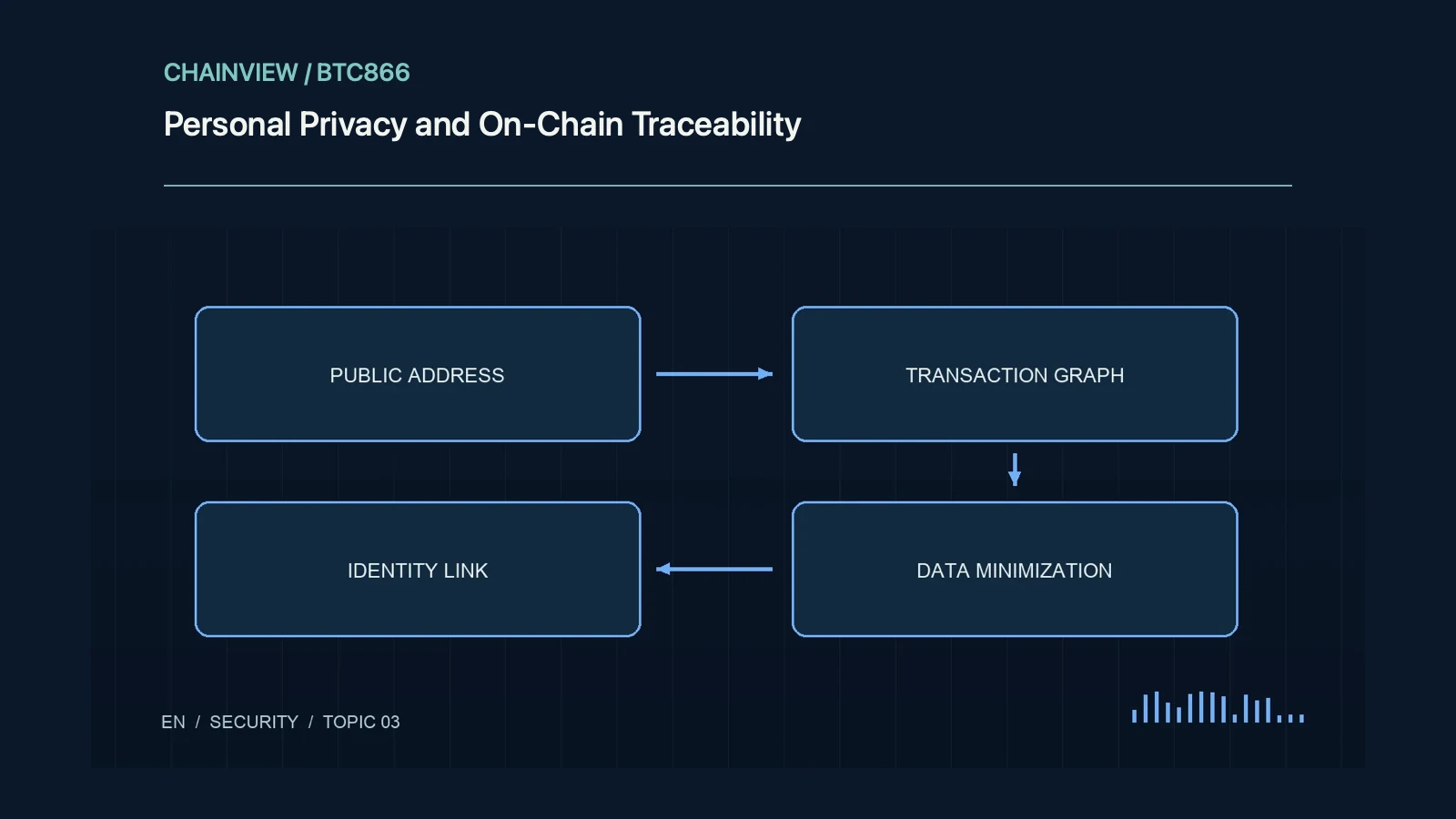
Public chains can expose addresses, amounts, timing, and contract interactions without displaying names. Addresses do not map reliably one-to-one to people because of custody, shared control, and automation. Identify public fields and their potential links to personal records. The absence of an identity document on-chain does not imply untraceability.
Limits of clustering heuristics
Common inputs, change patterns, repeated amounts, and timing can suggest relationships, but heuristics are not proof of common ownership. Specialized transactions can create false positives. Review methodology, confidence, and update dates before interpreting labels. A flagged address does not by itself establish a person offense, and an unlabeled address is not necessarily safe.
How off-chain records connect
Exchange verification, merchant orders, public payment codes, and social profiles can link identity to addresses. Sharing a transaction hash may expose counterparties and history. Check what evidence is actually required before publishing it. Data minimization should coexist with lawful reporting and source-of-funds records rather than being treated as an exemption from them.
Limits of account separation
Purpose-separated accounts can reduce obvious disclosure, but funding and behavioral links remain. A new wallet does not guarantee anonymity. Separation increases backup, accounting, and tax-record complexity, so document purpose and control. Too many poorly managed accounts can raise loss risk rather than improving overall protection.
Privacy when querying data
Wallet providers and explorers may observe IP addresses, queried accounts, and access times. Review retention policies and unnecessary tracking. Running a node can improve some aspects of data control but requires resources and does not eliminate network visibility or device compromise. Evaluate each tool against a specific threat rather than an abstract promise of privacy.
Review disclosure risk
Review previously published addresses, codes, and screenshots for links to identity or wealth. On-chain records cannot be guaranteed erasable, so change future disclosure habits while retaining necessary evidence. Preserve harassment evidence and use official channels. Do not pay services claiming to remove blockchain history; privacy management reduces exposure over time rather than erasing every past trace.
Worked review example
A profile address and matching payment screenshot can connect identity with historical activity. Changing a display name does not erase records; direct funding can link a new address. Inventory public disclosures and known relationships, then reduce future exposure while preserving necessary evidence. Evaluate tools against specific threats and reject promises of completely erasing an on-chain identity.