Original topic illustration: ChainView BTC866 original topic diagram · ChainView BTC866 Editorial · CC BY 4.0
Align transaction dates with the accounts
An announced purchase and a financial statement's period-end holding can describe different dates. Identify the reporting entity, reporting interval and asset form. Fund shares, derivative exposure and directly held bitcoin are not interchangeable. Reconcile purchases and sales before comparing holdings, and avoid counting the same assets in both a parent and subsidiary total.
Filings have both a reporting period and a publication date. A subsequent-event purchase must not be added to an earlier closing balance and described as if already held then. Separate a purchase commitment, an order and completed settlement. Those stages affect quantity accounting and should remain visible in a short news summary.
An announced purchase and a reported period-end holding refer to different dates; reconcile transaction timing with the financial statement reporting period.
Read the statements together
The balance sheet is a point-in-time position; cash flows explain funding movements, and notes describe measurement and restrictions. A valuation gain is not necessarily cash earned through operations. Check the applicable accounting policy for the period rather than assuming an older method. A guessed blockchain address is not a substitute for an issuer's audited disclosure.
Check whether the notes separately identify acquisition cost, carrying value and measurement changes. Confirm currencies and units before comparison. Total assets can rise because of an acquisition or unrelated business while coin quantity remains unchanged. One table cell cannot establish stronger operations or an ability to sell every asset immediately at its mark.
Read the balance sheet, cash-flow statement and notes to distinguish direct digital-asset ownership, fund shares, derivatives and operating exposure.
Examine how purchases were funded
Cash reserves, debt, convertible instruments and new shares allocate risks differently. Interest, maturity, collateral terms and dilution can affect shareholders even if the cryptocurrency price is unchanged. Coins per share cannot capture the entire capital structure. A company also has operating activities, taxes and competing claims, so its shares are not a frictionless substitute for direct ownership.
Describe convertible terms, preferred claims and common-share dilution separately. Raising cash does not make capital free, and an equity premium can contract. If collateral or covenant details are undisclosed, retain that uncertainty rather than assuming unrestricted bitcoin can be moved at any time without affecting other obligations.
Debt, convertible securities or new equity can fund purchases and introduce financing costs, covenants, maturity risk or dilution separate from token prices.
Make a quantity reconciliation
In a hypothetical example, a company starts with 100 units, buys 20 and sells five, leaving 115 before other movements. Keep this quantity bridge separate from reported value, which also depends on price and accounting. Financing raised but not invested is not already a coin holding. The example explains reconciliation and makes no claim about a current public issuer.
A quantity-bridge discrepancy can reflect fees, transfer classification or reporting scope. Do not invent an implied purchase to make the table balance. Keep native units beside reporting-currency values to expose conversion differences. Research should use legitimate disclosures, not employee tracking or attempts to obtain private wallet information.
Record the named reporting entity, custody disclosures and valuation policy; a treasury strategy is not an endorsement or a reliable proxy for the underlying coin.
Describe custody and disclosure gaps
Read whether assets are restricted, who provides custody and what the issuer says about control and counterparties. A named custodian does not guarantee the absence of loss. Distinguish facts disclosed in the report from matters left unanswered. Update comparisons when subsequent filings or corrections arrive, retaining the original reporting dates rather than silently mixing periods.
Explain that corporate credit, governance and operating income remain relevant. Company shares are not a fixed-multiple bitcoin receipt. Funds, debt and common equity also have different claims and priority. Understanding those rights is more informative than treating the number of coins in an announcement as a complete investment thesis.
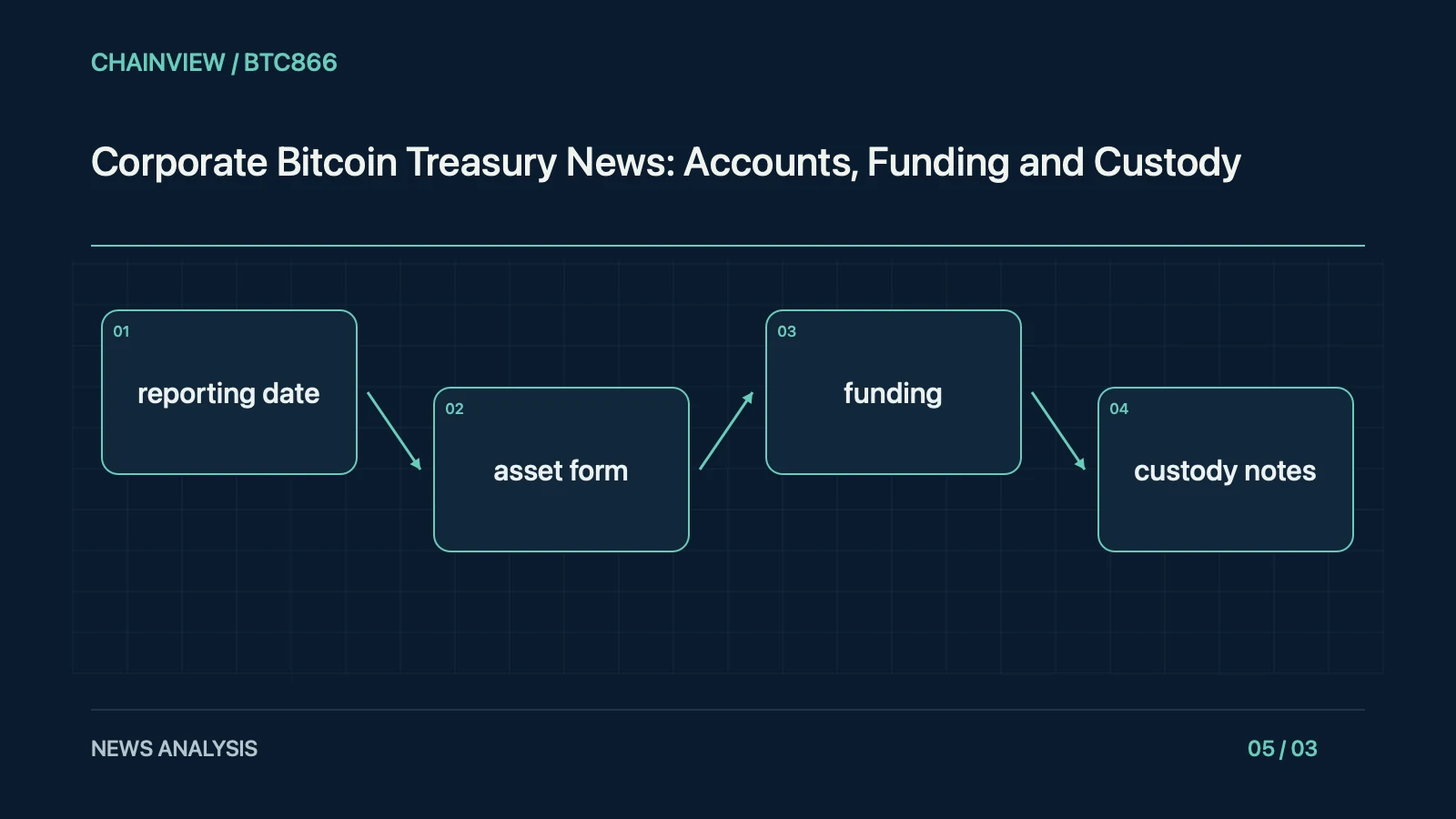
For this story, create four evidence columns headed reporting date, asset form, funding and custody notes. In each, retain the original passage, publisher, date and unresolved question. Separate completed events from interpretation and future conditions; the headline should rely only on supported findings. Preserve the original retrieval when a source changes and explain which conclusion was revised. Repetition across popular accounts is not independent confirmation when they all trace to one announcement. A reader should be able to follow the article back to the underlying document without trusting a screenshot, a familiar logo or an unexplained numerical comparison.