Original topic illustration: ChainView BTC866 original topic diagram · ChainView BTC866 Editorial · CC BY 4.0
Separate personal eligibility conditions
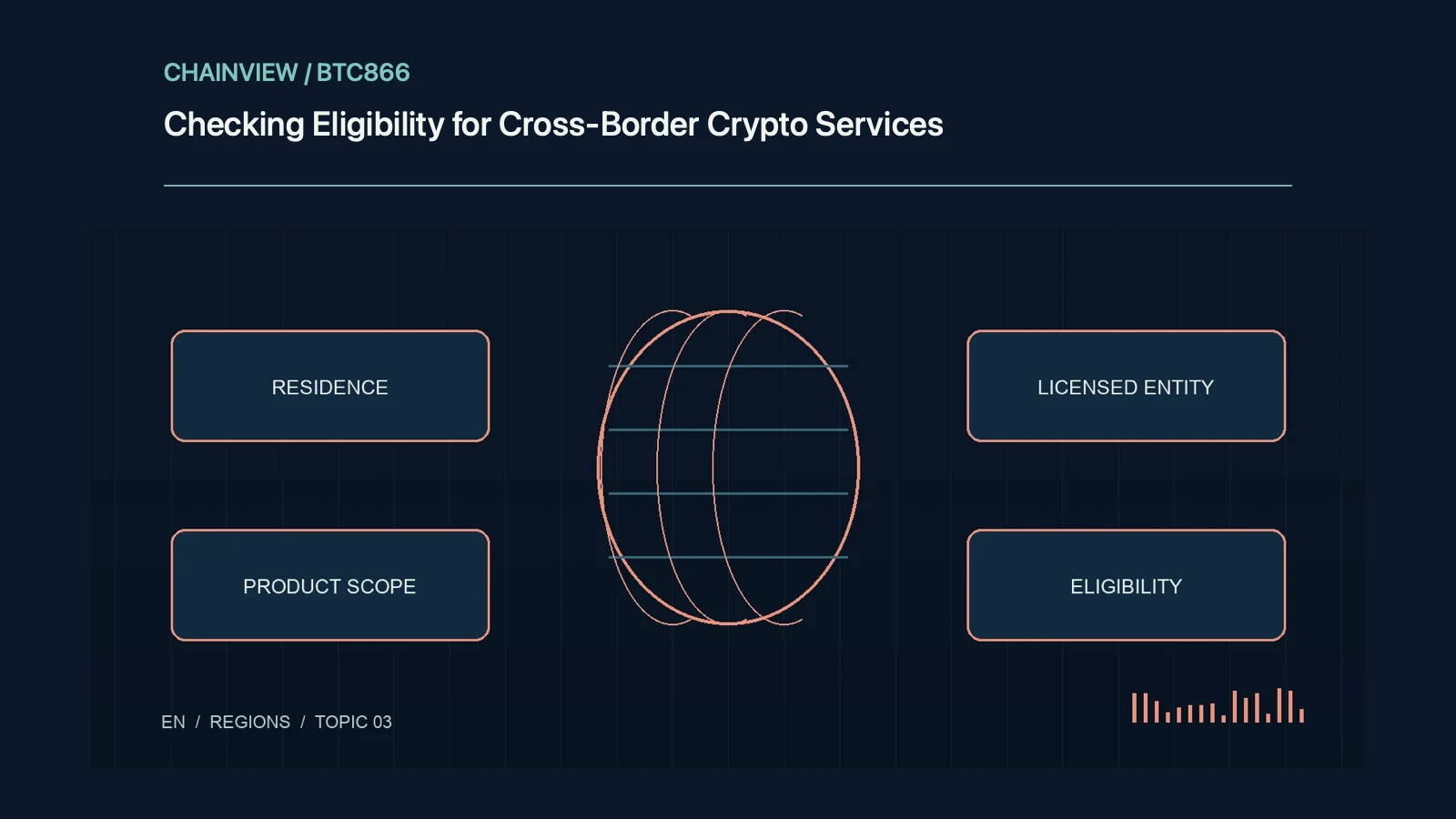
Nationality, residence, tax residence, and contracting entity can point to different places. Document actual circumstances and activity dates, then check product-specific terms. Language support, accepted passports, and app availability do not establish unrestricted eligibility. Resolve uncertainty through official support without false addresses or borrowed identities.
Identify the contracting entity and license
One brand may use several entities with different custody and complaint arrangements. Match the legal entity in the agreement to the official regulator register, including activities and status. Registration need not cover every product or guarantee assets. Compare addresses and domains to detect impersonation of licensed businesses.
Check restrictions by product
Spot, lending, derivatives, staking, payments, and issuance can follow different rules. Verified account access does not automatically authorize every new product. Preserve terms at onboarding and use, and review changes after moving. Circumventing technical controls does not change legal eligibility and can complicate withdrawals, disputes, and source-of-funds checks.
Cross-border records and tax duties
Cross-border activity can involve reporting, information exchange, provenance, and currency rules, depending on facts and status. Keep trade, migration, residence, and fiat-transfer records. Platform statements are not final tax determinations. Where residence is uncertain, use official rules and qualified advice rather than the location of a website or server.
Continuity when relocating
Before relocating, review address updates, reverification, entity changes, legacy positions, and withdrawal deadlines. Export statements and check banking and authentication access in the destination. Transitional arrangements vary; rely on written notices. Losing a phone number or bank access after arrival can make account recovery much harder.
Maintain an eligibility file
Keep a protected file of residence evidence, entity, official register links, terms, support replies, and check dates. Submit only necessary identity information through verified channels. Recheck after policy or personal changes. Eligibility review can reduce disruption, but cannot guarantee business continuity or replace advice about specific legal and tax obligations.
Worked review example
A passport from country A, residence in B, and contract with entity C require separate analysis. Record actual residence, tax status, entity, and product, then verify official registers and terms. Preserve updates after moving. Where definitions conflict, seek qualified advice rather than changing technical location to conceal facts. The file should show the evidence available at the time.