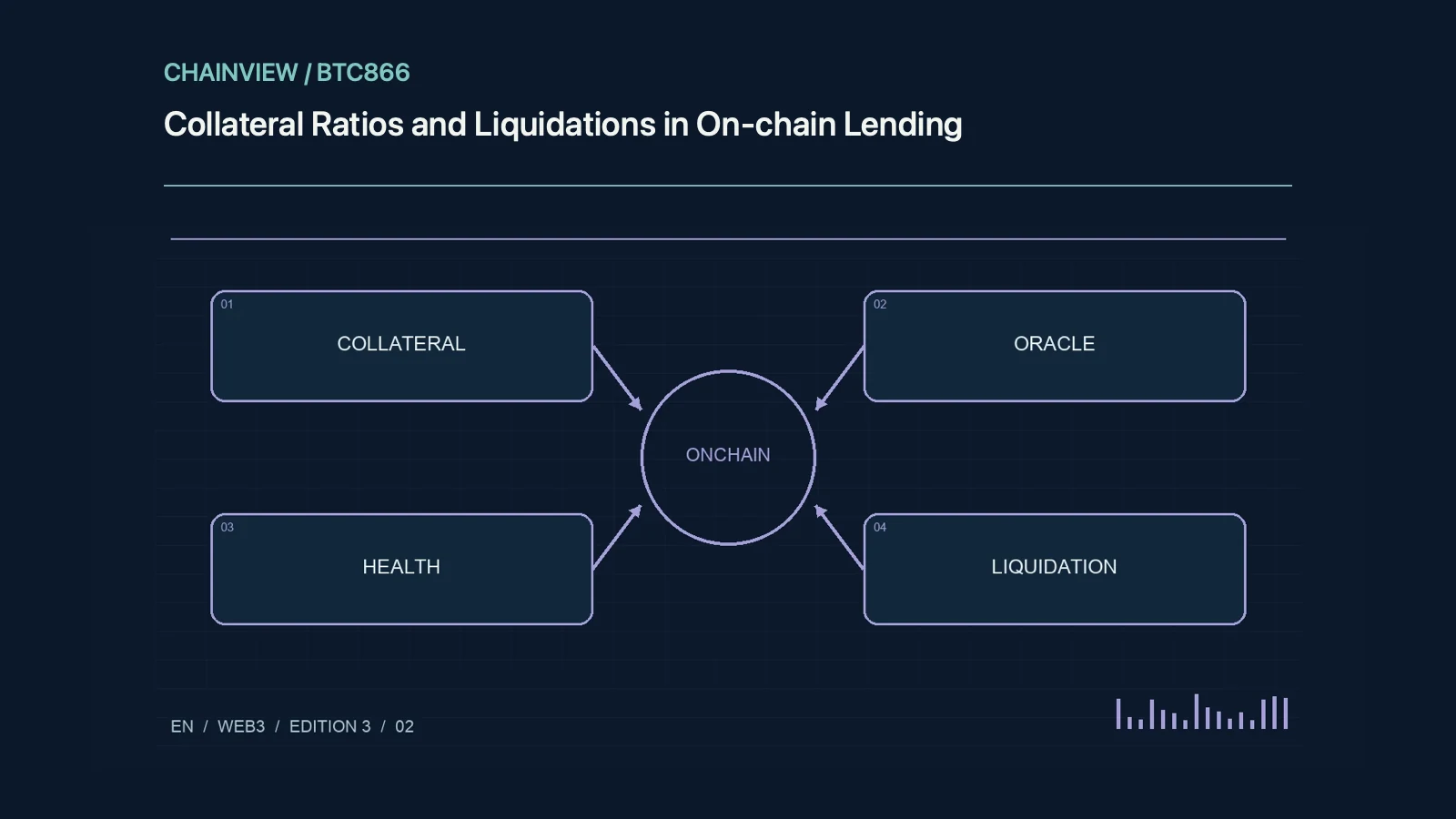
Original topic illustration: ChainView BTC866 original topic diagram · ChainView BTC866 Editorial · CC BY 4.0
Borrow capacity differs from liquidation
On-chain lending distinguishes borrowing capacity from liquidation thresholds. Asset class, debt currency, isolation modes, and account settings can change the margin of safety. Read current parameters and separate health metrics, borrowing caps, and withdrawable amounts. A protocol allowing more borrowing is not a recommendation to use it. Updated rules can invalidate old screenshots or third-party calculators, so record the contract and parameter version used for assessment.
Oracle prices and interest paths
Health depends on the protocol's oracle, update rules, and valuation, not an arbitrary market screen. Interest can raise debt even with unchanged asset prices. Different collateral and debt currencies add relative-price exposure. Stress stale feeds, depegs, utilisation, and rate changes. A venue price not crossing a threshold does not prove the protocol's reference did not; monitoring should follow the actual liquidation rules and data sources.
Liquidation incentives and bad debt
Liquidators may repay debt and receive collateral plus an incentive, with implementation-specific limits and penalties. Price gaps, congestion, and execution competition can prevent liquidation near a theoretical threshold. Review reserves, bad-debt allocation, pause powers, and parameter governance. Overcollateralisation is not a complete safety argument. Automated liquidation replaces some credit dependencies with contract, oracle, and execution-liquidity dependencies that an audit cannot guarantee under every condition.
Build an actionable monitoring record
Record collateral, debt, oracle price, rates, thresholds, and timestamps, including gas needed to repay or add collateral. Falling collateral and rising fees can shorten the practical response window. A stop order is no protocol guarantee. Learn calculations with public cases or test environments. If a metric looks wrong, verify chain, account, and freshness before acting; never give recovery phrases or private unfreezing payments to supposed liquidation support.