Original topic illustration: ChainView BTC866 original topic diagram · ChainView BTC866 Editorial · CC BY 4.0
Separate remittance from asset trades
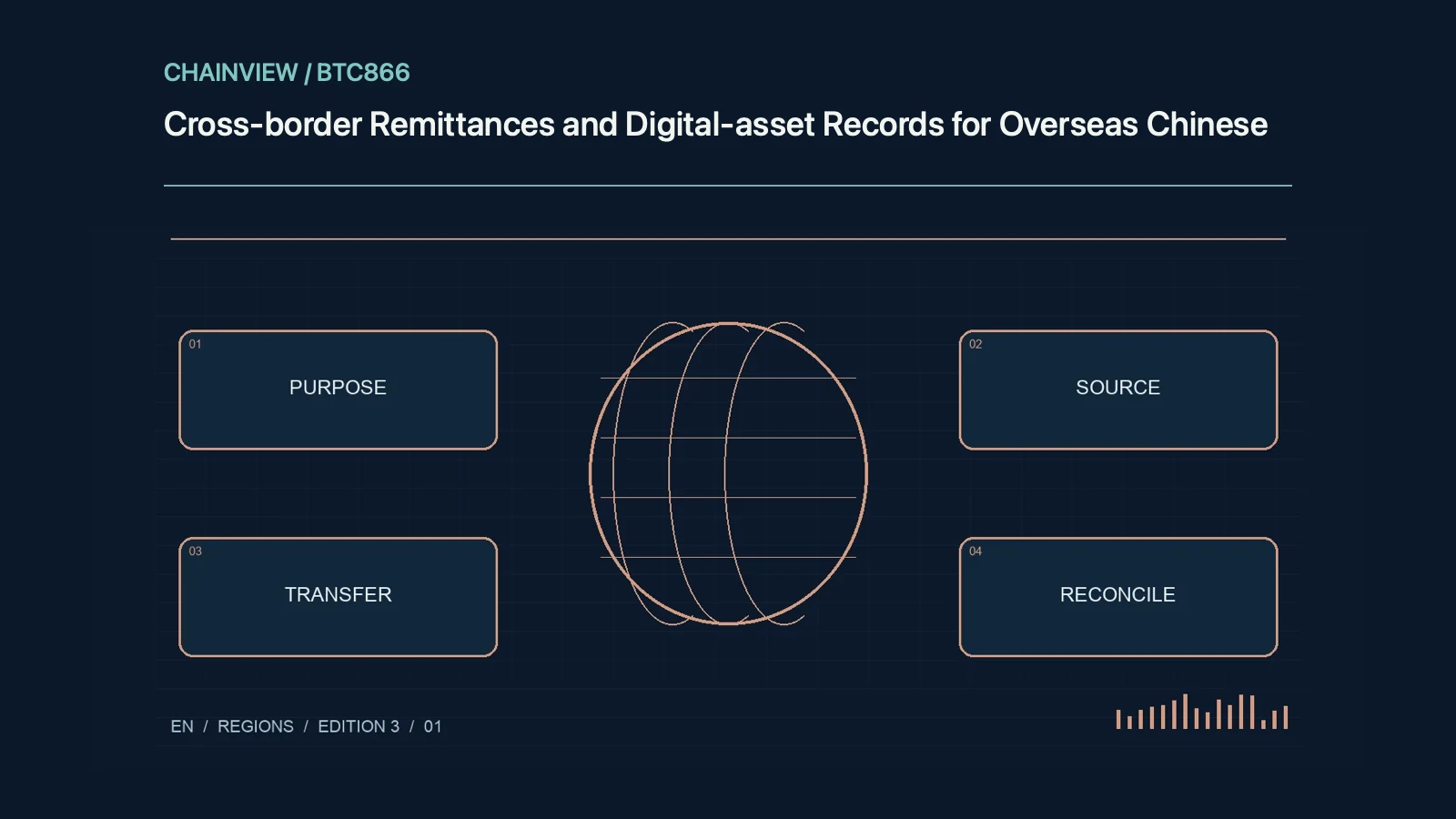
Cross-border remittances, asset trades, and transfers between a person's own accounts can have different banking and tax meanings. Keep payer, payee, purpose, entity, asset, time, and references; do not relabel every receipt for convenience. Check residence, tax status, and source-of-funds rules. A passport or language does not determine eligibility alone. Provide required travel-rule information through official routes without false addresses.
Evidence for fees and FX
Differences can arise from banks, intermediaries, venues, FX spreads, and network charges. Record sent currency, debit, receipt, rates, and who bears each fee. Zero advertised fees do not mean zero spread or free withdrawal. Time zones and banking days affect dates; fast chain settlement does not make bank cash instantly available. Link returned funds to the original reference instead of treating them as new income, and seek local advice on reporting character.
Reconcile source and venue records
Link bank statements, venue orders, chain transactions, and receipts by references or hashes. Separate self-transfers, third-party payments, trades, and fees. A 0.999 receipt after a 0.001 deduction needs evidence, not a guess. Preserve original timezones and a normalised view. Check export coverage, pagination, and unsettled balances through monthly reconciliation. Records support reviews but do not guarantee a route remains available.
Prepare for questions and evidence
Provide minimum evidence such as contracts, reconciliations, and public hashes when asked about source of funds; never recovery words or full passwords. Verify the provider entity and official contact. Keep ticket dates, deadlines, and requested documents when funds are delayed; do not send test payments. Sanctions, AML, and tax questions require truthful facts and qualified local guidance, not an IP change to conceal location. Preserve the rules in force when the decision was made.
Create a family-readable record
Family records should distinguish living remittances, investments, and self-transfers and show verified support routes without sharing every secret. Use a concise, permissioned table of assets, purposes, contacts, dates, and open questions. Recheck bank, venue, tax, and succession arrangements after residence changes. Translation aids understanding but does not change a governing contract or law. This method cannot guarantee a particular filing outcome.