Original topic illustration: ChainView BTC866 original topic diagram · ChainView BTC866 Editorial · CC BY 4.0
Organise records by event
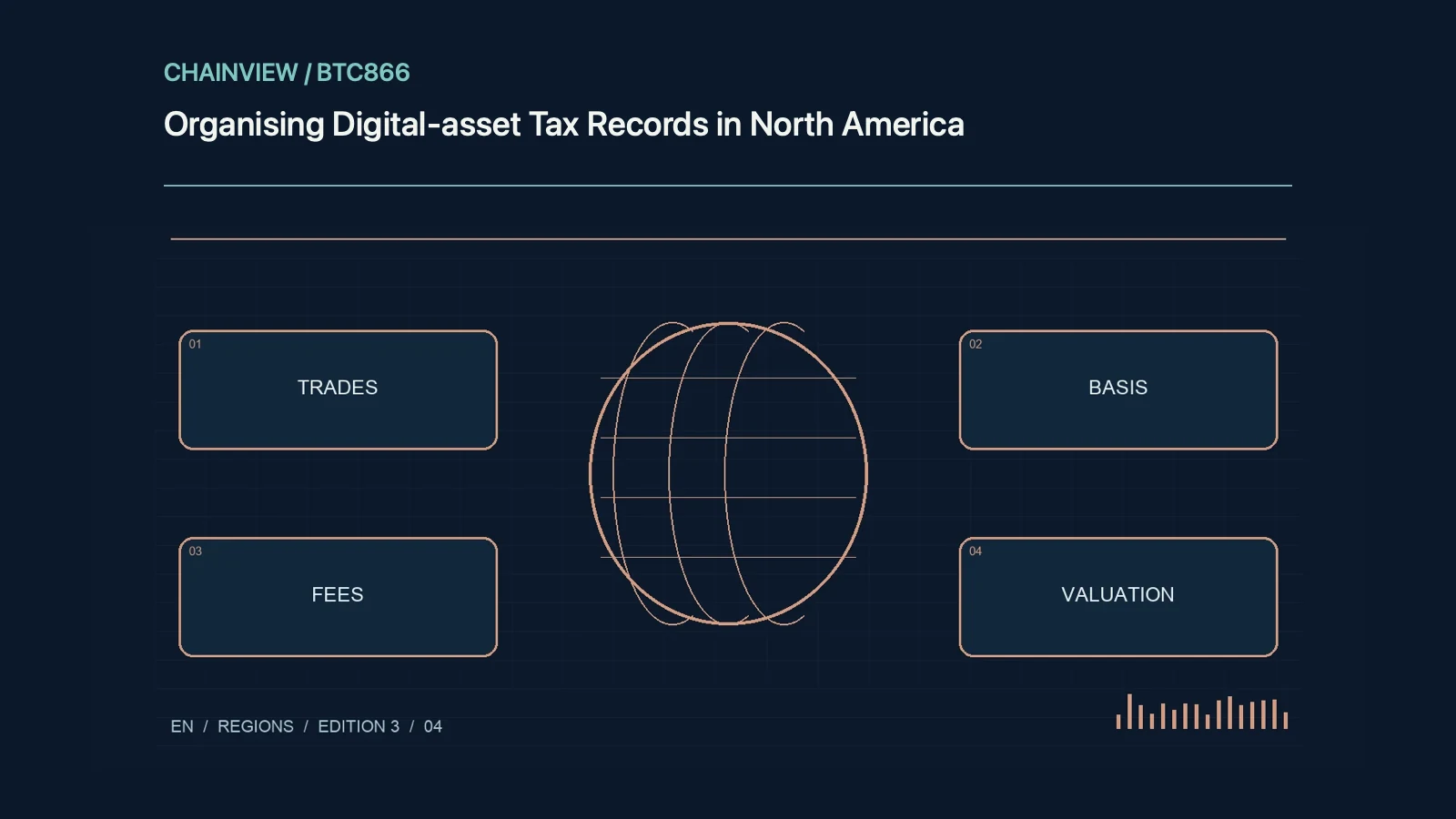
Organise purchases, sales, swaps, rewards, mining, staking, lending, and self-transfers separately; classification depends on country and facts. Keep time, quantity, acquisition method, fees, counterparties, valuation source, and hashes, preserving original timezone. Venue summaries may omit on-chain transfers and cost adjustments. Do not force uncertain classifications into a form; give traceable records to qualified local tax professionals.
Reconcile basis and transfers
Pair transfers between owned wallets to avoid counting the same asset as a new acquisition, while tracking fees, wrapping, bridging, and counterparty changes. Link by quantity and time, not labels alone. Basis rules vary by jurisdiction and asset. Exports may omit external history. Preserve fills, fees, cash movements, and revisions. Investigate decimals, timezones, pagination, and pending items before assigning tax character.
Valuation time and exchange rates
Rewards, airdrops, and swaps may require event-specific valuation rather than month-end price. Record market, currency, price type, timezone, and liquidity; an illiquid display price is not necessarily executable. Keep source and converted currency amounts with FX source and rounding. Align venue settlement and block inclusion to applicable rules instead of choosing the most favourable quote for an assumed tax outcome.
Reporting and privacy
Provide only required fields and protect unrelated addresses and credentials. A seed or password is never proof of funds; public hashes can link transactions but still carry privacy implications. Forms, deadlines, and residency rules differ across countries. Save submitted versions, confirmations, and corrections. Filing does not erase future audit risk, so maintain records and respond to provider data errors through formal channels.