Original topic illustration: ChainView BTC866 original topic diagram · ChainView BTC866 Editorial · CC BY 4.0
Distinguish categories and perimeters
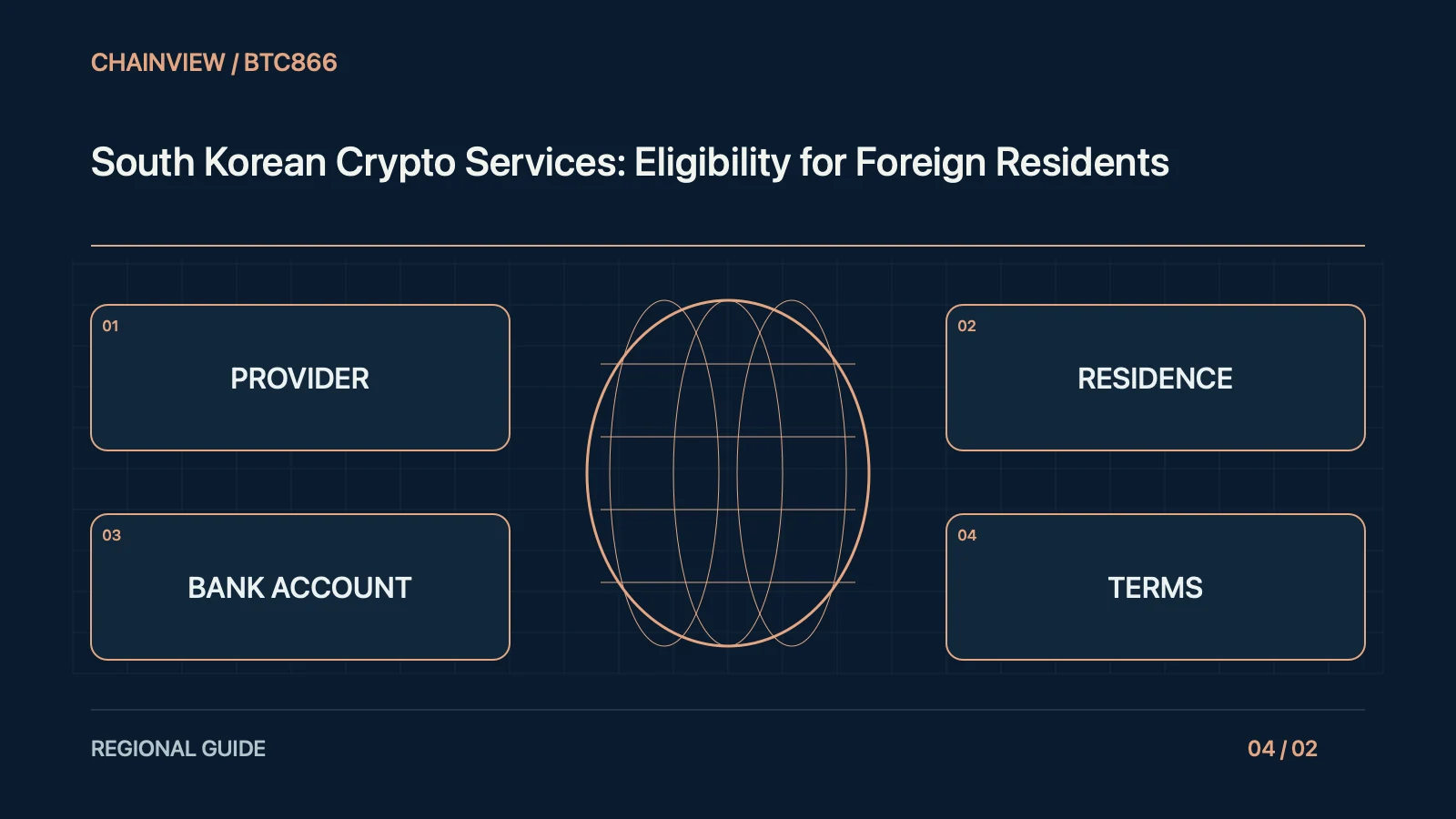
A Korean virtual-asset provider's reporting status, product permissions, and an individual foreign resident's eligibility are separate questions. Understand the roles and materials of FSC, FSS, and KoFIU rather than treating every notice as the same approval. Registration does not guarantee onboarding for every person or certify an asset's quality. Verify the entity and current status through official records, then read actual customer terms instead of relying on an advertisement or translated app.
For a notice, preserve its Korean title, publication date, and covered institution. Later guidance can modify an older document. A translated summary should link to the original and state its update date. Community retellings are especially weak evidence for current foreign-resident eligibility because personal circumstances and provider policies can differ even when users describe themselves with the same broad label.
Verify current records
Real-name banking, residence status, identity documents, telephone registration, and name matching can affect access, with requirements also depending on the bank and provider. Holding one document does not establish that every condition is met. Another resident's successful experience is not proof of personal eligibility. Resolve spelling, order, and ownership differences through official procedures. Borrowing another person's bank account is not a legitimate solution to a failed identity match.
Name matching can involve passport spelling, bank registration, and residence-document order. Explain differences through the official supplementary-document process. Do not edit scans merely to satisfy automation. Passing a form does not make an inaccurate identity statement true and can create later withdrawal or compliance problems. A documented discrepancy is safer to resolve openly than to conceal through an altered image or borrowed account.
Read applicable terms
Preserve applicable Korean contracts, risk notices, charges, and restrictions, with dated translations and their sources. Do not guess a legally significant phrase from automatic translation alone. A multilingual interface need not imply equivalent support, products, or legal texts. Where a translation conflicts with Korean wording, consult the contract's stated language rules and qualified assistance rather than inventing an interpretation on the provider's behalf or treating a familiar English word as complete legal meaning.
A bilingual table of important fees and risk clauses can help, but unfamiliar terms may need qualified explanation. One English word should not collapse distinct Korean legal concepts. Retain the provider's clarification and distinguish a personal translation from an official supplied version. This is particularly important when a support response describes a product limitation that a shorter marketing translation omitted.
Keep personal evidence
Onboarding and particular transaction functions can have separate stages or restrictions. Spot access does not establish availability of derivatives, withdrawals, or cross-border services. Check actual account permissions, minimums, networks, and bank-transfer requirements. Do not evade restrictions with false identity, disguised location, or technical bypasses. If eligibility changes, retain notices and outstanding-transaction records and ask the official provider about a supported exit route instead of improvising around controls.
Networks and product restrictions can change with account status. Before funding, recheck supported networks, required tags, and bank instructions. If withdrawals pause, consult formal notices rather than a supposed special route. Do not let a private-message helper take custody of assets to bypass a restriction. A legitimate operational problem can attract unrelated impostors offering faster access without evidence of authority.
Maintain and seek qualified review
Keep KRW movements, bank references, blockchain hashes, conversions, fees, and eligibility support cases separately. Tax residence, residential address, and nationality are not interchangeable concepts, and obligations depend on individual facts. This guide offers verification and recordkeeping rather than a promise of account access or returns. Recheck original wording and translations when rules change so outdated personal experiences do not continue circulating as current instructions within overseas communities.
Record the exact questions submitted to verified support and their answers, then recheck after version or policy changes. Tax and cross-border reporting duties should not be inferred from onboarding eligibility. Permission to use a service does not eliminate other obligations. Obtain advice under the relevant personal facts and jurisdiction, while keeping the transaction and banking evidence needed to explain what actually occurred.