Original topic illustration: ChainView BTC866 original topic diagram · ChainView BTC866 Editorial · CC BY 4.0
Separate shares from assets
ERC4626 represents a vault claim using shares, which need not equal one underlying unit. Different share prices cannot be compared as a simple ranking of yield. Confirm the actual underlying contract first.
Inspect the underlying asset function and share contract address so a similarly named token or wrapped asset on another chain is not mistaken for the intended exposure. Asset decimals and share decimals may differ. Compare within their proper units rather than interpreting a larger displayed number as a better conversion or profit.
An ERC-4626 vault represents claims with shares while accounting for an underlying asset; one share is not required to equal one unit of that asset.
Check the operation's input unit
Deposit, mint, withdraw and redeem differ in whether the chosen input is assets or shares. Their outputs and rounding also differ. A mistaken unit can turn an intended withdrawal amount into an unintended share quantity.
Mint specifies shares to obtain, while redeem specifies shares to surrender; deposit and withdraw are asset-oriented. A fictional comparison of ten shares and ten asset units shows why entering ten can mean different things. Check front-end labels against final transaction parameters instead of relying only on a familiar button name.
Conversion and preview methods describe different operations and rounding directions; quoted estimates are subject to transaction state and stated fees.
Treat previews as estimates
Preview methods describe a particular operation under stated semantics. State and applicable costs can change before execution. Max methods communicate limits rather than proving unlimited immediate exit capacity at every displayed conversion rate.
Preview outputs are not permanent reserved quotes. Other users' deposits and withdrawals can change state while a transaction waits. Understand supported limits and failure costs without granting a large unknown vault allowance just to test it. Read-only calls do not require or create an additional spending permission.
Deposit, mint, withdraw and redeem have distinct input units, and max methods can indicate operation limits rather than universally available liquidity.
Review the strategy separately
Interface compliance does not certify valuation, accounting or principal protection. Examine losses, administrator powers, portfolio exposure and exit restrictions. Matching ticker symbols cannot establish identical underlying assets or equivalent contractual rights.
A strategy can hold positions in other protocols, whose losses affect assets per share. Interface compliance cannot eliminate oracle, liquidity or administrative risks, and an audit covers a particular scope and version. Listing dependencies explains where the economic exposure actually sits better than a vault icon alone.
Inspect strategy exposure, administrator powers, losses and withdrawal constraints; interface compliance does not guarantee sound accounting or principal protection.
Reconcile a hypothetical redemption
Track assets, shares, conversion, charges and received amount in a small example. A read-only preview can explain the mechanism but cannot promise success. Distinguish the displayed claim from immediately available withdrawal liquidity.
A reconciliation table can track deposit date, asset quantity, shares received, valuation, exit request and final credit. If redemption waits, distinguish pending shares from available assets; do not count both the share claim and its future underlying as two holdings. Preserve original records for a qualified legal or tax classification when needed.
If an interface displays both a share balance and an asset estimate, label one as the claim and one as its conversion, not two independent holdings. During a pending exit, use the protocol's actual accounting state. A portfolio aggregator that adds both values can double the apparent wealth. Compare one small read-only conversion in each direction, allowing for documented rounding, before trusting a combined household summary assembled from several dashboards.
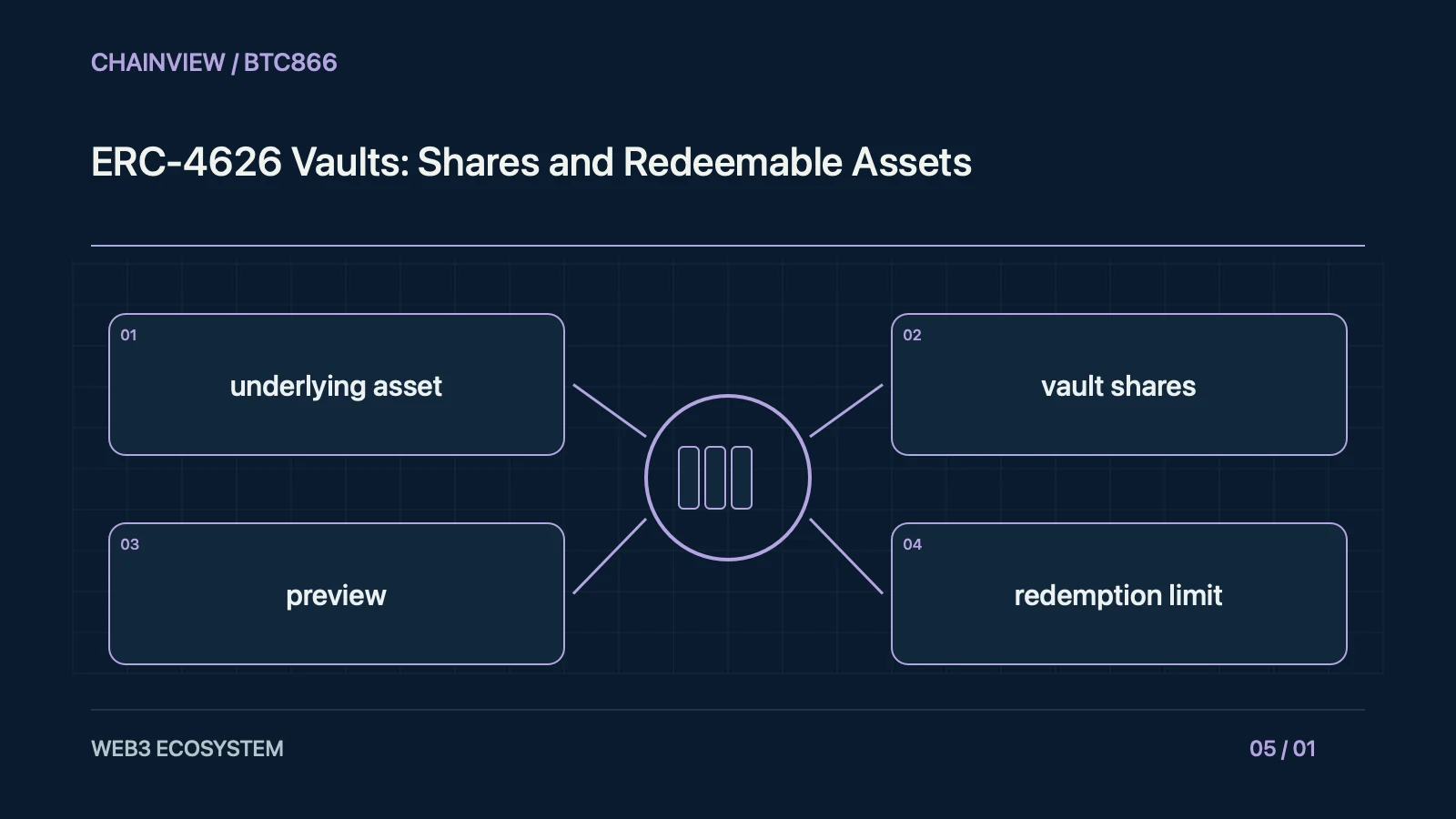
Build a rights-and-execution table around underlying asset, vault shares, preview and redemption limit. Record who can act, which condition must be satisfied, when funds become available and what happens if the step fails. Separate interface display, signed commitment and completed transaction; the same claim shown in two places must not become two assets in a ledger. Keep the rule version and exit conditions, explicitly marking unknown powers. This exercise supports an assessment of real obligations and control. A headline return, community vote or popular application can be relevant context, but does not replace the specific contractual and technical facts of the operation.