Original topic illustration: ChainView BTC866 original topic diagram · ChainView BTC866 Editorial · CC BY 4.0
Normalize quoted differences
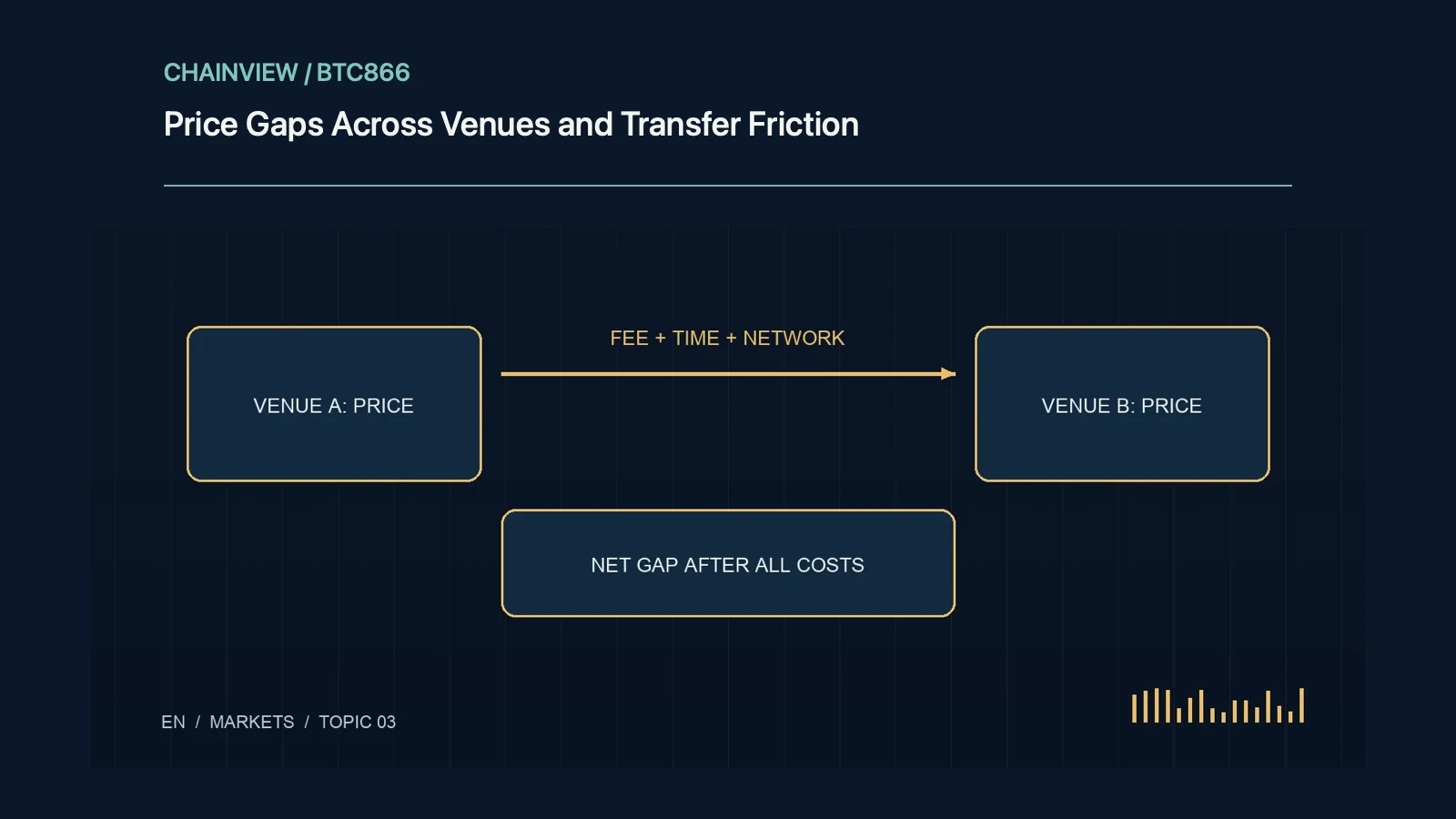
Normalize asset identity, quote currency, instrument, taxes, and units. FX rates or stablecoin premiums can create apparent gaps. Compare executable bid and offer prices at the same time, not stale last trades. Without simultaneous access to both markets, a displayed difference is an observation rather than realizable profit.
Transfer routes determine timing
Transfers include venue approval, broadcast, confirmations, and destination crediting. Verify contracts, networks, memos, and permitted sources. Similar address formats do not establish asset compatibility. A successful small test can confirm one route at one time, but a larger transfer may still face additional review or changing deposit conditions.
Include every cost
Include trading, withdrawal, network, FX, borrowing, and relevant tax costs. Fixed fees disproportionately affect small transfers; tiers and limits change larger results. Estimate net differences using conservative executable prices and delay scenarios. Subtracting two quoted prices is not a complete calculation of attainable proceeds.
Exposure during settlement
Buying before transfer leaves price exposure during settlement; borrowing to sell adds repayment obligations. Prefunding reduces execution delay but increases venue exposure and capital use. Verify hedge quantities, instruments, and settlement currencies. Opposite directions do not guarantee neutrality when one market halts, collateral changes, or liquidation occurs.
Eligibility and source of funds
Check genuine eligibility, identity verification, daily limits, source-of-funds reviews, and bank conditions. Do not use borrowed identities, false addresses, or splitting to evade controls. Keep provenance and purpose records. A trade accepted at one venue does not guarantee that another venue or its banking partner will accept the resulting transfer.
Test failure scenarios
Model withdrawal delays, destination halts, adverse prices, and fee increases. Identify irreversible steps, remaining capital exposure, and support response times. Persistent large gaps often reflect genuine access or settlement constraints. A complete review asks what happens if the route fails rather than treating the displayed spread as an easy profit.
Worked review example
Suppose a buy costs 99 and a sale appears available at 101. After one unit of combined fees and conversion costs, only one remains; a two-unit adverse move during transfer makes the outcome negative. Record capital use, delays, and failed-route scenarios. Prefunding can reduce timing exposure but increases capital committed to venues. These invented prices illustrate the full-route calculation rather than a real opportunity. Eligibility, deposit acceptance, limits, and settlement remain necessary conditions, and none can be inferred merely from two prices displayed on different screens.