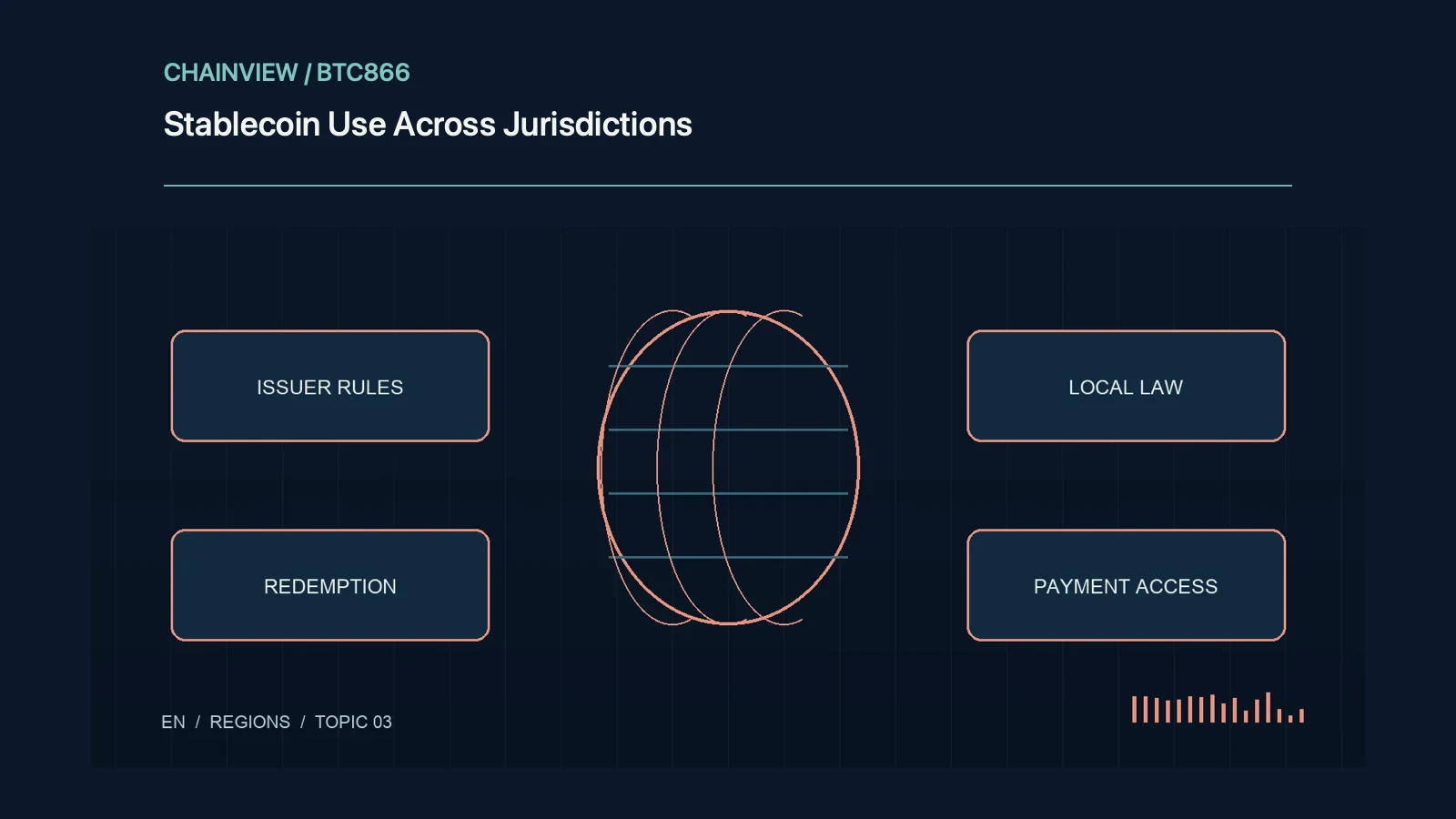
Original topic illustration: ChainView BTC866 original topic diagram · ChainView BTC866 Editorial · CC BY 4.0
Separate issuance and use rules
Issuance, trading, payment, and custody can fall under different regimes. Identify whether the question concerns issuer, intermediary, or user. A currency reference does not imply sovereign backing. An issuer license does not automatically authorize every foreign platform to distribute related products. Compare jurisdictions only after defining the activity.
Issuer and reserve disclosure
Compare legal issuer, regulator, reserves, redemption, and governing law. Identical symbols do not establish identical rights. Disclosure frequency, reserve standards, liability scope, and assurance can differ. Regulated status needs a specific explanation and should not be read as a universal guarantee of price, custody, or holder protection.
Conversion channels and banks
On-chain receipt does not guarantee local bank conversion. Check issuer redemption eligibility and intermediary fees, limits, supported currencies, and provenance requirements. Banking holidays and cross-border reviews can dominate timing. Preserve payer, payee, and purpose evidence rather than judging a complete payment route solely by blockchain confirmation speed.
Spending and refunds
Merchants may retain tokens or use instant fiat conversion, affecting fees and refunds. Confirm network, units, refund currency, and FX timing. Irreversible chain settlement differs from consumer contractual rights. Keep orders and receipts: a successful transfer cannot guarantee delivery if the merchant fails or its processor freezes activity.
Restrictions and freezing risks
Some contracts permit freezing or pausing, and terms can restrict geography or use. Identify control, triggers, and appeals. Bridged versions add bridge and destination risks. Changing networks, labels, or personal details does not remove legal or contractual obligations, so access review should rely on accurate information and official requirements.
Maintain a jurisdiction comparison
Use a table of activity, authority, entity, disclosure, redemption, banking, and effective date, with official references and unresolved entries. Retain earlier versions for historical transactions. A licensing conclusion from one jurisdiction cannot simply be copied to another. Recheck actual status, purpose, and current rules before a specific transaction.
Worked review example
An issuer may redeem only for qualified institutions while a traveler must sell through an intermediary. Separate direct rights from local conversion access, minimums, banking hours, and fees. Fast chain settlement does not imply equally fast bank conversion. Refund currencies add another distinction. Jurisdiction affects exit and spending conditions as well as initial purchase eligibility.