Original topic illustration: ChainView BTC866 original topic diagram · ChainView BTC866 Editorial · CC BY 4.0
Identify what the bridge moves
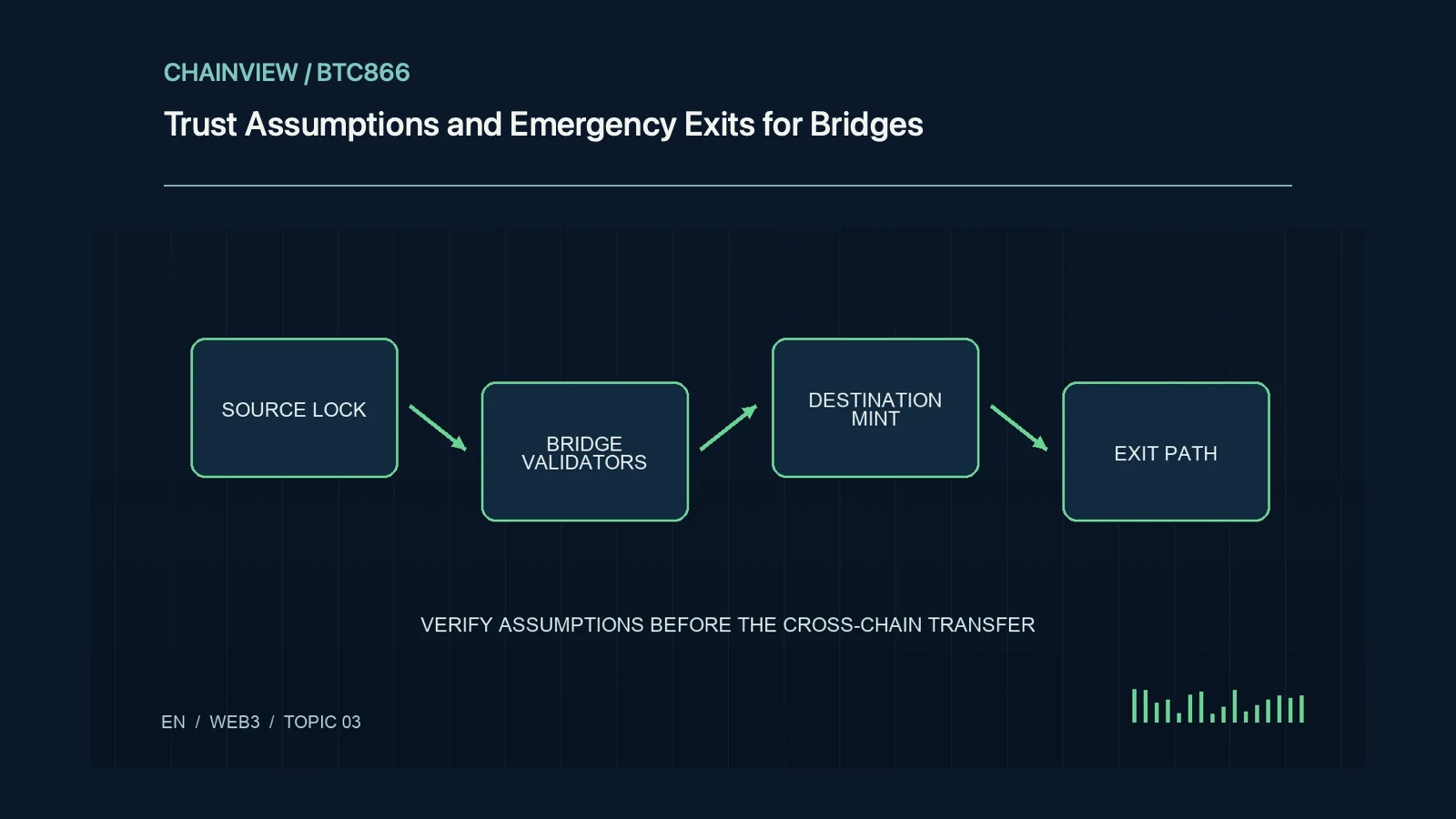
A bridge may lock and mint, or use liquidity pools to deliver another asset. Map source, destination, custody, messages, and redemption. Determine whether the received asset is native or a representation. Matching names and symbols do not establish interchangeability, and nested bridges can create several layers of custodial or technical dependence.
Who verifies messages
Verification may use committees, light clients, optimistic challenges, or other proofs. Inspect thresholds, membership changes, challenge periods, and rejection mechanisms. Decentralization claims need concrete control conditions. Proving that a source event occurred does not establish that the destination contract, custody arrangements, or accounting logic is correct.
Finality and waiting periods
Bridges wait for source confirmations or finality before destination execution. Early acceptance can expose reorganizations; challenge systems can lengthen exits. Record stages and observable statuses. Destination gas, verification outages, and relay funding can delay completion. A successful source transaction does not mean the end-to-end bridge operation has finished.
Pause, upgrade, and keys
Map pause, upgrade, and validator-management rights, including thresholds, timelocks, and bypasses. Match audits to deployed versions. Key compromise, collusion, and external failures matter alongside code bugs. Audits cover defined scope at a point in time; they do not guarantee that deposits can never be lost or frozen.
Exit liquidity and discounts
A visible bridged balance may lack sufficient exit liquidity. Inspect pool depth, fees, minimums, queues, and emergency redemption rules. Secondary-market discounts differ from official redemption terms but affect urgent sellers. Model pauses and congestion: a small round trip under ordinary conditions does not guarantee exit availability during stress.
Keep a bridge evidence packet
Keep official entry points, chain and contract identities, amounts, fees, source hash, message identifier, and destination hash. Diagnose delays by stage instead of paying again or sending recovery fees privately. Support does not need recovery phrases. These records also help distinguish lock, mint, and redemption events for accounting and local tax analysis.
Worked review example
If source locking succeeds but destination execution remains pending, preserve the source hash and message identifier. Check verification, challenge periods, and destination gas rather than locking funds again. During a pause, use official exit instructions and reject private unlock payments. Stage-by-stage evidence locates failure and supports later review without implying that a successful source transaction completed the bridge.