Original topic illustration: ChainView BTC866 original topic diagram · ChainView BTC866 Editorial · CC BY 4.0
Spot balances and contract exposure
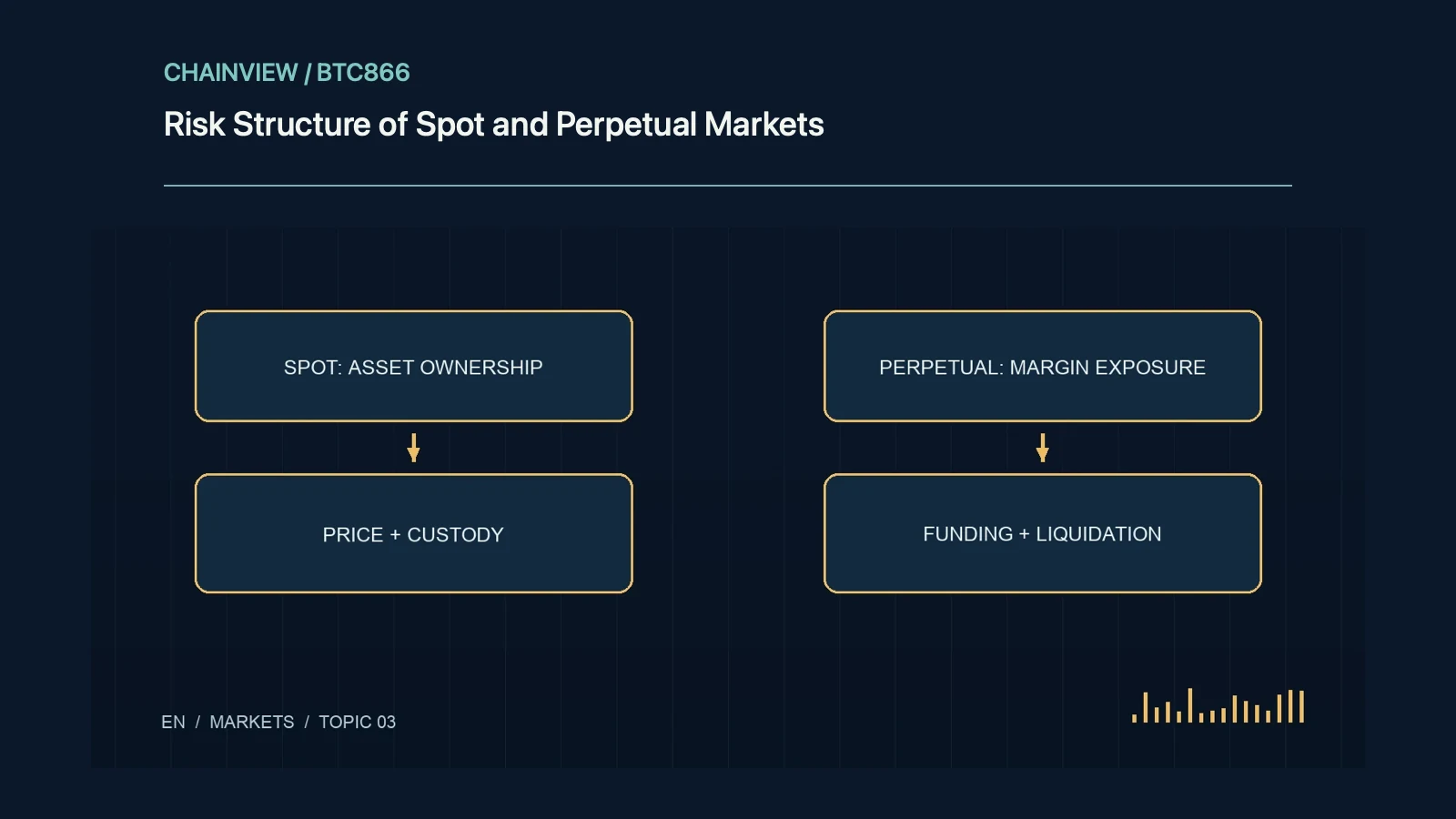
A spot balance and perpetual exposure are different claims. Check custody, underlying asset, settlement currency, quotation unit, and contract multiplier. A derivatives position may settle profit and loss without delivering the underlying, while a hosted spot balance remains subject to the custodian until a withdrawal completes.
Notional and margin
Margin is collateral, not a universal maximum-loss guarantee. Track notional exposure, account equity, initial and maintenance margin, and fee reserves. Cross margin can share collateral across positions; isolated margin generally partitions it. Read the venue rules for negative balances and exceptional settlement rather than relying on a leverage label.
Funding is not fixed income
Funding transfers depend on direction, interval, caps, and contract rules. Positive funding commonly charges longs, but shorts can still lose through price moves, fees, or basis changes. Record realized payments and the position held at each settlement. A temporarily high rate should not be annualized as a dependable income stream.
Mark price and liquidation
Last trade, index price, and mark price can differ; liquidation may follow the mark. Inspect index components, anomaly treatment, and margin tiers. Fees, funding, and collateral prices can change estimates. Stop orders trigger execution instructions but cannot guarantee a particular fill during gaps, outages, or thin liquidity.
Collateral and correlated risk
Volatile collateral can fall at the same time as a position loses value. Stablecoin collateral introduces issuer, depeg, and haircut risks. Check accepted assets and conversion rules, then stress both position and collateral prices. Multiple trades sharing one margin pool may concentrate risk despite appearing economically diversified.
Compare reconciled ledgers
Reconcile entry and exit fills, funding, fees, realized results, and deposits. Equity changes can reflect top-ups rather than profit. Simulate stress scenarios and margin buffers before using a product. If you cannot explain liquidation or tolerate the losses, historical performance screenshots are insufficient grounds for a trade.
Worked review example
Suppose one thousand units of collateral support five thousand units of long exposure. A ten-percent underlying decline implies roughly five hundred units of loss before other effects. Collateral depreciation, funding, and fees can further change equity. Vary those inputs separately and compare the remaining buffer with actual maintenance rules. This simplified example is not a liquidation quote: venues may use mark prices, tiers, and nonlinear contract conventions. Its purpose is to show why a leverage label alone cannot describe the whole risk and why additional collateral is additional capital exposed rather than a guaranteed cure for a losing trade.