Original topic illustration: ChainView BTC866 original topic diagram · ChainView BTC866 Editorial · CC BY 4.0
Start with a full position snapshot
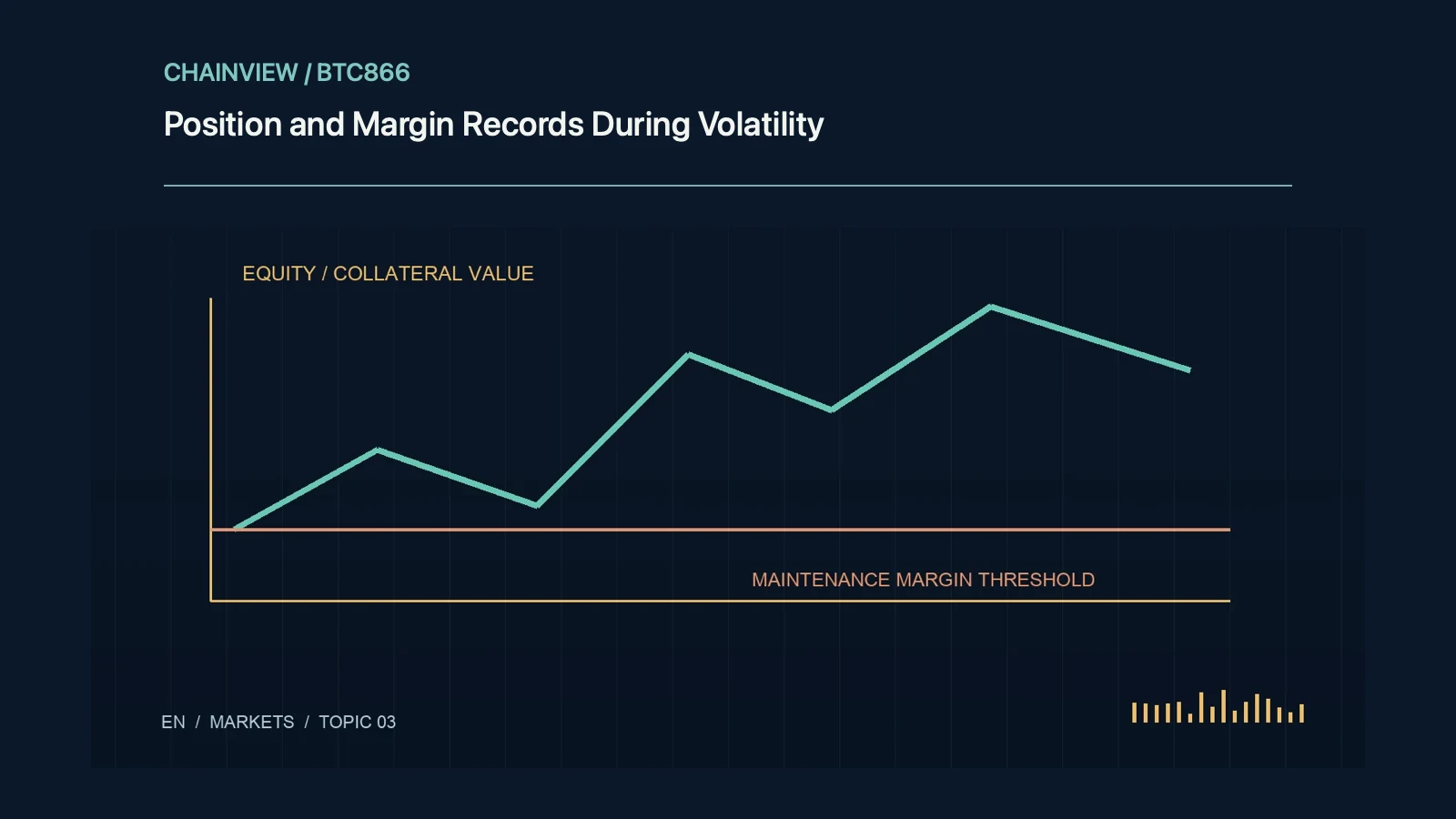
Snapshot assets, debts, open orders, and collateral across accounts at one valuation time. Preserve native quantities and separate spot, lending, and derivatives exposures. Pending orders can add exposure and interest continues accruing. Record immediately withdrawable balances separately from headline equity, since restrictions can make the two very different.
Define warning lines
Define warnings using measurable ratios or available collateral, with a source and response action. Margin tiers and mark prices can differ from displayed last trades. A warning is a prompt for review, not a guarantee that enough time remains to top up collateral or close the position during a discontinuous market move.
The full cost of top-ups
A top-up increases capital at risk; it does not validate the original trade. Log source account, route, fees, arrival estimate, and remaining emergency reserves. Limits, congestion, and banking hours can delay transfers. Do not count unarrived funds as usable margin, and consider correlations between backup assets and the position.
Cancellation and reduction constraints
Check open orders, reduce-only settings, and partial-fill handling before reducing exposure. Market exits can slip; limit exits can remain unfilled. Retain request identifiers and acknowledgements. A timeout does not prove rejection, so query current order state before resubmitting to avoid accidentally opening a position in the opposite direction.
Separate performance from transfers
Reconcile equity changes into trading results, unrealized moves, funding, interest, fees, and external transfers. Use fixed valuation times and recorded exchange rates. Export statements and fill records. Without these adjustments, moving money between accounts can masquerade as performance and obscure whether a risk intervention improved the portfolio.
Review and revise thresholds
After volatility, review data delays, noisy warnings, executable actions, and unavailable funds. Preserve the decision time and evidence available then rather than judging solely with hindsight. Reduce exposure or stop using products you cannot monitor. The record should reveal constraints, not imply that every strategy can be made fully controllable.
Worked review example
Suppose equity rises from five thousand to six thousand while two thousand was deposited. Before other adjustments, trading contributed a loss of one thousand rather than a gain. Add fees, funding, and unrealized changes to reconcile the full difference. Tag external transfers separately and compare the ledger with venue statements. This invented example explains performance accounting, not a recommended margin strategy. A proper review asks whether risk actually improved or whether new capital merely concealed losses, and checks that balances described as available were genuinely usable at the time decisions were made.