Original topic illustration: ChainView BTC866 original topic diagram · ChainView BTC866 Editorial · CC BY 4.0
Identity and network boundaries
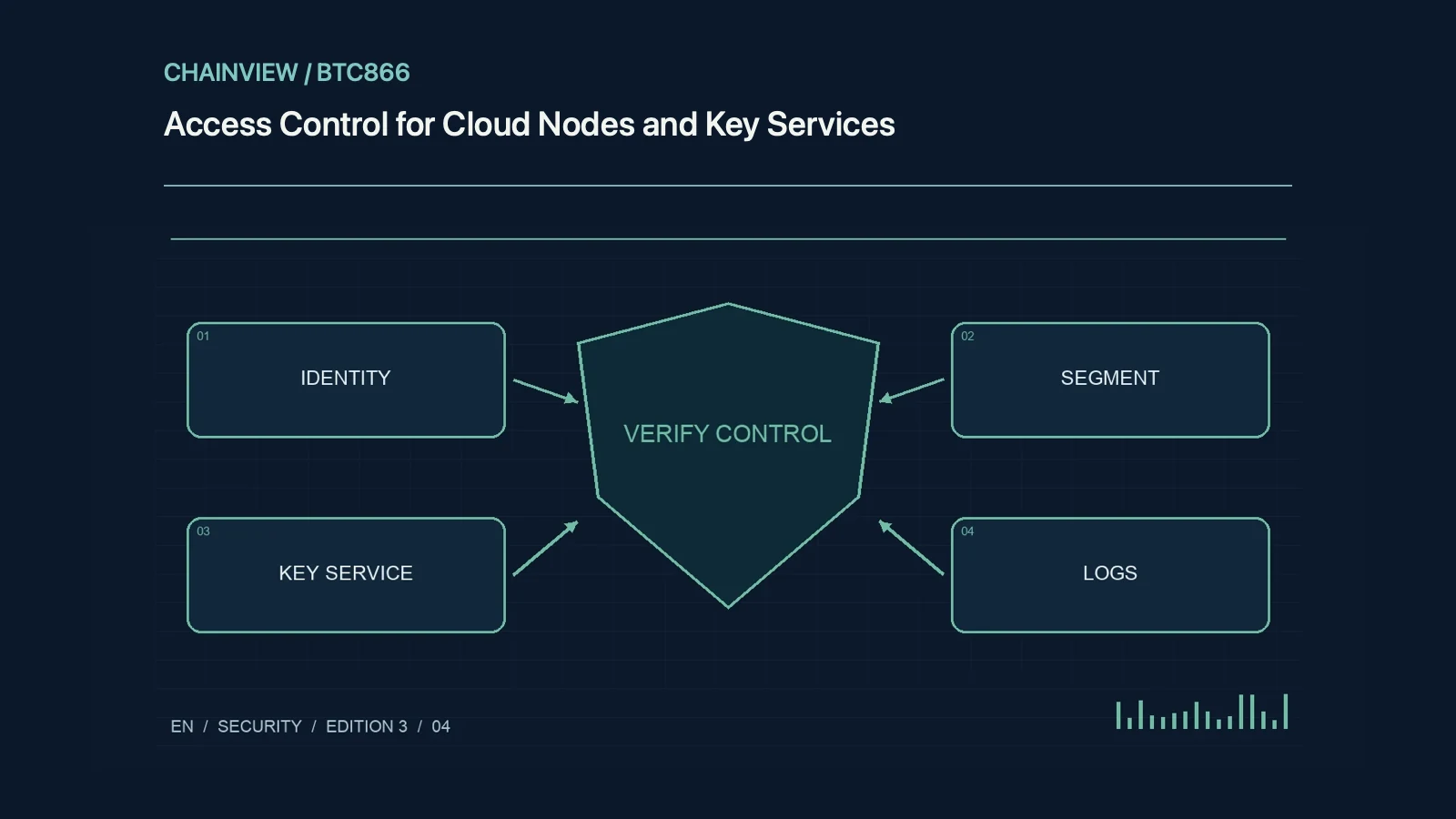
Separate read, administration, deployment, and signing identities. Avoid embedding long-lived administrator credentials in applications; use scoped roles and short-lived credentials where supported. Restrict management, RPC, and key-service entry points. A private network is not complete authentication, and proxies can expose internal ports. Map who can change policy, export secrets, or deploy code: indirect administrative powers may be as consequential as direct permission to sign.
A key service is not automatically safe
Hardware isolation or managed key storage can reduce export risk without preventing an authorised caller from requesting a harmful signature. Apply supported policy limits to networks, assets, recipients, amounts, and purpose. Review recovery, administrators, and failure modes. Non-exportability is different from non-abusability. If a compromised application retains unrestricted signing authority, funds can be lost while the key never leaves hardware; control the request and approval path as well.
Logging, alerts, and rotation
Log identity, time, policy decision, transaction summary, and outcome without secrets or unnecessary personal data. Assign owners to alerts for unusual access, privilege changes, signing, policy edits, and disabled logging. Rotation needs dependency checks, testing, revocation, and verification. Creating a new credential while leaving the old one active is incomplete. Infrastructure credential rotation and blockchain-key migration are different operations and need distinct response records.
Verify recovery and degradation
Test restoration, policy recovery, and log completeness in a safe environment. Define whether control-plane failure pauses or permits operations. Losing an approval service should not silently create an unrestricted hot-wallet fallback. Document contacts, versions, dependencies, and minimum permissions without storing all secrets together. Recovery speed and security must be assessed jointly; a running process with excessive authority can expand the incident instead of resolving it.