Original topic illustration: ChainView BTC866 original topic diagram · ChainView BTC866 Editorial · CC BY 4.0
Segregation starts with the request
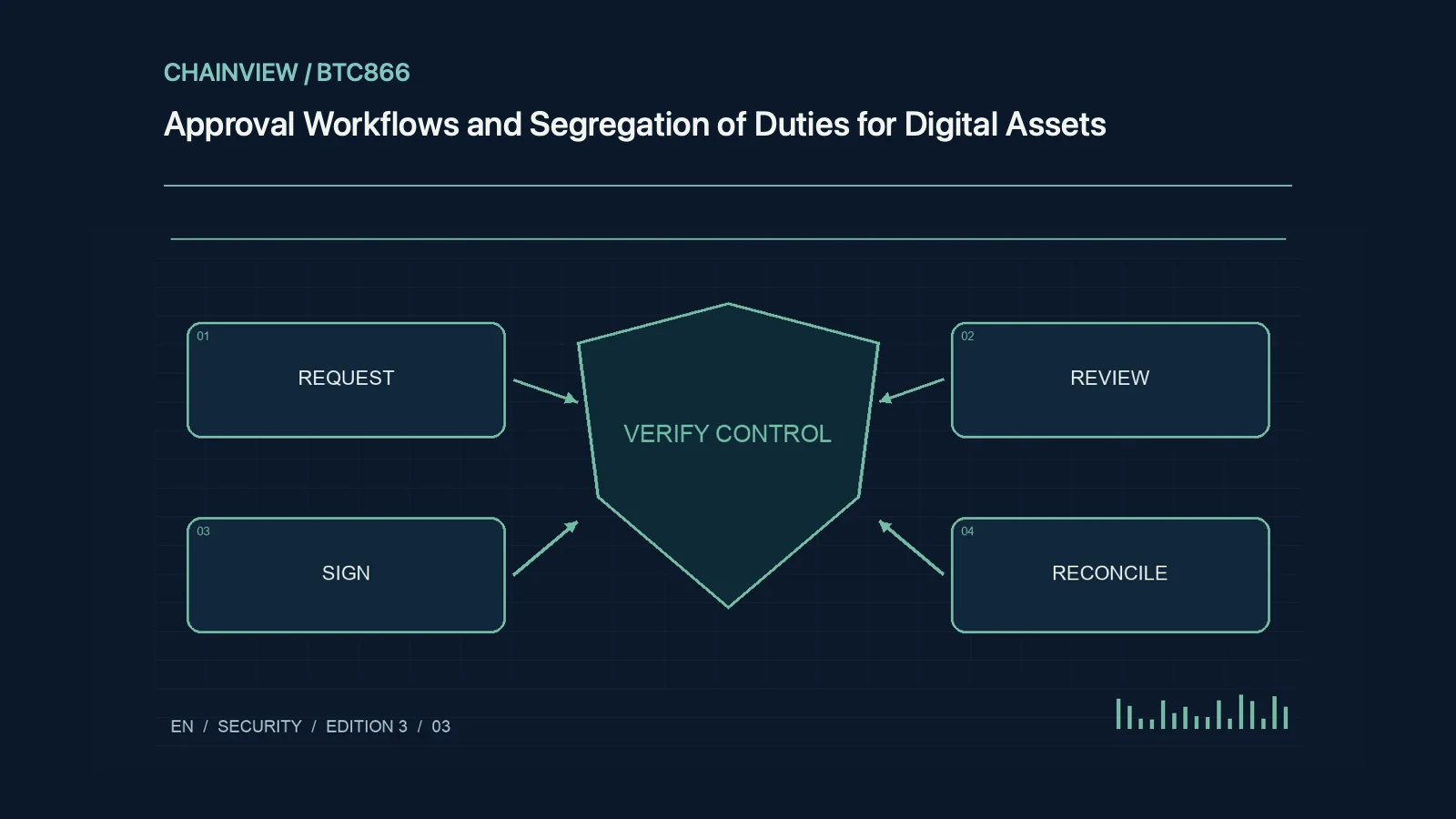
Separate initiation, recipient verification, risk review, signing, broadcast, and reconciliation. Multisig is one control, not a complete workflow: shared devices, credentials, or one directing authority can defeat independence. Map who can add beneficiaries, edit allowlists, and raise limits. These upstream powers may bypass transaction checks. Scale controls to actual operations so every consequential decision has an accountable owner and evidence, rather than ceremonial approvals nobody understands.
Align intent with signed content
The approval record should specify entity, chain, asset contract, amount, recipient, fee limit, purpose, and expiry. Signers must compare actual payloads, not a chat summary. Explain contract functions and permissions; simulation is supporting evidence. Verify recipients through an independent channel. Bulk payouts, allowlist edits, and unlimited allowances deserve appropriate rules so a routine small-payment process cannot silently authorise a different, much broader action.
Exceptions and emergency recovery
Predefine emergency authority, limits, records, and review instead of suspending every control verbally during an outage. Plan for departures, lost keys, failed devices, and legal-representative changes. Test segregated recovery material without creating an approval bypass. Signers sharing travel, a location, or one cloud account can fail together. Assess common causes, not merely whether the nominal number of keys meets the threshold.
Close the loop through reconciliation
Reconcile hashes, confirmations, receipts, fees, and ledger entries against approvals, including failures and replacements. Nine completed payments out of ten are not a fully settled batch. Retain versions and exception evidence with controlled access and applicable retention. Review conflicting privileges and promptly revoke departed staff access. Controls make errors discoverable and explainable without guaranteeing zero loss; update them as operations and contracts evolve.