Original topic illustration: ChainView BTC866 original topic diagram · ChainView BTC866 Editorial · CC BY 4.0
Identify the legal arrangement
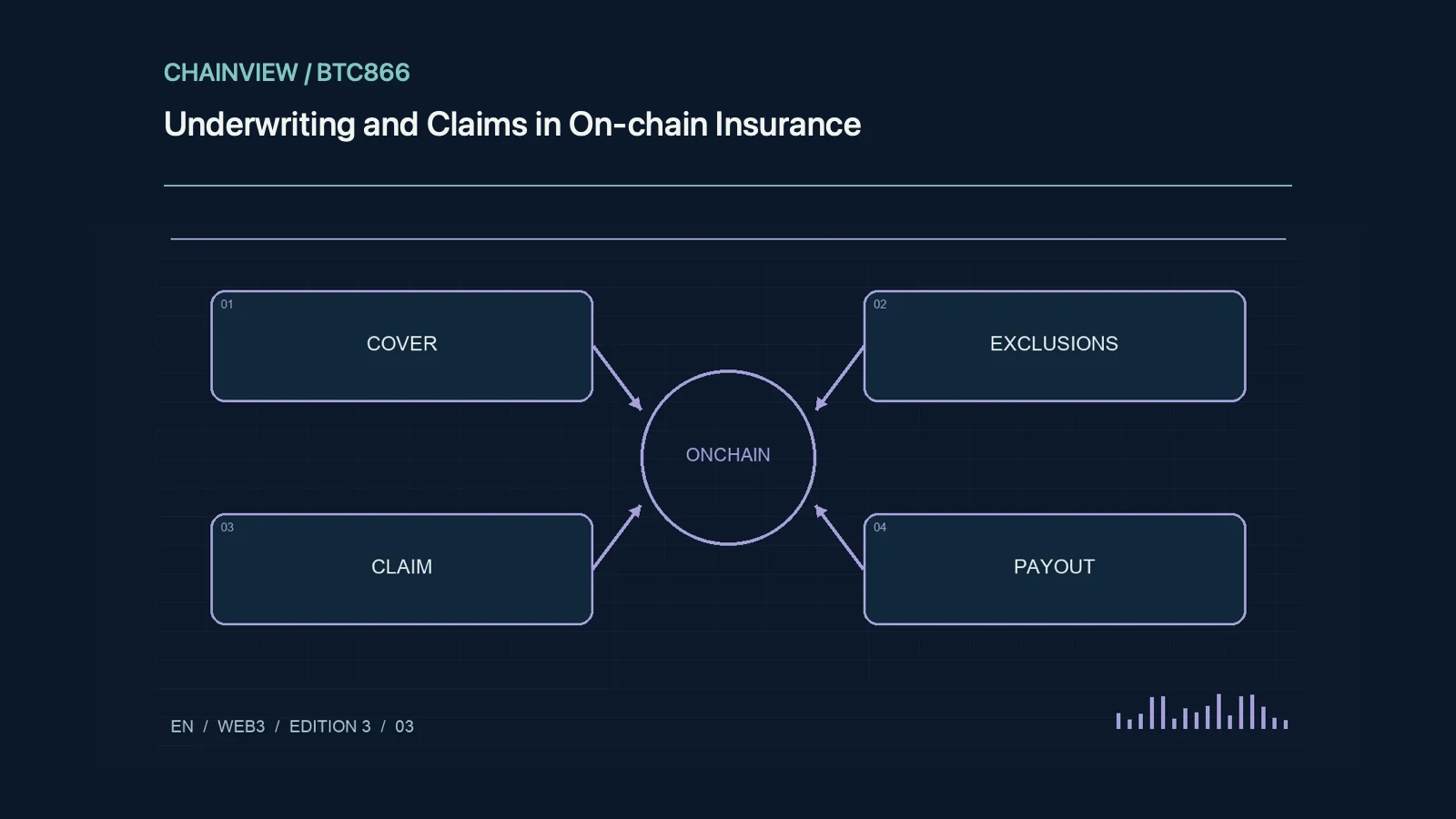
Cover tokens, mutual membership, and insurance can represent different legal arrangements. Buying a token does not automatically create regulated insurance or statutory compensation protection. Identify entity, law, covered risks, beneficiary, eligibility, and complaints. A completed purchase proves execution, not a payable claim. Advertised coverage and premium yield cannot replace analysis of enforceable rights, exclusions, and the source of funds available for claims.
Coverage and exclusions
Contract exploits, custodian defaults, oracle failures, key theft, and market losses can receive different treatment. Record limits, deductibles, waiting periods, coverage dates, duplicate cover, and insured addresses or versions. A publicly described hack may still fail the contract's event definition or evidence requirements. Save wording and version. The news label for an incident does not establish that every affected holder qualifies for the same payout.
Who decides a claim
Claims may depend on an objective trigger, oracle, committee, or token vote. Review evidence, deadlines, thresholds, appeals, execution, and any final claim step. Public votes do not prove independent judgment, and automatic execution does not remove disputes about real events. Preserve balances, hashes, and official notices to support loss evidence. Private keys and unnecessary identity material should never be handed to an unverified assessor.
Pool capacity and correlated exposure
Pool assets, reinsurance, and capital determine capacity during correlated claims. One policy limit does not prove all policyholders can be paid simultaneously. Review concentration in chains, custodians, and infrastructure, asset-price stress, and rule-change powers. Shared pools require analysis of aggregate obligations. Cover remains a contract requiring scrutiny; it does not remove wallet security, exposure limits, or documentation duties, and unsupported guaranteed-payout claims deserve rejection.