Original topic illustration: ChainView BTC866 original topic diagram · ChainView BTC866 Editorial · CC BY 4.0
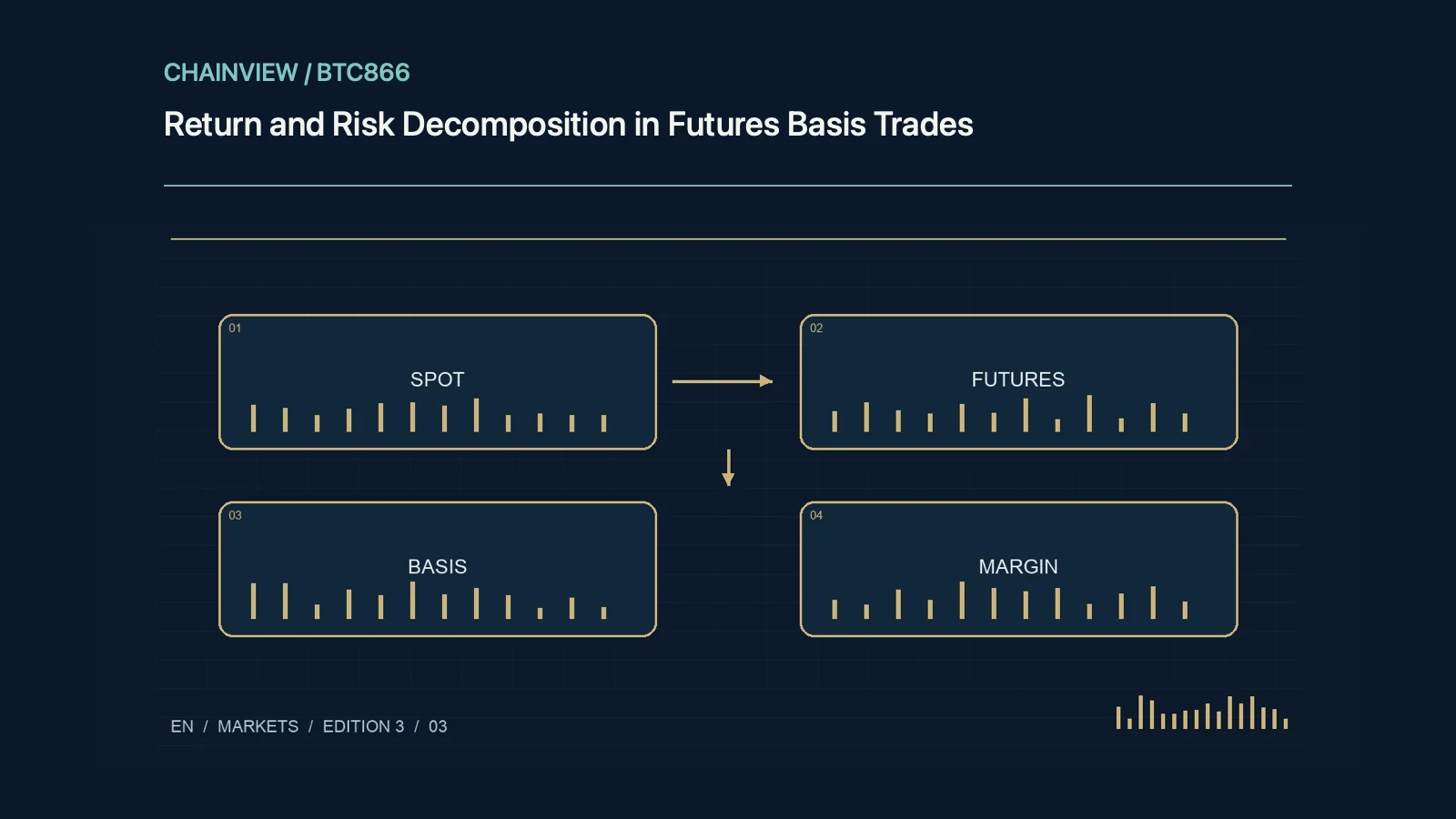
Separate spot and futures legs
A cash-and-carry position combines spot ownership with a short futures position. It is not risk-free interest: custody, margin, settlement, and funding each impose conditions. Match assets, quantities, quotation currency, and contract terms. Perpetuals do not have a fixed expiry convergence mechanism, and funding can reverse. Annualising today's premium does not lock a future return or establish that both legs can be maintained until exit.
Basis and the margin path
Basis can widen before converging, creating margin calls on the short. Spot gains may not be transferable in time, especially across venues, currencies, or closed banking windows. Model daily equity, maintenance margin, collateral haircuts, and available top-ups. Liquidation of one leg leaves directional exposure. An expiry payoff diagram misses this path risk, so intermediate funding survival must be assessed separately from the eventual theoretical spread.
Financing, rolling, and settlement
Subtract borrowing, financing, trading, custody, withdrawal, FX, and roll costs. Cash settlement depends on a reference price; physical delivery depends on eligibility and asset delivery rules. Future roll spreads are unknown. Review index disruption, automatic deleveraging, and loss-allocation provisions. Exceptional mechanisms can alter cash flows that look offsetting under ordinary conditions, and rules should be saved in the version applicable when the trade is opened.
Test the conclusion with a ledger
If spot costs one hundred and futures sell at one hundred five, five is a gross spread, not net profit. Add hypothetical financing of two, transaction costs of one, and the required margin path. Keep fills, settlements, precision, and hedge residuals for both legs. These teaching figures are not market quotes. Unquantified custody, liquidity, or legal risks remain real and should never disappear behind an arbitrage or zero-risk label.